
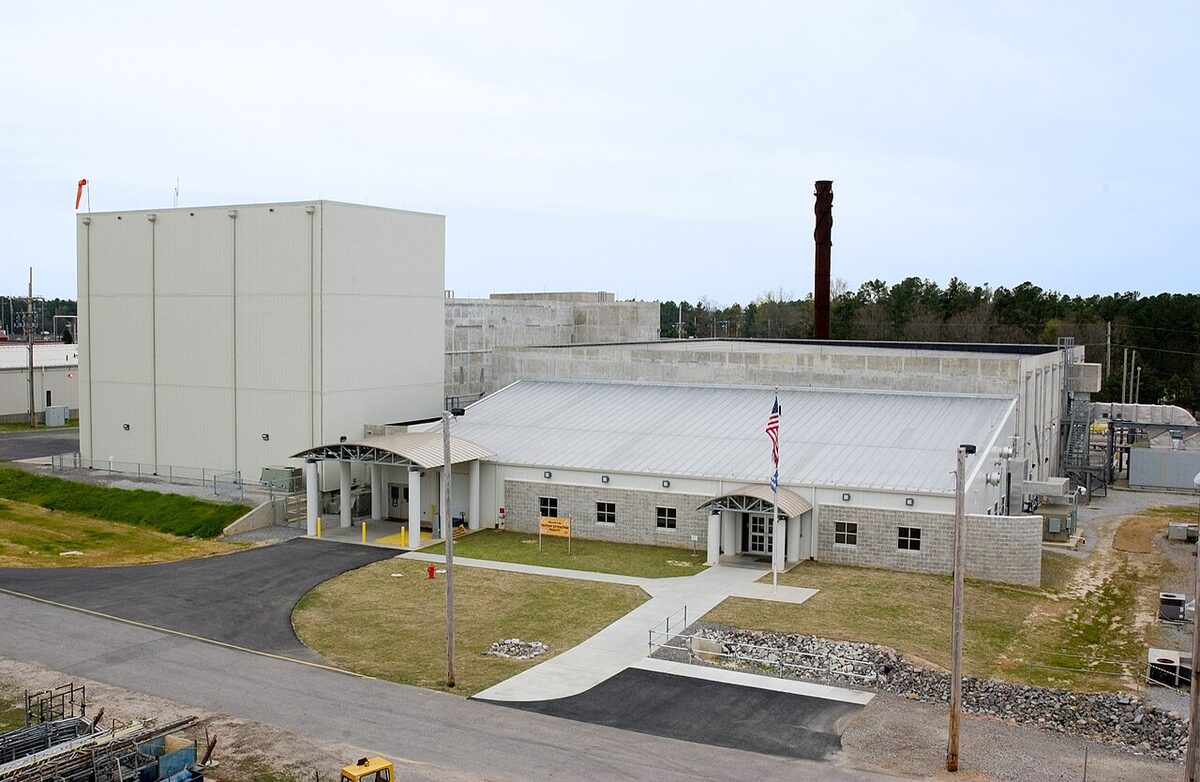
The Savannah River Site in South Carolina can now move to full-scale construction of the plant meant to make it the nation's second producer of plutonium pits, setting off a construction mobilization expected to bring more than 3,000 workers to the site. The Department of Energy approved the performance baseline and authorized "a full start of construction activities" for the Savannah River Pit Production Facility (SRPPF) Main Processing Building, the National Nuclear Security Administration announced. The approval, known as Critical Decision (CD)-2/3, was signed Thursday, Oct. 15, 2026.
The decision closes out the design phase for the Main Processing Building and fixes the baseline against which the project's cost and schedule will now be measured. It also moves the Savannah River Site (SRS) closer to joining Los Alamos National Laboratory in New Mexico as a source of pits, the plutonium cores at the center of U.S. nuclear weapons.
What CD-2/3 Unlocks for the Main Processing Building
DOE manages large capital projects through a series of critical decisions. CD-2 approves a project's performance baseline; CD-3 authorizes construction. Signing both together lets work on the Main Processing Building proceed at full scale.
The Aiken Standard reported that the approval "marks formal completion of the design phase for the SRPPF Main Process Building," authorizes construction and establishes a performance baseline. The paper reported that the approval was announced Oct. 19 and, citing a joint media release from NNSA and Savannah River Nuclear Solutions (SRNS), the site's management and operations contractor, described it as "part of the Department of Energy’s process for the acquisition of capital assets" and "a landmark step in advancing the SRPPF project."
According to NNSA, SRPPF "includes the primary production facility and auxiliary support facilities necessary to produce war reserve plutonium pits, covering 160 acres of the Savannah River Site." The agency framed the project as one half of its production plan: "Once construction is complete at SRPPF, SRS will join Los Alamos National Laboratory as an additional site for pit production and is an essential part of NNSA’s two-site strategy to deliver plutonium pits to the Department of War and ensure a modernized U.S. nuclear deterrent."
How Far Has the SRPPF Cost Estimate Moved Since 2021?
NNSA's own release does not include a cost figure or a completion date. The Aiken Standard did. It reported that the project was estimated in 2021 to cost between $6.9 billion and $11.1 billion, and that the estimated cost now ranges from $18 billion to $25 billion. Completion estimates, the paper reported, range from 2032 to 2035.
At the midpoints, that is a move from roughly $9 billion to roughly $21.5 billion, more than double the 2021 range. The upper end of today's range is more than three and a half times the low end of the 2021 estimate.
The facility does not start from bare ground. The Aiken Standard noted that SRPPF is being built using the uncompleted building designed for the Mixed Oxide Fuel Fabrication Facility, which was intended to convert weapons-grade plutonium into nuclear fuel. That MOX project was canceled in 2018 after construction delays and cost overruns.
3,000 Construction Workers, Then a 2,000-Person Operating Staff
The approval sets off a hiring surge. "Mobilization for construction activities will now significantly increase at SRS with more than 3,000 new workers anticipated at peak construction," according to the joint NNSA-SRNS release, as quoted by the Aiken Standard. When SRPPF is complete and operational, the paper reported, it is expected to employ a workforce of more than 2,000.
SRNS leadership cast the decision in regional terms. "The approval to proceed with full construction of SRPPF is a monumental achievement — one that will have a tremendous impact on SRS and the region for years to come," said Jeff Griffin, president and CEO of Savannah River Nuclear Solutions, as quoted by the Aiken Standard.
Griffin also pointed to schedule pressure. "The construction of SRPPF and its role in modernizing America’s strategic deterrent is a top priority for our government. We recognize the urgency, and we are working together with our NNSA and subcontract partners to meet our commitments and deliver this project for the nation," he said.
Why the Training Center Moved First
The Main Processing Building is the second SRPPF element to clear CD-2/3 this year. NNSA said that earlier in 2026, DOE approved CD-2/3 for the SRPPF High-Fidelity Training and Operations Center, "which will be a specialized training facility for plutonium pit production at SRS."
The sequencing appears deliberate. The joint release, as quoted by the Aiken Standard, said workforce efforts are already in progress, "including construction of the High-Fidelity Training and Operations Center, …forecast for completion in 2028." It added: "The training facility will allow for pit production workforce development to advance while SRPPF is under construction."
On the reported schedules, the training center would finish four or more years before the earliest projected completion of the main plant, giving SRS a head start on staffing the 2,000-plus operating workforce.
What It Means for Contractors
For firms in the nuclear construction and services supply chain, CD-2/3 signals a larger volume of work at SRS. With full construction authorized, the Main Processing Building moves out of the design phase. Griffin's reference to "subcontract partners" suggests that some of that work may flow through SRNS as the management and operations contractor, though the sources do not describe how packages will be awarded.
Several points stand out for companies tracking the project:
- Labor demand: More than 3,000 workers at peak construction will compete for craft labor in the region. Subcontractors bidding SRPPF packages should plan for tight labor markets and price that risk into proposals.
- Baseline discipline: A signed performance baseline means cost and schedule are now formally measured against approved figures. Changes that push against the baseline are likely to draw scrutiny, which raises the premium on accurate estimates and firm schedules from subcontractors.
- Two parallel tracks: The training center, forecast for completion in 2028, and the Main Processing Building are both moving ahead, so demand may span facility build-out, process equipment, and training and qualification support.
- Long horizon: With completion estimates of 2032 to 2035 and an operating staff of more than 2,000 to follow, SRPPF represents a multi-year pipeline that extends from construction into operations.
The cost trajectory is the open question. A project whose estimated range has moved from $6.9 billion–$11.1 billion to $18 billion–$25 billion in five years will draw continued attention to how closely work tracks the newly signed baseline.
