
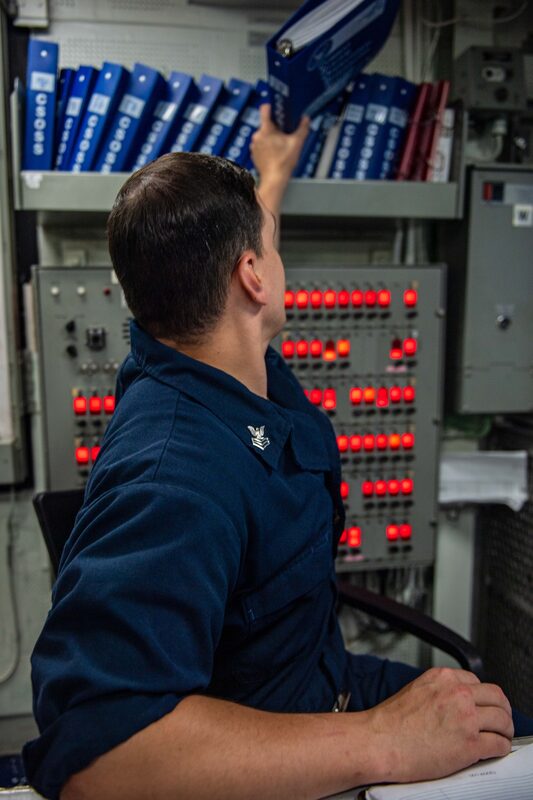
The Navy has awarded Lockheed Martin Rotary and Mission Systems a contract worth up to $1,383,266,817 for AEGIS ship integration and test work supporting surface combatants, with an initial obligation of $60,602,848 and performance spread across five U.S. shipyards and two NATO missile defense sites in Europe.
Background
AEGIS is the Navy's primary combat system for cruisers and destroyers, integrating radar, fire control and missile systems into a single shipboard network. Every cruiser and destroyer that carries the system depends on continuous integration and test work as ships cycle through modernization periods, new software baselines roll out, and the combat system's ballistic missile defense capability extends beyond the fleet. The Navy has fielded Aegis Ashore installations in Romania and Poland as part of the NATO missile defense shield, land-based sites that mirror the shipboard AEGIS weapon system to intercept short- and medium-range ballistic missiles aimed at Europe. Both sites require the same kind of ongoing integration, testing and configuration management that keeps the shipboard variant current, which is why a single ship-integration-and-test contract can span destroyer homeports and NATO installations at once.
Lockheed Martin has held a string of AEGIS-related awards in 2026, including an AEGIS training contract covering six foreign military sales nations and a separate Aegis Guam missile defense award, both announced in May. Those awards reflected different pieces of the AEGIS enterprise: one built training capacity for allied navies operating the system, the other stood up a dedicated missile defense architecture to protect Guam. This new contract, tracked under contract number N00024-26-C-5341, is a distinct scope of work again — ship integration and test support rather than training or a single-site missile defense system build. The Navy's contract announcement does not indicate the new award consolidates or replaces the earlier ones, and each carries its own performance period and funding line.
The breadth of sites named in the award also reflects how AEGIS work is distributed across the surface fleet's homeports and construction yards. Bath Iron Works in Maine and the Pascagoula shipyards in Mississippi build and overhaul the destroyers and cruisers that carry AEGIS, while Norfolk and San Diego serve as the two coasts' primary fleet concentration areas where in-service ships receive combat-system upgrades and go through test events before deployment. Moorestown has functioned as Lockheed Martin's AEGIS engineering and land-based test site for decades, giving the company a controlled environment to validate software and hardware changes before they reach ships or Aegis Ashore installations.
Key Details
The contract carries the number N00024-26-C-5341 and was announced July 6, 2026, in the Department of War's daily contracts release. Its initial value is $60,602,848, with a cumulative ceiling of $1,383,266,817 if the Navy exercises every priced option.
Work spans multiple sites tied to the Navy's surface fleet and its shore-based Aegis footprint:
- Moorestown, New Jersey (36 percent of the work)
- Norfolk/Virginia Beach, Virginia (25 percent of the work)
- Bath, Maine (11 percent of the work)
- Pascagoula, Mississippi (10 percent of the work)
- San Diego, California (9 percent of the work)
- Aegis Ashore site in Deveselu, Romania (4 percent of the work)
- Aegis Ashore site in Redzikowo, Poland (3 percent of the work)
The base period of performance runs through June 2027. If the Navy exercises all contract options, work continues through June 2036, giving Lockheed Martin nearly a decade of potential engineering and integration activity tied to the AEGIS combat system across both fleet and land-based installations, contingent on the Navy funding and exercising each option year by year.
What It Means for Contractors
The contract's geographic spread signals where AEGIS-related subcontracting demand will concentrate over the next decade. Moorestown remains Lockheed Martin's AEGIS engineering hub, but the inclusion of Bath Iron Works, Pascagoula's shipyards, and Naval Station Norfolk/Virginia Beach points to integration and test work happening alongside new-construction and maintenance-availability schedules at those yards. Companies that already hold facilities-support, technical-services, or test-instrumentation contracts at those locations should expect adjacent tasking as Lockheed Martin staffs up its portion of the award.
The 4 percent and 3 percent work-share figures for Romania and Poland are a reminder that Aegis Ashore sustainment is not purely a U.S.-based labor pool. Firms with cleared personnel able to deploy to NATO installations, or with existing footprints supporting U.S. European Command missile defense sites, have a defined, multiyear channel to pursue subcontract work through Lockheed Martin's team rather than waiting for a standalone Navy or NATO solicitation.
The wide gap between the $60.6 million initial obligation and the $1.38 billion ceiling is typical of Navy IDIQ-style ship integration and test contracts, where the government funds task orders incrementally as fleet modernization and Aegis Ashore requirements are validated year to year. Contractors should not treat the ceiling figure as committed revenue; it represents the maximum the Navy could spend if every option is exercised through 2036, not a guaranteed order book. Subcontractors and teaming partners should track individual task-order announcements rather than assuming the full ceiling will fund out on a predictable schedule.
For competitors, the award also underscores how difficult it remains to dislodge Lockheed Martin from the AEGIS ecosystem it has built since the 1970s. The company's incumbency across training, missile defense system deployment, and now ship integration and test work at five domestic yards plus two NATO sites gives it a breadth of touchpoints that rival integrators would need years to replicate, even as the Navy periodically opens pieces of the AEGIS enterprise to competition on modernization and software work.
The size and duration of the award also matter for small and mid-tier businesses that depend on subcontracting plans tied to large prime awards. A contract running through 2036 with priced options gives Lockheed Martin room to commit to multiyear teaming arrangements rather than one-off purchase orders, which can make it easier for specialized firms in radar calibration, cybersecurity accreditation, or shipboard test instrumentation to plan staffing and facility investments around a predictable, if incrementally funded, pipeline of work. Companies pursuing that subcontracting path should track Lockheed Martin's supplier-outreach postings for the N00024-26-C-5341 program rather than waiting for the Navy to issue separate solicitations, since most of the task-level work will flow through the prime rather than through direct Navy contracting actions.
The award also lands against a backdrop of sustained NATO interest in missile defense following years of European security concerns, meaning the Romania and Poland work shares are unlikely to be the last Aegis Ashore tasking the Navy funds under this vehicle. Firms already supporting U.S. European Command installations, or holding North Atlantic Treaty Organization security clearances for personnel who can rotate through those sites, are positioned to benefit as that portion of the contract matures.
