
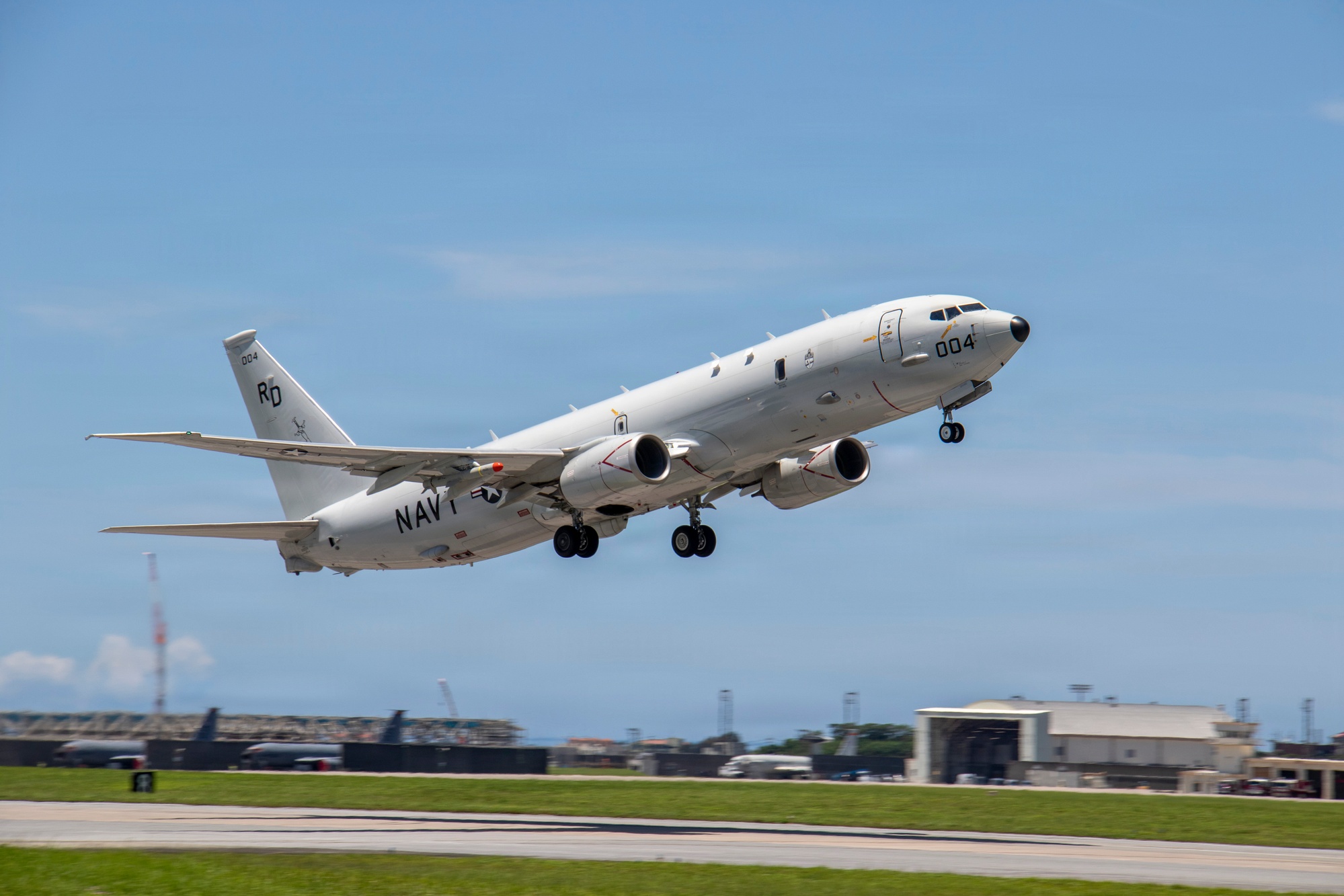
The U.S. Navy just locked in years of future engine supply for the aircraft that hunts submarines and ferries its senior leaders, and the deal reaches well beyond the fleet at home. Naval Air Systems Command in Patuxent River, Maryland, awarded CFM International Inc. a $489,739,433 firm-fixed-price indefinite-delivery/indefinite-quantity contract for core engines that power the P-8A Poseidon and the C-40A Clipper, according to the Department of War's Sept. 16, 2026 daily contracts announcement. Half of the P-8A engines on order are earmarked for allies buying the same jets through the Foreign Military Sales program, tying the award directly to the reach of the P-8A overseas.
The contract, N0001926D1008, covers procurement of up to 24 CFM56-7B27AE core engines for the P-8A — as many as 12 for the Navy and as many as 12 for FMS customers — plus a single CFM56-7B24E core engine for the C-40A. No money changed hands at signing; funds get obligated only as the Navy places individual delivery orders against the ceiling, a structure common to sustainment-style IDIQs where the buying agency wants a locked-in price and source without committing cash for engines it hasn't yet decided to buy.
What $489.7 Million Actually Buys: 24 P-8A Cores and One C-40A Engine
The P-8A Poseidon, built on the Boeing 737 airframe, is the Navy's multi-mission maritime patrol and reconnaissance aircraft, flying long-range anti-submarine warfare, anti-surface warfare and intelligence, surveillance and reconnaissance missions, and it has moved into Full Rate Production, according to NAVAIR's own program page. Each aircraft carries two of the engines covered by this award. NAVAIR describes the P-8A's propulsion as "2 CFM 56-7B engines with 27,300 lbs. thrust each," output the agency ties directly to the aircraft's endurance and payload on long maritime patrols. The C-40A Clipper, the Navy's version of the 737-700 used for logistics and VIP transport, draws on the same CFM56-7B engine family but in the lower-thrust -7B24E variant, reflecting its different mission profile.
The P-8A reached initial operational capability in November 2013 as the replacement for the propeller-driven P-3C Orion, and NAVAIR credits its extended global reach, greater payload capacity, higher operating altitude and open-systems architecture with delivering more combat capability from a smaller, nine-person crew than its predecessor required. Its sensor suite — synthetic aperture radar, an electro-optical and infrared sensor turret, and an acoustic-processing system built specifically for the Poseidon — runs concurrent passive and active processing, a capability NAVAIR says is due for periodic future upgrades to keep pace with evolving anti-submarine threats. Boeing Defense, Space and Security builds the 737-derived airframe itself; CFM's engines are a separate contract line entirely, which is why the Navy can lock in five years of engine supply on this IDIQ without touching the airframe production contract.
Splitting orders between Navy-owned aircraft and FMS customers in a single IDIQ lets the government negotiate one price and delivery schedule instead of running separate competitions every time a partner nation needs a spare core engine. It also means the pace of Navy deliveries can be affected by ally orders sharing the same production line, since both draw from the same ceiling and the same manufacturing slots at CFM's plants.
Why Production Runs Through Villaroche, Durham and Peebles
Work under the contract is split geographically in a way that reflects CFM International's structure as a 1974 joint venture between GE Aerospace and the French firm Safran. Per the award notice, 53% of the work will be performed in Villaroche, France; 43% in Durham, North Carolina; and 4% in Peebles, Ohio. Wikipedia's entry on the CFM56 engine family notes that "GE produces the high-pressure compressor, combustor, and high-pressure turbine, Safran manufactures the fan, gearbox, exhaust and the low-pressure turbine" — a division of labor that lines up with the contract's own work-share breakdown, with the heavier French share reflecting fan, gearbox and low-pressure turbine production alongside final assembly.
That transatlantic split is not incidental. The CFM56-7B engine family covered by this contract spans 19,500 to 27,300 pounds of thrust and also powers the E-7 Wedgetail airborne early warning aircraft and the civilian 737NG family, giving CFM a large, diversified order book that keeps both the French and American production lines running regardless of which customer's engine is on the line at a given moment. The contract runs through September 2031, giving the Navy, its FMS partners and CFM's two home countries five years of predictable production against this ceiling.
What It Means for Contractors
For CFM International, the award — issued without competition, per the Navy's own notice — extends a decades-long lock on P-8A and C-40A engine supply, reinforcing the company's position as the sole source for an engine family with no readily available substitute already integrated into these airframes. That exclusivity is the mechanism by which sole-source IDIQs like this one get justified: once an aircraft is designed around a specific engine, switching suppliers mid-program means requalifying an entirely new powerplant, so the government instead negotiates ceiling pricing and lets individual delivery orders manage the actual spend.
For the broader industrial base, the award is a reminder that FMS demand is now baked directly into domestic engine contracts rather than negotiated separately after the fact. Up to half of the P-8A engines on this ceiling are earmarked for foreign militaries, meaning subcontractors feeding GE's Durham and Peebles lines and Safran's Villaroche line should expect order volume tied to allied P-8A fleets, not just the U.S. Navy's own buy plan. Program offices structuring future maritime patrol or airlift sustainment contracts are likely to keep following this template — a single IDIQ vehicle spanning both domestic and FMS quantities — since it lets the Navy negotiate one price for the full production run instead of splitting Navy and allied orders into separate, smaller competitions that each carry their own overhead.
The zero-dollar obligation at award also underscores how these ceiling contracts work in practice: the number that made headlines, $489.7 million, is a spending cap, not a check the Navy has cut. The real dollar flow will show up gradually as individual delivery orders get issued against the IDIQ over the next five years, each one a smaller data point worth tracking for how quickly the Navy and its allies are actually drawing down engines against this ceiling.
