
The Defense Department has handed RAND's federally funded research arm a task order that could grow to nearly $1 billion over its full term, funding the wargaming, modeling, and policy analysis that helps shape how the U.S. military plans campaigns and buys weapons. On July 2, 2026, Washington Headquarters Services awarded the RAND National Defense Research Institute a task order (HQ003426DE016) valued at $452,461,776, with a total value of $985,625,480 if every option is exercised. No funds were obligated at the time of award.
Background
The RAND National Defense Research Institute, based in Santa Monica, California, is one of the Defense Department's federally funded research and development centers (FFRDCs) — nonprofit organizations that carry out long-term analytic work the government prefers not to staff in-house or contract out competitively. NDRI serves the Office of the Secretary of Defense, the Joint Staff, the combatant commands, the defense agencies, and the intelligence community. Because FFRDCs operate under a strategic, long-running relationship with their sponsor, their work is typically directed through sole-source vehicles rather than open competition, and the government maintains ceilings on the labor hours these centers may bill each year.
Washington Headquarters Services, the contracting activity on this award, is the Pentagon field activity that provides administrative and contracting support to OSD and other departmental offices. Routing an NDRI task order through WHS reflects the office-wide, policy-level nature of the work rather than a single program or service. The award continues a decades-old arrangement in which RAND has produced force-planning studies, acquisition analyses, and wargames that feed directly into departmental strategy and budget decisions. NDRI is one of roughly ten FFRDCs the Defense Department sponsors and the center chartered to provide studies and analysis to the Office of the Secretary of Defense, the Joint Staff, the combatant commands, and the defense agencies — a department-wide remit that helps explain why the vehicle is directed to a single institution rather than competed.
Key Details
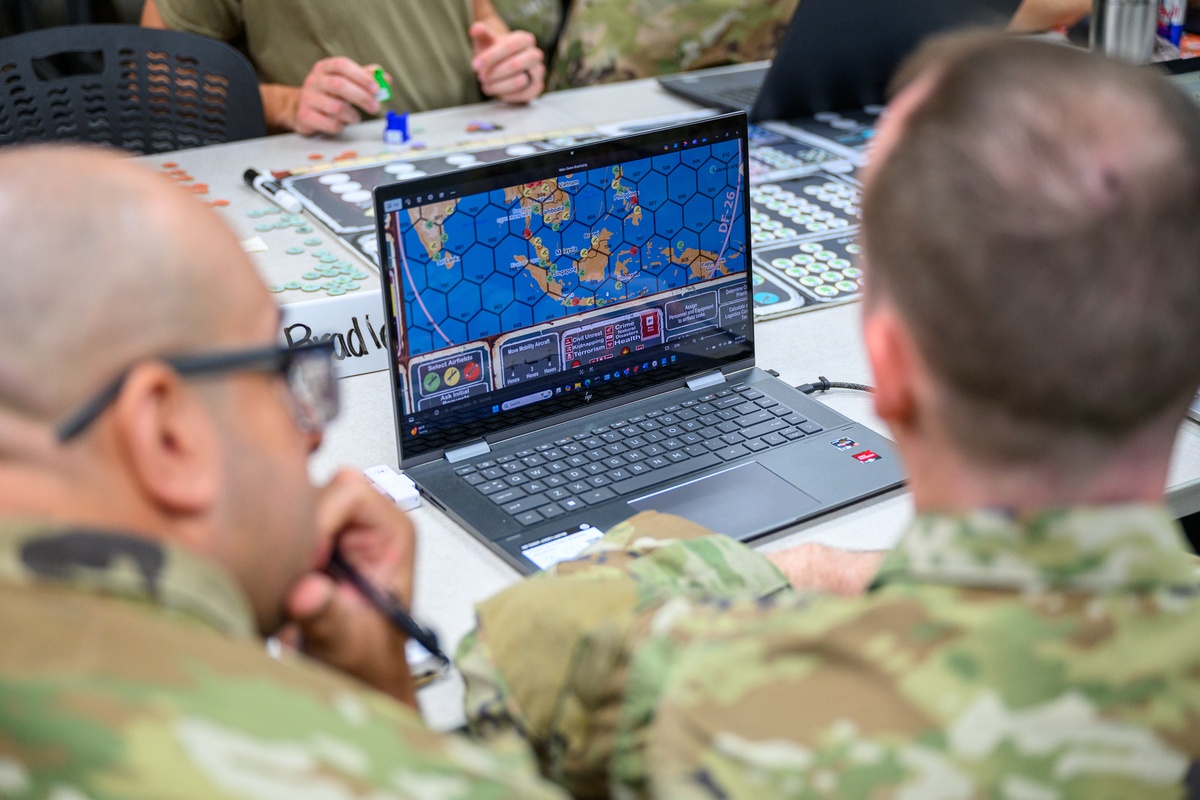
The task order covers research, studies, analysis, analytic models, simulations, and wargaming exercises. Per the contract announcement, that work brings together analysts, government officials, academia, and industry to support policy formulation and program planning across the department. Wargaming in particular has drawn renewed attention inside the Pentagon as leaders test operational concepts against near-peer scenarios before committing to force structure and procurement choices.
The base task order is worth $452,461,776. If all options are exercised, the cumulative value reaches $985,625,480 — more than double the initial figure — which sets the outer boundary on how much analytic capacity the department can draw down over the life of the vehicle. Work will be performed at the Pentagon in Arlington, Virginia; at RAND's headquarters in Santa Monica, California; and in Pittsburgh, Pennsylvania, where RAND maintains a research campus.
The contracting activity is Washington Headquarters Services in Arlington. The announcement lists no funds obligated at award, meaning the department will fund individual studies and wargames through subsequent orders and obligations as specific requirements are defined. That structure is standard for FFRDC vehicles, which function as a reservoir of pre-arranged analytic capacity that sponsors tap task by task rather than a lump-sum commitment paid up front.
The dollar ceiling is not the only limit on how much RAND can take on. As with every FFRDC, the Pentagon also caps the annual staff-years of technical effort each center may bill, a control set each year that keeps FFRDC growth in check even as sponsor demand rises — so the near-billion-dollar figure marks an outer boundary that the department fills only as far as those labor limits and its own funding decisions allow.
What It Means for Contractors
For the analytics and professional-services market, an FFRDC ceiling of this size is a signal about where sponsor demand is concentrated — and about which work is effectively walled off from open competition. FFRDC task orders are directed to a single named institution, so private analytic firms cannot bid on this vehicle directly. The practical opportunity for industry lies alongside and beneath it: subcontracting, data provision, modeling and simulation tooling, and specialized subject-matter expertise that RAND draws on to execute individual studies and wargames.
The scope language explicitly names industry as a participant in RAND's wargaming and analysis, which points to a recurring channel for firms with operational or technical depth in specific mission areas. Companies that build simulation environments, supply threat and platform data, or offer red-team and scenario-design talent are the natural partners for work of this kind. Positioning early — before a study is scoped — matters more here than responding to a solicitation, because these engagements are shaped through the FFRDC's relationships rather than through public RFPs.
The award also carries a competitive signal for firms that pursue OSD analytic work through non-FFRDC vehicles. When the department routes a near-billion-dollar ceiling of studies, models, and wargames to a single research institute, it constrains the pool of comparable work available to commercial analytic houses and other FFRDCs. Firms competing for policy-analysis and program-support contracts should read the size and breadth of this task order as a marker of how much of the department's high-level analytic demand is being consolidated. Watching the follow-on obligations against this vehicle will indicate which mission areas — force planning, acquisition analysis, or campaign wargaming — are drawing the most funding, and where adjacent commercial and subcontract opportunities are most likely to emerge over the next several years.
