
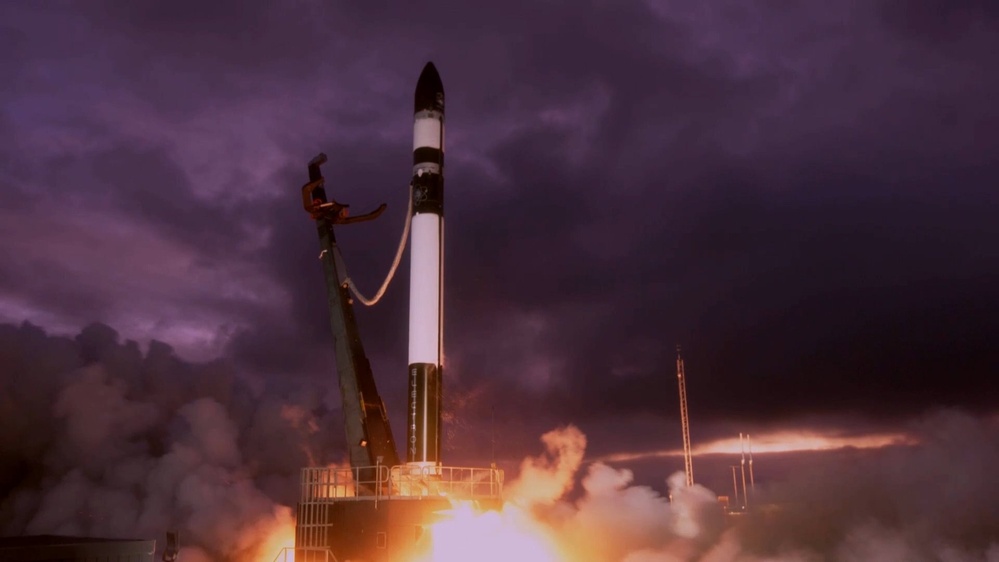
The Space Force has committed $266 million to a fixed-price campaign of suborbital launches from Alaska, handing Rocket Lab USA Inc. one of the larger commercial-space-into-defense awards of the summer. According to the Department of Defense contract announcement for July 21, 2026, the Long Beach, California company received a firm-fixed-price completion contract covering the launch of 12 suborbital launch vehicles, with six optional additional launches, from the Pacific Spaceport Complex on Kodiak Island. Space Systems Command at Kirtland Air Force Base in Albuquerque, New Mexico is the contracting activity, and the deal carries the identifier FA8818-26-C-B003.
Background
Suborbital launch has quietly become one of the busiest corners of the national security space enterprise. Unlike orbital missions, suborbital flights carry payloads above the atmosphere and back down without achieving orbit, making them the workhorse platform for hypersonic weapons testing, sensor evaluation, and rapid technology demonstrations that the Pentagon needs to run on a repeatable cadence. As the services have accelerated hypersonic programs, demand for reliable, high-tempo suborbital lift has climbed alongside it, and the Space Force has moved to lock in dedicated capacity rather than compete for it flight by flight.
Rocket Lab is best known for its Electron orbital rocket, but the company has built a parallel suborbital line derived from that vehicle, marketed for test and evaluation missions. The Pacific Spaceport Complex on Kodiak Island gives the program a high-latitude range with clear downrange trajectories over the Pacific, well suited to the kind of test flights the contract anticipates. Placing a multi-year, multi-launch commitment at a single commercial-friendly range signals that the Space Force wants a standing pipeline rather than one-off procurements.
The award also marks another step in Rocket Lab's push from a launch-services startup into an established defense contractor. The company has spent recent years broadening its government business beyond commercial smallsat deployment, and a nine-figure fixed-price award from Space Systems Command places it firmly among the vendors the Space Force relies on for recurring mission support.
Key Details
The contract is structured as a firm-fixed-price completion contract with a total value of $266,000,000. The base scope covers 12 suborbital launch vehicles, and the government holds six optional additional launches it can exercise on top of that baseline, which would push the total flight count as high as 18 if all options are taken. Work will be performed at the Pacific Spaceport Complex in Alaska, and the announcement lists a completion date of December 31, 2028, giving Rocket Lab roughly two and a half years to execute the campaign.
The acquisition was competitive. Space Systems Command solicited the requirement and received three offers, a healthy field for a specialized launch requirement and one that gives the government a credible basis for its fixed-price terms. At the time of award, $112,000,000 in fiscal 2025 research, development, test and evaluation funds were obligated, meaning the government committed a substantial share of the ceiling up front while leaving room to fund later flights and any exercised options in subsequent budget years.
Investors read the award as a clear positive for the company. Rocket Lab shares, which trade under the RKLB ticker, rose roughly 6 percent in after-hours trading following the announcement. For a firm-fixed-price completion contract, the structure places execution risk on Rocket Lab: the company must deliver the launches at the agreed price, absorbing any cost overruns, which is precisely the arrangement the Space Force prefers when it wants budget certainty on a repeatable service.
What It Means for Contractors
The award is a useful data point for any contractor watching how the Space Force buys recurring launch and test services. Rather than negotiating cost-reimbursement terms or sole-sourcing to a legacy provider, Space Systems Command ran a competition, drew three offers, and settled on a firm-fixed-price completion contract. That combination tells vendors the government is comfortable pushing execution risk onto commercial suppliers when the requirement is well defined and a competitive field exists to discipline pricing. Companies eyeing this market should expect fixed-price terms to be the default, not the exception.
The obligation pattern is also instructive. The government committed $112 million of the $266 million ceiling at award, funding the campaign incrementally with RDT&E dollars while retaining six options. Subcontractors and suppliers in the launch supply chain should read that as a signal that near-term work is funded and real, but that the full value depends on future appropriations and on Rocket Lab meeting its flight cadence. Range operators, payload integrators, and hypersonic test customers all have reason to track how quickly the early launches proceed, since a strong start makes the options far more likely to be exercised.
For the commercial space sector more broadly, the contract reinforces a trajectory that has been building for several years: launch providers that began as venture-funded startups are now winning nine-figure defense awards on competitive terms. That maturation opens doors for smaller firms across the supply chain, from avionics and propulsion suppliers to range services and mission assurance, but it also raises the bar. Winning this kind of work now means competing head to head on price against companies willing to accept fixed-price risk, and delivering on a demanding multi-year schedule at a single operating location. Contractors that can demonstrate both cost discipline and a repeatable, high-tempo delivery model are the ones best positioned as the Space Force continues to buy suborbital capacity by the campaign rather than the flight.
