
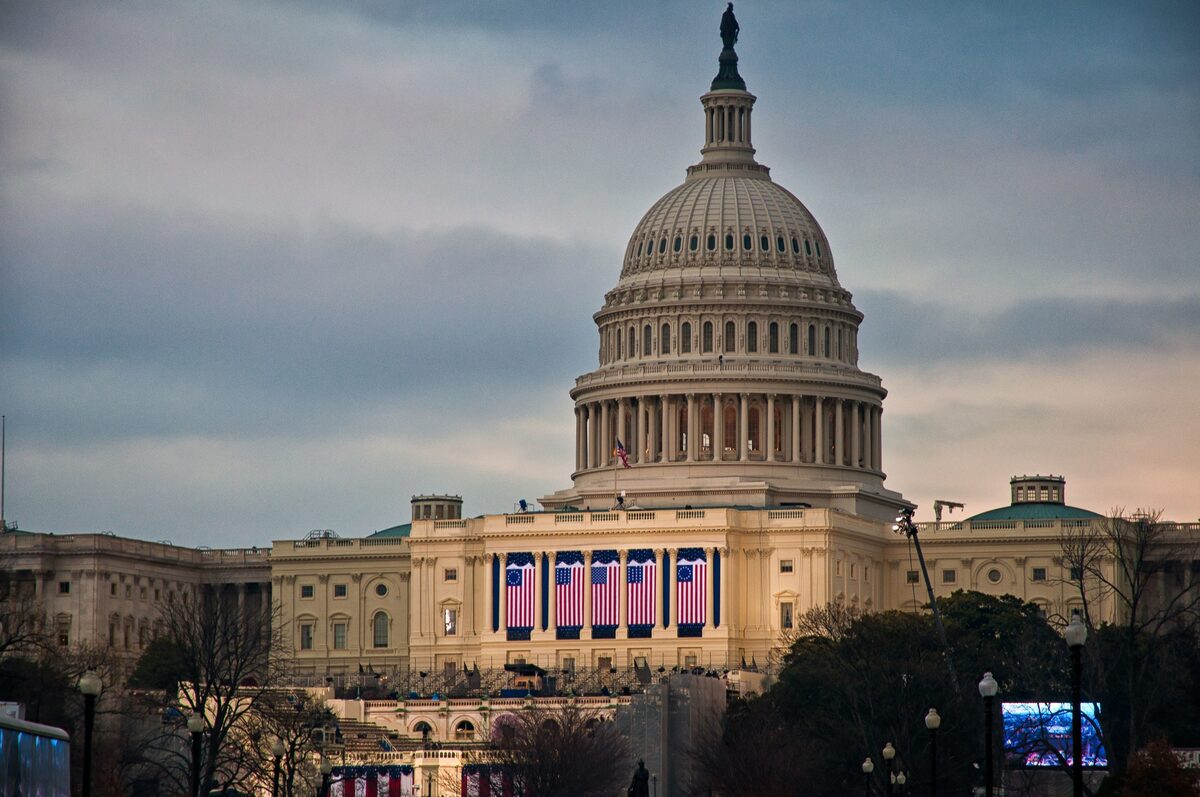
The Senate failed to advance the FY2027 National Defense Authorization Act on July 14, 2026, when a cloture vote on the motion to proceed to S. 4784 drew 50 yeas against 46 nays — a majority, but ten votes short of the three-fifths threshold the chamber requires. The official Senate roll call, recorded at 2:41 PM, lists the result as "Cloture on the Motion to Proceed Rejected." The bill did not lose a majority. It lost a supermajority, and that distinction shapes everything that follows for contractors watching the authorization calendar.
Background
The NDAA is one of the few bills Congress reliably clears every year, and defense contractors plan around that reliability. It authorizes force structure, sets policy for acquisition reform, blesses new program starts, and creates the legal scaffolding that appropriators later fund. When it slips, program offices lose the authority they were counting on to begin work in the new fiscal year, and the industrial base loses the signal it uses to size hiring and capital plans.
S. 4784 is the Senate vehicle for FY2027. Its House companion is H.R. 8800, also in the 119th Congress. Breaking Defense reports the Senate bill carries roughly $1.14 trillion in Department of Defense funding, a figure that could approach roughly $1.5 trillion if the proposed $350 billion in Pentagon reconciliation spending is counted alongside it.
Cloture on a motion to proceed is the first real test of a bill's floor prospects. It is not a vote on the NDAA itself — it is a vote on whether the Senate will even begin debating it. Failing that vote means the chamber never opened the bill for amendment, so the member-sponsored provisions that ride on the NDAA each year have not yet had a floor path.
Key Details
The roll call lists the required majority as 3/5 — 60 votes in a full chamber. With 50 yeas and 46 nays, the motion fell. Four senators did not vote: Fetterman, Justice, McConnell, and Padilla.
Majority Leader John Thune switched his vote from yes to no and entered a motion to reconsider. This is procedural mechanics, not a substantive objection. Under Senate rules, only a senator on the prevailing side may move to reconsider, so a leader who wants to refile cloture later will flip his vote to preserve that right. The Senate Press Gallery noted that absent Thune's switch, the tally was a party-line vote — Republicans for, Democrats against.
Democrats gave two stated reasons for withholding support. The first is the Iran war, which they argue is being prosecuted without congressional authorization. The second is the gap between the defense topline and domestic spending.
Sen. Angus King put the spending argument in concrete terms: "Generally, there's been some sort of parity. This time, the increase in defense is four times the increase on the domestic side." On the war, King was direct about the linkage: "If the war had been authorized, it would be a different discussion." He also called for a debate on the conflict itself: "Let's have the administration make the argument and tell us what it costs."
Sen. Jack Reed framed the path forward around the budget rather than the war powers question. "I think the most practical step is to settle the budget issues, because we understand that this war is a multifaceted dynamic that's very much more complicated than they initially thought," Reed said. He added that it is "the type of legislation that we can revive quickly when we have the opportunity and the stars align."
That framing matters. Reed is describing a negotiable obstacle, not a permanent one. Thune's motion to reconsider keeps the vehicle alive on the floor without requiring a fresh procedural start. Breaking Defense also reports Sen. Tammy Duckworth said she would oppose the bill unless it included an amendment barring funding for the Iran war — a reminder that some objections are pinned to specific amendment text.
What It Means for Contractors
Do not read this vote as the NDAA collapsing. Read it as leverage being applied. A 50-46 tally with a party-line structure and a preserved motion to reconsider is the profile of a bill that gets refiled once the underlying dispute settles, not a bill that dies.
The near-term risk is schedule, not existence. Breaking Defense reports the House could take up its NDAA before lawmakers leave Washington for the August recess, which would put the House ahead of the Senate and shift the center of gravity in any eventual conference. Contractors with provisions they care about — acquisition authorities, multiyear procurement language, program-specific carve-outs — should be tracking the House text more closely than they otherwise would, because a House-passed bill facing a stalled Senate companion gives House negotiators the stronger opening position.
The second-order effect lands on new starts. Authorization is what lets a program office begin work on something that did not exist in the prior year's bill. Recompetes and existing programs of record continue on prior-year authority and appropriations. New-start programs do not. If your capture pipeline depends on an FY2027 new start clearing the NDAA, the timeline just got less certain, and the honest planning assumption is a later authorization rather than none.
The Iran war objection introduces a variable most defense-industry planning models do not carry. Democrats have tied their NDAA position to a war powers question that the authorization bill itself does not resolve. That means the unlock condition is partly outside the four corners of the defense bill — a budget agreement, per Reed, or an authorization for the use of military force, per King. Neither is a defense-committee deliverable. Contractors modeling a quick refile-and-pass should account for the possibility that the blocking condition is being negotiated somewhere the armed services committees do not control.
One reporting caution worth carrying into your own tracking: the $1.14 trillion topline is a press figure from Breaking Defense, not a number scored against an enacted text, and toplines cited in coverage of this bill have varied. The difference is immaterial to strategy but material to anyone citing a precise number in a proposal or board deck. Use the bill text and official cost estimates rather than press figures.
Finally, watch the vote structure itself. Four senators were absent, so the underlying math is not quite as far from 60 as the raw tally implies. But absences do not close a ten-vote gap. Getting there requires Democratic yes votes, and those are being priced against a budget deal — which makes the appropriations calendar, not the armed services calendar, the thing to watch next.
