
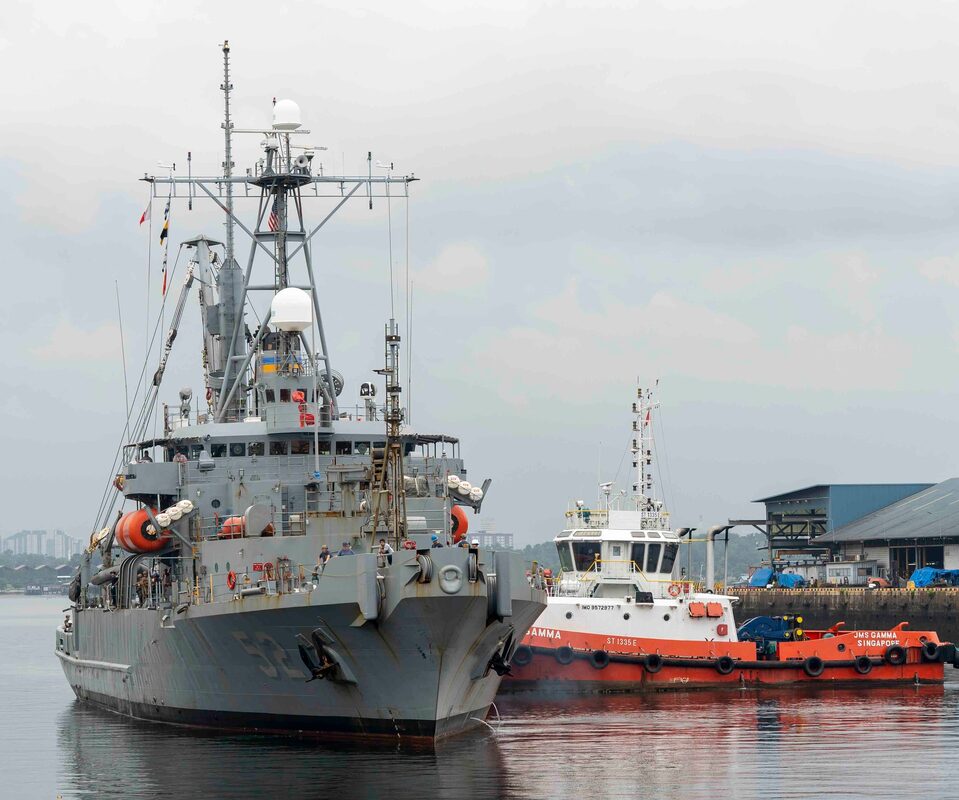
The Navy has handed a $180,000,000 indefinite-delivery/indefinite-quantity contract to SMIT Singapore Pte Ltd. to keep salvage, towing and harbor-clearance crews on call across the Western Pacific through 2031, one of several contract actions the Department of War posted in its daily contracts release for July 2, 2026. The award covers salvage-related towing, harbor clearance, ocean engineering projects, and point-to-point towing services across a region where distances between ports and repair yards can stretch thousands of miles.
Background
The Navy relies on commercial salvage and towing firms to backstop its own fleet of rescue and salvage ships, especially in a region as large as the Western Pacific, where a single grounded vessel, a damaged pier, or a stranded barge can sideline operations for weeks without a contractor already under a standing agreement. Rather than negotiate a new contract every time a ship needs to be pulled off a reef, a wreck needs to be cleared from a channel, or a harbor needs dredging or engineering support after a storm, the Navy uses indefinite-delivery/indefinite-quantity vehicles that let it issue individual task orders as needs arise and draw down against a ceiling value over a multiyear period.
Naval Sea Systems Command ran the competition that produced the SMIT Singapore award, soliciting bids through SAM.gov and receiving five offers before selecting the Singapore-based marine services firm. The five-offer field indicates a competitive pool for a category of work that combines heavy marine engineering, deep-sea towing assets, and harbor-clearance expertise not every contractor can field on short notice across the Indo-Pacific's long distances and limited port infrastructure.
Salvage and towing support has taken on added weight as the Navy spreads more of its forward presence across a wider set of Pacific ports and austere locations rather than concentrating on a handful of established hubs. That dispersal increases the odds that a vessel casualty, grounding, or storm-damaged pier occurs somewhere without an organic Navy salvage ship nearby, which is precisely the gap standing commercial IDIQ contracts like this one are meant to close. A contractor with vessels, divers, and engineering staff already based in the region can respond to a task order in days rather than the weeks it might take to sail a Navy salvage ship from a home port thousands of miles away. That responsiveness is the entire premise behind awarding this category of work to a firm headquartered inside the theater rather than one based on the U.S. mainland.
Key Details
The contract carries a maximum value of $180,000,000 and combines two pricing structures, cost-plus-award-fee and cost-plus-fixed-fee, a hybrid arrangement the Navy typically reserves for work where scope and difficulty vary sharply from one task order to the next. Cost-plus-award-fee line items let the Navy tie part of SMIT Singapore's compensation to performance ratings on individual jobs, while cost-plus-fixed-fee line items cover more predictable, recurring work such as routine towing. The scope covers four categories of work: salvage-related towing, harbor clearance, ocean engineering projects, and point-to-point towing services.
All of the work will be performed in the Western Pacific region, and the period of performance runs through July 2031, giving SMIT Singapore roughly five years to draw task orders against the ceiling value. Naval Sea Systems Command in Washington, D.C., is the contracting activity, and the award carries contract number N00024-26-D-4308.
The contract was competitively procured with a solicitation posted on SAM.gov, and the Navy received five offers before making the award, according to the Department of War's official contract announcement. The award appeared alongside a separate $90 million architect-engineer IDIQ that Naval Facilities Engineering Command Mid-Atlantic issued the same day to a Norfolk, Virginia firm, underscoring how much routine Navy infrastructure and marine-support work moves through these standing multi-award vehicles rather than one-off contracts negotiated case by case. Both awards landed on the same daily contracts release, a reminder that the bulk of the Navy's Pacific-facing sustainment spending flows through unglamorous IDIQ vehicles rather than headline-grabbing shipbuilding programs.
What It Means for Contractors
A Singapore-flagged firm taking the lead on a nine-figure Navy IDIQ is a reminder that specialized maritime salvage and ocean-engineering work draws on a narrower, more international pool of qualified vendors than most defense service contracts. Companies that can field deep-sea towing vessels, harbor-clearance divers, and marine engineering staff already positioned in the Indo-Pacific hold an inherent advantage over mainland U.S. firms that would otherwise need to mobilize equipment and personnel across the Pacific for every task order, a cost and schedule disadvantage that is difficult to overcome in a region defined by long transit distances.
For smaller domestic contractors, the award is still worth tracking closely. IDIQ vehicles of this size routinely generate subcontracting opportunities as the prime issues individual task orders for harbor clearance, wreck removal, or towing jobs that require local vessels, divers, surveyors, or logistics support in specific ports. Firms with Indo-Pacific port access, salvage diving certifications, or marine surveying credentials should watch for task-order solicitations tied to N00024-26-D-4308 as they are issued over the next five years, since primes on IDIQs of this kind frequently look for regional partners rather than shipping their own crews to every location.
The award also underscores how much of the Navy's forward posture in the Pacific depends on contracted, rather than organic, salvage and towing capacity. With the contract running through mid-2031, the five-offer competition suggests the Navy has more than one qualified firm it could turn to for follow-on requirements, which should keep pressure on pricing and performance for the life of the vehicle. Contractors positioning for adjacent Pacific infrastructure work, including harbor maintenance and marine construction, should note the emphasis on ocean engineering projects alongside pure towing and salvage tasks, since that scope line often draws in engineering and design subcontractors beyond the towing and diving specialists typically associated with salvage work. Firms that can pair marine engineering credentials with an established Indo-Pacific footprint are best positioned to compete for task orders as they come out under this vehicle over the next five years, and program offices tracking Pacific readiness spending should watch N00024-26-D-4308 task orders as an early indicator of where the Navy expects the next casualty, grounding, or harbor obstruction to occur.
