
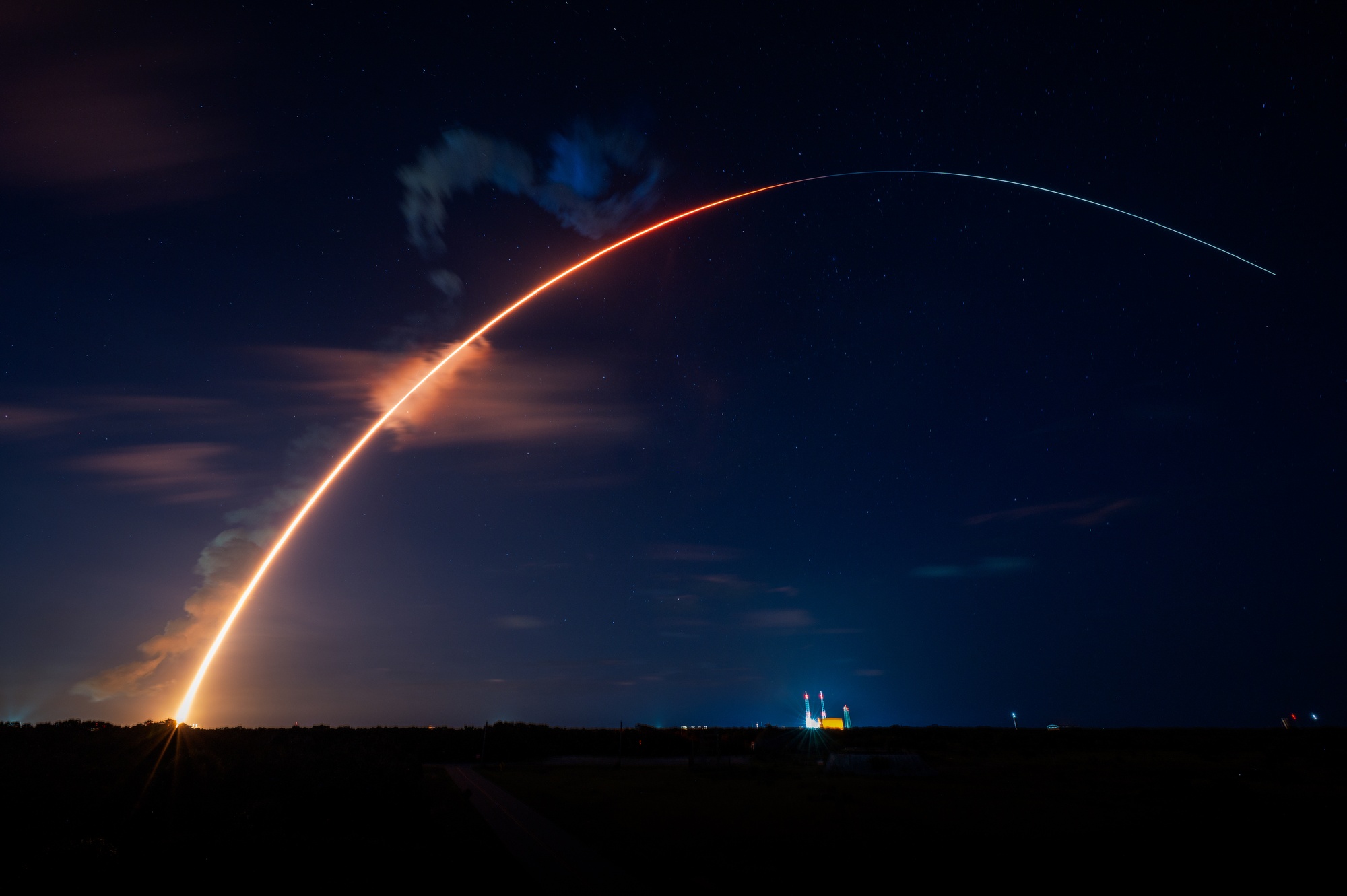
The U.S. Department of War announced July 7, 2026, that it has awarded Impulse Space Inc. of Redondo Beach, California, and Relativity Federal Inc. of Long Beach, California, spots on the National Security Space Launch Phase Three Lane 1 indefinite-delivery/indefinite-quantity contract, adding two commercial launch startups to a program with a cumulative ceiling of $5.6 billion through 2030.
Background
NSSL Phase 3 splits national security launch business into two tracks. Lane 2 covers the most demanding, highest-risk missions and remains restricted to SpaceX and United Launch Alliance. Lane 1 was built for lower-complexity missions to easier-to-reach orbits with smaller payloads, including satellites for the Space Development Agency and the Space Force's Test Program, and it uses commercial-style launch standards rather than the full military certification process required for Lane 2. The Space Force designed Lane 1 as an on-ramp vehicle, opening the qualified-provider pool on a recurring basis so new entrants can compete for task orders as they mature their vehicles, rather than waiting years for a single static competition.
Before this week's awards, Lane 1's roster stood at five companies: SpaceX, United Launch Alliance, Blue Origin, Rocket Lab and Stoke Space. The Space Force expects Lane 1 to include roughly 30 missions through its competitive task-order structure, with the program continuing through at least fiscal year 2029. Under that structure, the government does not commit to buying launches at the time a company joins the pool; instead, qualified providers compete against one another for individual missions as the Space Force releases task orders each year, meaning a larger pool of eligible bidders translates directly into more competition for every mission the Space Force puts up for bid.
Key Details
The Department of War's contract announcement describes the awards to Impulse Space and Relativity Federal as multiple-award, firm-fixed-price IDIQ contracts with a maximum cumulative ceiling of $5.6 billion. The government received three offers during the competitive acquisition. Each company's initial award is an on-ramp task valued at $5 million, funding a capabilities assessment and the development of a mission-assurance approach; the Space Force obligated $10 million in fiscal 2026 space procurement funds at the time of award, covering both companies.
Impulse Space is bringing its Helios high-energy upper stage — also called an orbital transfer vehicle — into the program. According to Air & Space Forces Magazine, Helios is designed to move payloads from low-Earth orbit to higher orbits, a capability NSSL has not previously had under contract. Impulse Space's entry is notable within the program structure: it is the first non-rocket-builder and the first upper-stage-only prime contractor added to NSSL. The company's first Lane 1 mission is targeted for late 2026 or 2027, flying as a payload aboard a SpaceX Falcon 9.
Relativity Federal is the government-focused arm of Relativity Space and is offering the Terran R, a reusable, two-stage rocket sized for medium-lift missions. Relativity Federal's first Terran R flight is expected in late 2026. SpaceNews reported that the two additions bring the Lane 1 qualified-provider pool to at least seven companies, an expansion the outlet framed as part of the Space Force's strategy to diversify launch transportation options and inject more commercial competition into military launch procurement.
With Impulse Space and Relativity Federal added, the Lane 1 pool now spans SpaceX, United Launch Alliance, Blue Origin, Rocket Lab, Stoke Space, Impulse Space and Relativity Federal — a mix that ranges from the government's two long-established launch primes to startups that have yet to fly an operational mission. That composition reflects the lane's design intent: rather than certifying a single new entrant through a lengthy, one-time process, the Space Force built Lane 1 to accept providers on a rolling basis and let them prove out mission assurance on lower-consequence payloads before any of them is considered for Lane 2-class national security missions.
Air & Space Forces Magazine, covering the same announcement, quoted Space Force officials describing the awards as a way to expand the industrial base and improve resiliency and responsiveness in delivering national security space capabilities — a rationale consistent with Lane 1's role as the venue for lower-risk, lower-complexity missions where the government can accept newer vehicles with shorter track records than it would tolerate on Lane 2.
What It Means for Contractors
The awards confirm that NSSL Phase 3 Lane 1 remains an active on-ramp rather than a closed roster, and that the Space Force is willing to qualify vehicle types beyond conventional orbital rockets. Impulse Space's inclusion as an upper-stage-only prime signals that companies building mission-enabling hardware — not just launch vehicles themselves — have a path into national security launch contracts if they can demonstrate a credible mission-assurance approach. Subcontractors and component suppliers working with in-space transportation vehicles, not only first-stage rocket builders, now have a clearer government customer to target.
For companies still outside Lane 1, the $5 million on-ramp structure — sized for a capabilities assessment and mission-assurance planning rather than a full launch — shows the Space Force is keeping the bar for entry relatively low at the qualification stage, while reserving the larger dollars for the annual competitive task orders that follow. Firms with launch vehicles or upper stages in late development should watch for the next on-ramp opportunity rather than assume the pool is fixed at seven.
Prime contractors on Lane 2 and established Lane 1 providers now face a larger field of competitors bidding for the roughly 30 missions the lane covers, which should sharpen pricing and scheduling proposals on future task orders. Companies supplying ground systems, payload integration services, or range support for Space Development Agency and Space Force Test Program missions should also expect two more active customers moving through capabilities assessments over the coming months, each working toward a late-2026 first-flight target.
Sources
- Contracts for July 7, 2026 — U.S. Department of War
- Space Force adds Relativity, Impulse Space to national security launch program — SpaceNews
- Space Force Picks Two More Startups to Compete for Launch Missions — Air & Space Forces Magazine
- Space Force adds two startups to small, medium launch pool — Breaking Defense
