
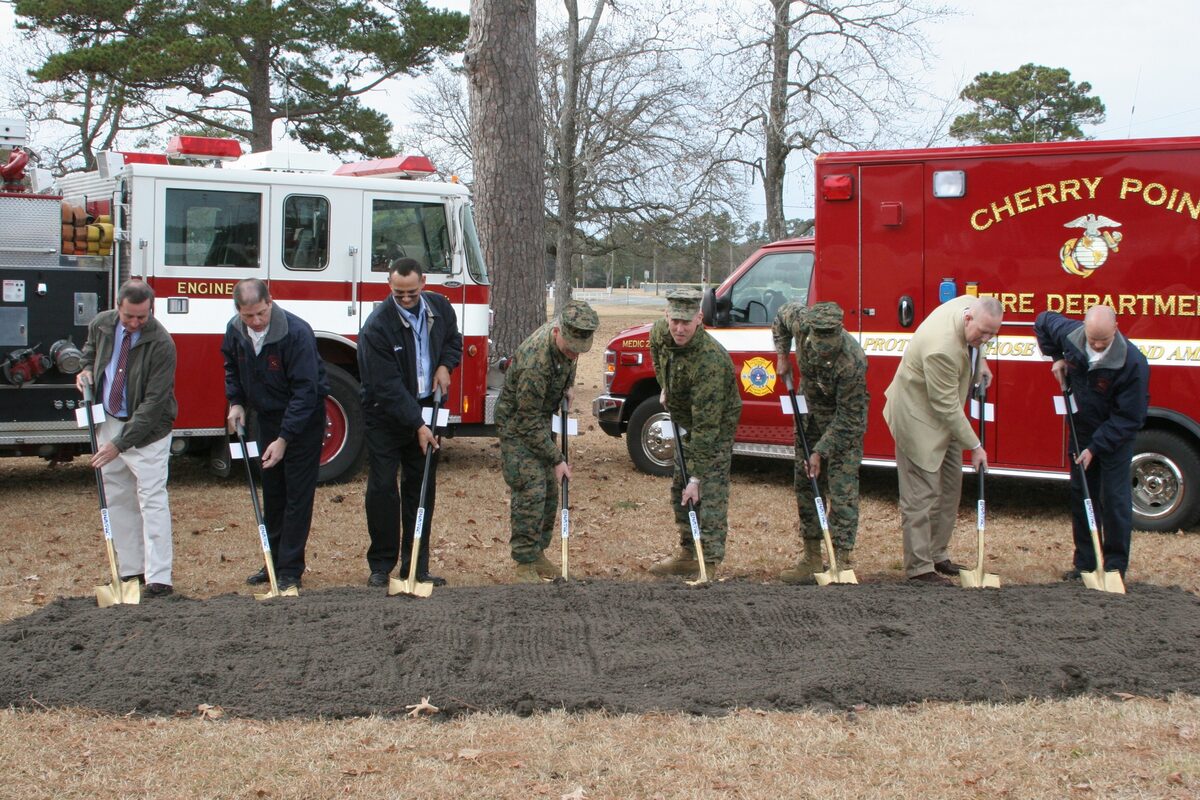
Naval Facilities Engineering Systems Command Mid-Atlantic has awarded Walsh Federal LLC a $487,972,063 firm-fixed-price contract to build the first phase of an F-35 Aircraft Sustainment Center and a CH-53K Composite Repair Facility at Marine Corps Air Station Cherry Point, North Carolina, according to the Department of War daily contracts announcement for July 15, 2026. The award carries a maximum value of $658,307,001 once options are exercised, making it one of the largest single military construction packages the Navy has released this year.
Walsh Federal, based in Chicago, Illinois, beat one other offeror in a competition run through SAM.gov. Naval Facilities Engineering Systems Command Mid-Atlantic in Norfolk, Virginia manages the contract, numbered N40085-26-C-0016, with work expected to finish in May 2030, roughly a four-year build measured from the July 2026 award.
Background
The award anchors the physical infrastructure behind two of the Marine Corps aviation fleet's most demanding maintenance missions. The F-35B and F-35C depend on a stealth coating and airframe that require specialized, climate-controlled facilities to sustain, and the Marine Corps has spent years standing up the depot capacity to keep its Lightning II fleet flying without shipping airframes back to prime contractor lines. The CH-53K King Stallion, Sikorsky's heavy-lift replacement for the aging CH-53E, leans heavily on composite structures that demand purpose-built repair bays rather than the metal-bending shops that served earlier helicopters.
Cherry Point already hosts Fleet Readiness Center East, one of the Navy's three aviation depots and a longtime center of gravity for Marine Corps rotary-wing and fixed-wing sustainment. Adding an F-35 sustainment center and a dedicated composite repair facility folds two next-generation platforms into an installation that has historically overhauled AV-8B Harriers, H-53 helicopters, and V-22 Ospreys. The facilities give the Marine Corps organic depot capacity for the aircraft that will define its aviation fleet for the next several decades.
The award also reflects how the Marine Corps is reducing its reliance on contractor field teams and original-equipment lines for deep maintenance. Standing up organic depot capacity at Cherry Point lets the service perform heavy repairs and modifications in-house, shortening turnaround times and keeping sustainment work under government control rather than routing airframes across the country. For the F-35B in particular, the short-takeoff variant flown by Marine squadrons, that organic capacity matters as the fleet matures and airframes accumulate flight hours that drive depot-level demand.
Key Details
The construction spans the F-35 Aircraft Sustainment Center Phase I and the CH-53K Composite Repair Facility under a single contract. The government structured the deal as incrementally funded, meaning the Navy obligates money in tranches as construction milestones and appropriations allow rather than committing the full value at signing. Fiscal 2025 and 2026 military construction, Navy funds totaling $288,421,624 for the first increment were obligated at the time of award, and those funds do not expire at the end of the fiscal year. Future increments will be funded in later fiscal years as the work progresses.
The gap between the base contract value and the maximum reflects options the Navy can exercise as later phases and appropriations come through. The roughly $170 million spread between the $487,972,063 base award and the $658,307,001 ceiling represents that optioned scope. The base award covers Phase I; the ceiling anticipates follow-on work that extends the sustainment center and its supporting infrastructure. The competition ran under NAVFAC solicitation P993/995, which packaged the F-35 sustainment center and the composite repair facility together for bidding.
Only two firms submitted offers, a thin field for a nearly half-billion-dollar construction package. Large military construction awards of this size draw from a limited pool of contractors capable of bonding and staffing multi-year projects at active military installations, and the specialized nature of aviation depot facilities narrows that field further. Walsh Federal brings a portfolio of federal construction work to a project that will run four years on an operational Marine Corps air station, where the firm-fixed-price structure puts the risk of cost overruns on the contractor rather than the government.
The Cherry Point package sits inside a broader modernization effort at the installation tied to the F-35 program, spread across multiple solicitations and phases. The Marine Corps is building out sustainment capacity in parallel with fielding the aircraft, and Phase I of the sustainment center is the leading edge of that construction wave. Subsequent phases will expand the footprint as the depot mission grows.
What It Means for Contractors
For construction contractors, the award confirms that military aviation sustainment infrastructure remains a durable, well-funded line of work even as attention gravitates toward weapons and unmanned systems. The Navy and Marine Corps are investing in the buildings, hangars, and repair bays that keep fifth-generation aircraft and heavy-lift helicopters mission-capable, and those investments run for years. The incremental funding structure means the work is real and obligated, not contingent on a single appropriations cycle clearing.
The two-offer field also signals both an opportunity and a barrier. Firms that can bond, staff, and execute specialized aviation-depot construction at active installations face limited competition on packages this size, which supports margins for those already in the pool. But the same specialization and bonding thresholds keep newer or smaller general contractors out, pushing them toward subcontracting and teaming rather than prime pursuit. Walsh Federal's win, on a project blending stealth-aircraft sustainment requirements with composite-repair engineering, reflects the kind of technical construction resume that primes on this class of work.
Subcontractors and specialty trades stand to benefit from a four-year build on an installation that will keep spending as later phases of the Cherry Point F-35 program advance. Mechanical, electrical, and specialized coatings and environmental-control trades all factor into aviation sustainment facilities, and the incremental phasing creates a runway of downstream opportunity as each increment funds. Contractors tracking NAVFAC Mid-Atlantic should watch for the follow-on solicitations that will carry the sustainment center beyond Phase I toward its full buildout. Walsh Federal now carries the schedule risk of delivering both facilities by May 2030 while Cherry Point continues normal flight and maintenance operations, a constraint that shapes phasing, site logistics, and coordination with Fleet Readiness Center East throughout the build.
