
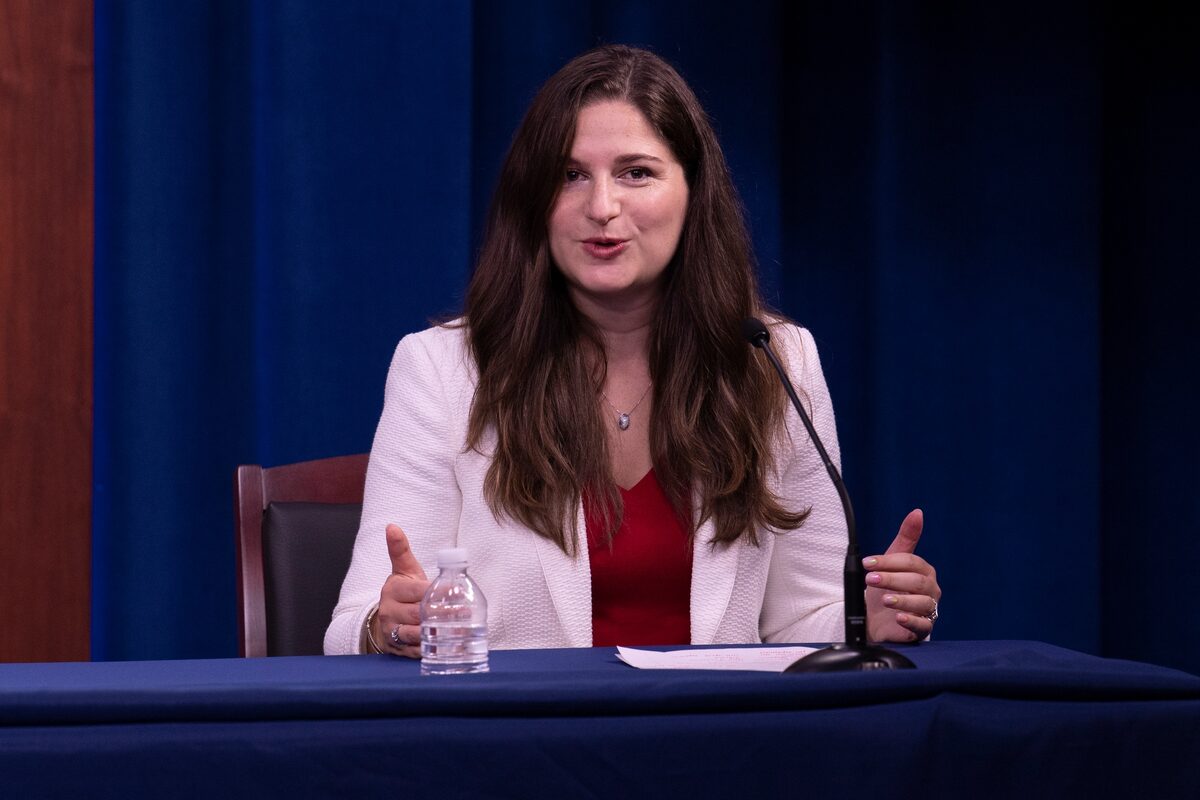
Sen. Elizabeth Warren (D-Mass.) sent letters to Defense Secretary Pete Hegseth and seven artificial intelligence companies on July 2, 2026, demanding the Pentagon release the full text of its AI contracts and confirm whether the agreements permit domestic mass surveillance or lethal autonomous weapons use. The letters, announced July 7, set a response deadline of July 20, 2026.
Background
Warren addressed her inquiry to Hegseth and to seven companies that hold or are pursuing Department of Defense AI work: Google, SpaceX, NVIDIA, Reflection, Microsoft, Amazon Web Services, and Oracle. Warren's office has pointed to reports that the Pentagon has pressured AI companies to abandon existing safeguards and accept a broad "any lawful use" standard governing how their models can be deployed. That standard is the crux of Warren's objection. In her letter she wrote that "any standard that allows for all lawful use leaves the door wide open to gross violations of domestic civil liberties and civilian harm." The letter argues that DoD carries a "strategic, legal, and moral responsibility to ensure that AI technology is deployed with meaningful constraints," and that a blanket lawful-use clause does not meet that bar. Warren's letter also cites reporting that DoD officials have said they hope the new agreements will push Anthropic — an AI company not among the seven letter recipients — to drop its own reservations about the broad lawful-use standard, a detail Warren's office points to as evidence that at least one major AI developer has resisted the terms other companies are being asked to accept.
Without the underlying contract language public, neither Congress nor outside observers can independently verify what limits, if any, apply once a company's AI models are running on military or intelligence systems. Warren's letters ask DoD and the seven firms to close that gap directly, rather than relying on characterizations of the contract terms from either side.
The request lands as the Pentagon has been expanding commercial AI partnerships across cloud computing, data analytics, and autonomous systems. Warren's inquiry treats the terms of those partnerships — not just their existence — as the open question that still needs answering.
Key Details
Warren's letters ask Hegseth to turn over the Pentagon's full contracts with the seven companies, along with information on the department's plans for fully autonomous weapons systems and details of its current safety guardrails for AI deployed in military operations, according to a summary of the letters. She is seeking confirmation of which companies' AI systems are deployed on classified networks and whether any agreement would permit use of that AI for domestic mass surveillance or for lethal autonomous weapons.
The letters also raise a separate line of inquiry specific to the Reflection AI contract award: Warren asked whether DoD officials communicated with Donald Trump Jr. or his representatives regarding that award. The question suggests Warren's office is probing not just the substance of the AI-use terms but also how at least one of the seven contracts was won.
Both the Pentagon and the seven companies named in the letters have until July 20, 2026, to respond. Warren has not indicated what recourse she intends to pursue if the deadline passes without a substantive answer.
Getting all seven companies and the department to agree on a coordinated, detailed response within roughly two and a half weeks of the initial letters represents a significant ask, particularly given that some of the underlying contract terms may themselves be treated as proprietary or classified.
The seven companies named span a wide range of DoD relationships, from cloud infrastructure providers such as AWS, Microsoft, and Oracle to chipmaker NVIDIA, launch and satellite provider SpaceX, and Google's broader technology portfolio. Reflection AI has not publicly released an AI model, making it the least established name on the list, and its inclusion alongside older, larger contractors illustrates how quickly the department has been signing agreements with a wider set of AI vendors. Because each company's relationship with DoD differs in scope, the letters effectively ask for seven separate disclosures rather than one uniform answer, which could produce uneven levels of transparency even if every recipient responds by the deadline. A cloud provider's contract, for instance, may govern access to classified data infrastructure broadly, while a chipmaker's agreement may center on hardware supply rather than direct model deployment — meaning the answers Warren receives from each company could differ substantially in both scope and specificity even though all seven are responding to the same set of questions.
What It Means for Contractors
Companies holding or bidding on DoD AI work should expect continued congressional scrutiny of contract language governing permissible uses, particularly around domestic surveillance and autonomous weapons applications. Contractors named in the letters — Google, SpaceX, NVIDIA, Reflection, Microsoft, AWS, and Oracle — now face a public deadline that puts their contract terms, however narrowly disclosed, into the political spotlight regardless of whether DoD grants a formal release.
For firms negotiating new AI agreements with the Pentagon, the letters signal that broad "any lawful use" clauses are likely to draw continued congressional pushback and may not survive as a durable standard. Companies that can point to specific, documented safety guardrails and use-case restrictions in their agreements are better positioned to respond to this kind of inquiry than those relying on general lawful-use language.
The Reflection-specific question about contact with Donald Trump Jr. adds a reputational dimension distinct from the broader AI-governance issue. Any contractor whose award process becomes the subject of a congressional inquiry into political influence should anticipate follow-up requests for communications records, regardless of whether wrongdoing is ultimately found. Companies with pending or recent DoD AI awards should review their own documentation of how those awards were made and be prepared to produce it if similar inquiries expand beyond the seven firms named here.
More broadly, the letters underscore that transparency around AI contract terms is becoming a recurring congressional flashpoint rather than a one-off request. Contractors that build clear internal documentation of permitted and prohibited AI uses — and that can articulate those limits publicly if asked — reduce their exposure to the kind of scrutiny Warren's office is now applying. Those still operating under undefined "lawful use" terms should expect that ambiguity to be treated as a liability, not a convenience, the next time a member of Congress asks for the contract itself.
