
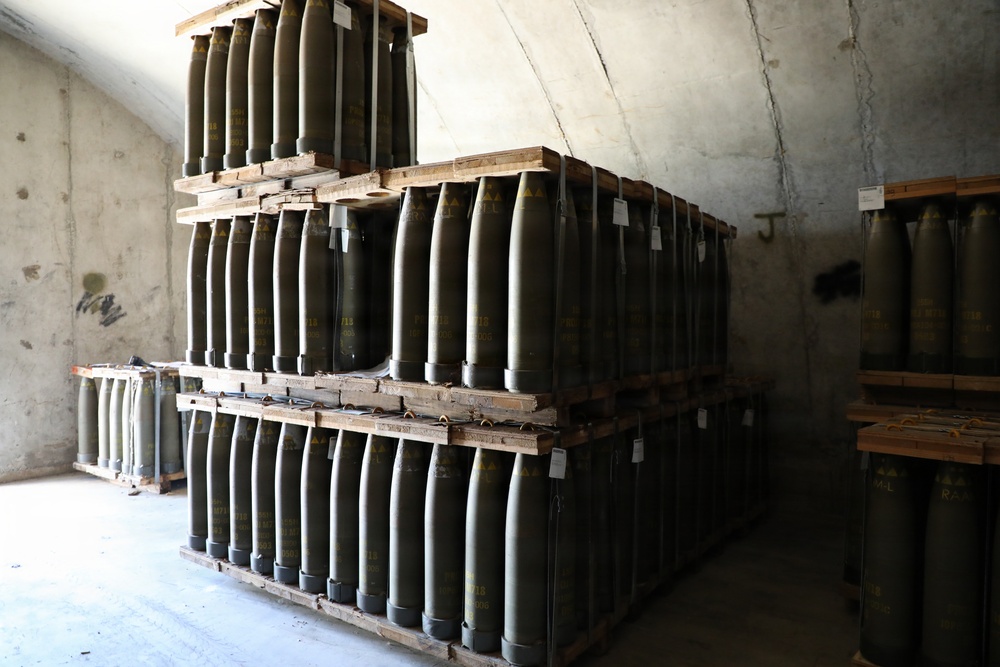
The White House transmitted an $87.6 billion supplemental spending request to Congress on June 24, 2026, directing most of the funding toward the Iran military campaign, depleted munitions stockpiles, and a $12.1 billion bloc of classified programs — one of the largest single emergency defense packages ever sent to Capitol Hill.
Background
Operation Epic Fury, the U.S. military campaign against Iran, depleted weapons inventories and consumed operational budgets at a rate that exhausted standing appropriations well before the campaign's second month. The Pentagon had already cited roughly $25 billion in costs for just the first two months of operations. The June 24 supplemental covers extended operations, replenishment of expended munitions, and a broad array of follow-on investments, pushing the total cumulative ask far beyond that earlier figure. Replenishing those stocks while simultaneously funding ongoing operations is the core mission of the supplemental — a dual requirement that historically drives larger emergency requests than single-purpose bills.
The administration delivered the request to Speaker Mike Johnson by White House letter framing the spending as addressing urgent needs generated by Operation Epic Fury. Of the $87.6 billion total, $67.15 billion — roughly 77 percent — flows to the Department of War. The remaining funds cover non-defense priorities including $11.1 billion for U.S. farmers, approximately $2 billion for Coast Guard operations in the Western Hemisphere and at the southern border, $1.4 billion for an Ebola response, $1 billion for Penn Station infrastructure, $1 billion for Delphi pension obligations, $600 million for GSA facilities projects, approximately $768 million for Department of Energy activities primarily through the National Nuclear Security Administration's Iran nuclear program termination work, and $500 million for restoration and construction projects in Washington, D.C.
Congressional passage is far from certain. Both chambers have passed war powers resolutions directing President Trump to halt Iran military operations, and Republican leaders face slim margins in both chambers. Senate Appropriations Committee ranking member Patty Murray stated that “President Trump launched a reckless and costly war with Iran — without authorization from Congress or the support of the American people.” Democrats in both chambers have signaled they will not approve the spending without conditions, complicating the administration's push for rapid appropriation.
Key Details
The Department of War's $67.15 billion breaks down across ten line items:
- $21 billion — munitions replenishment, covering weapons expended during Operation Epic Fury
- $17.3 billion — direct operational costs for Operation Epic Fury
- $12.1 billion — classified programs
- $5.1 billion — cybersecurity and autonomous systems
- $4 billion — airborne moving target indication (AMTI) and a space data network backbone
- $2.4 billion — drones
- $1.7 billion — readiness and sustainment
- $1.5 billion — fuel
- $1.2 billion — administration priorities
- $800 million — National Guard support
One line conspicuously absent: military construction funding to repair base damage sustained during operations. That category is expected to surface in either a follow-on supplemental or the FY2027 base budget request.
The $12.1 billion classified tranche ranks as the third-largest line item after munitions replenishment and operational costs. Classified supplementals of this magnitude typically cover signals intelligence infrastructure, cyber offensive programs, space-based collection assets, and special access programs. Public budget justification documents will not detail how that money is spent.
What It Means for Contractors
The supplemental creates simultaneous demand signals across multiple defense sectors. The $21 billion munitions replenishment line is large enough to accelerate production ramps across all major precision strike and missile defense programs. The funding confirms that the rate of consumption during Operation Epic Fury has outpaced existing production capacity and that sustained investment will be required through at least the end of this decade.
The $12.1 billion classified tranche represents the most opaque but potentially the largest near-term opportunity for primes with established security clearances and existing classified contract vehicles. Contractors already embedded in sensitive programs through prior authorized agreements are better positioned to access this funding quickly than those requiring new classified relationships or vehicle awards from scratch.
The $5.1 billion for cybersecurity and autonomous systems, combined with $2.4 billion for drones and $4 billion for AMTI and space data network infrastructure, opens meaningful near-term opportunities for defense technology companies that operate in shorter development cycles than traditional primes. The drone allocation alone — $2.4 billion — is large enough to generate both prime awards and a substantial tier of hardware, software, and integration subcontracts. Vendors with existing IDIQ contracts tied to the Defense Innovation Unit or other rapid-acquisition pathways stand to move faster than those entering cold.
The $4 billion for AMTI and the space data network backbone targets the persistent gap between sensing moving ground threats and delivering actionable targeting data in near-real time. Integrators building radar fusion software, kill-chain data links, and space-to-ground relay architecture benefit most directly from that line.
The approximately $768 million for Department of Energy activities, primarily through the National Nuclear Security Administration's Defense Nuclear Nonproliferation account, covers nuclear termination activities related to Iran's weapons program. That work flows through the national laboratory system and management and operating contractors rather than through traditional Department of War acquisition channels. Contractors with active DOE task order vehicles or existing presence in the national laboratory supply chain hold the clearest path to that funding.
Coast Guard's approximately $2 billion for Western Hemisphere and border operations opens maritime patrol, surveillance, and logistics contracts for companies that specialize in the homeland security market and work primarily with DHS rather than the Department of War.
Timing depends on the pace of congressional action. If the supplemental clears both chambers before the August recess, contracting officers could begin obligation activity in the third quarter of fiscal year 2026. If opposition extends the debate into the fall — a real possibility given the war powers votes already cast in both chambers — new awards slide to the fourth quarter or into FY2027. Contractors should treat floor scheduling milestones as the leading indicator for when to begin finalizing capture plans against this supplemental's line items.
Sources
- White House Supplemental Request Letter to Speaker Johnson — Whitehouse.gov
- White House sends $87.6B supplemental to Congress, with $67B for defense — Breaking Defense
- White House asks Congress for $87.6 billion, mostly for Iran war — Defense News
- Senator Murray on Trump's Supplemental Request — Senate Appropriations Committee
