
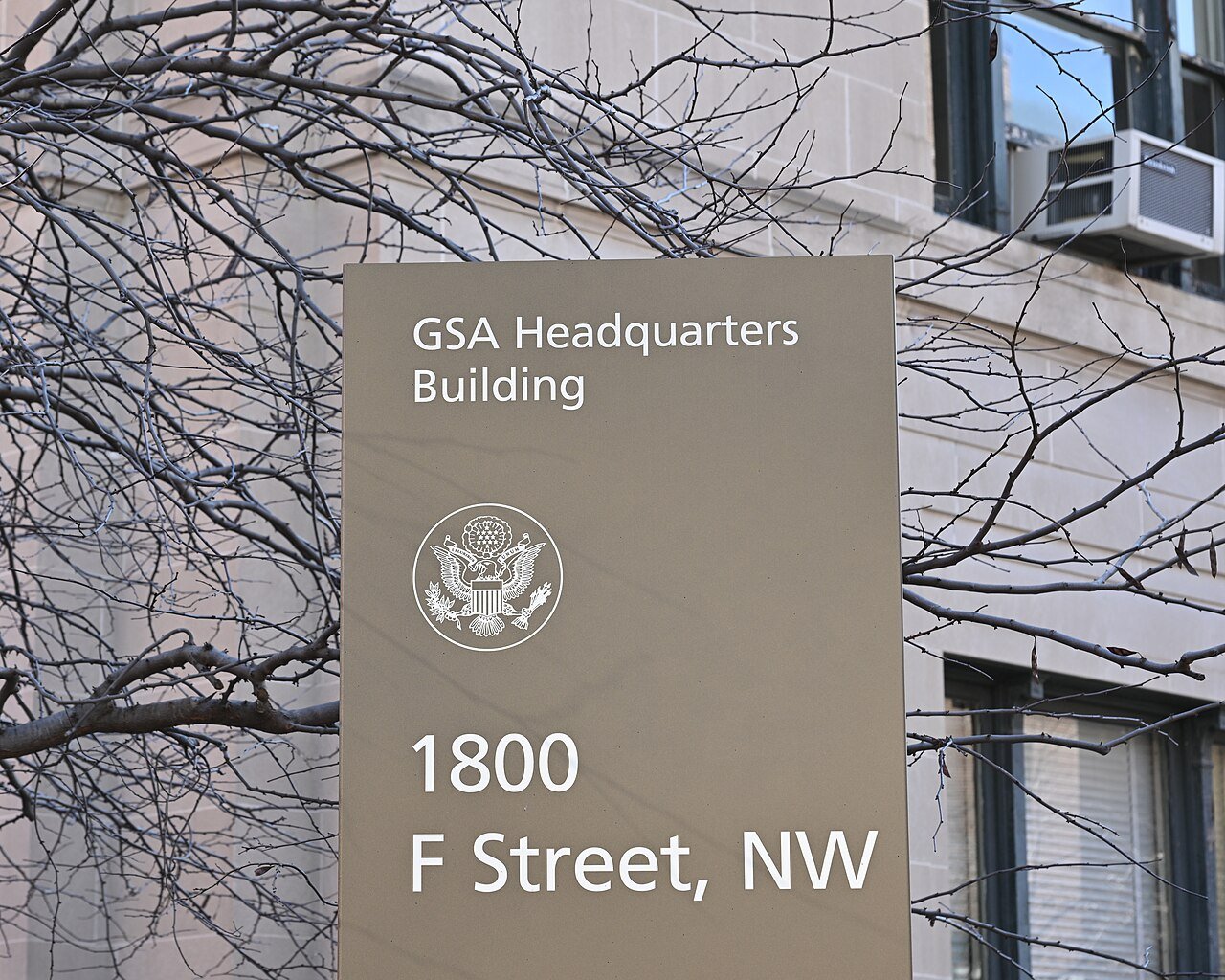
Nonprofit agencies that sell AbilityOne products through GSA schedules must meet the Trade Agreements Act on those vehicles starting Nov. 12, 2026, and must prove country of origin before they can add products or change prices. The U.S. AbilityOne Commission set those rules in Directive 27-01, dated Oct. 8, 2026. Separately, a GSA official told Nextgov/FCW the agency had already pulled 244 Chinese products from a government procurement list in a "first wave of action, with more to come in the future."
The directive modifies Commission Directive 25-01 of Sept. 10, 2025, and supplements Directive 26-02 of May 1, 2026. It ties the program to Executive Order 14392, Ensuring Truthful Advertising of Products Claiming to be Made in America. Commission Chairperson Christina Brandt signed it, and it takes effect immediately.
How GSA's Class Deviation CD-2026-03 Ends the AbilityOne TAA Exception
The trigger is a GSA class deviation issued Aug. 14, 2026. The directive describes its effect directly: "GSA’s August 14, 2026, class deviation (CD‑2026‑03) removes the TAA exception for AbilityOne and Federal Prison Industries (FPI) items on GSA contracts, making TAA compliance mandatory for all AbilityOne products offered through certain GSA contracting vehicles."
Under the directive, contracting officers may amend solicitations or modify existing awards to enforce the new standard across schedules and blanket purchase agreements, after giving authorized nonprofit agencies 90 days' notice under 41 CFR 51-6.12. Nonprofit agencies are expected to verify country of origin, keep documentation, and certify compliance or a valid exception "to avoid removal from GSA schedules or BPAs."
Beginning Nov. 12, products listed on a GSA Multiple Award Schedule or BPA "must be TAA-compliant regardless of dollar amount," according to the directive. Two certification gates follow:
- Before a new product is added to the Procurement List, the recommended nonprofit agency must certify through its central nonprofit agency that the product is TAA compliant or has received or requested a nonavailability waiver.
- For existing products, a price change notice may not be published without certification, an approved nonavailability waiver, or a waiver request from the ordering activity.
Starting at the end of the first quarter of fiscal 2027, the Commission's Directorate of Business Operations will send GSA a quarterly list of every product it has validated.
Why the Country-of-Origin Fields Read "N/A"
Part of the cleanup involves data GSA itself shaped. The directive says GSA had told central nonprofit agencies to enter XX or ZZ in the Federal Acquisition Service Verified Product Portal, which produces N/A country codes, and that GSA has not issued further written instructions. Brandt instructed the central nonprofit agencies to correct those fields with the actual country of origin, supplied by the producing nonprofit, by Nov. 6, 2026.
By the same date, each central nonprofit agency must submit to the Commission's executive director a plan for building country-of-origin assessments into its compliance program. The plan must cover actions taken so far, how verification will fold into routine activities such as qualification assessments, and a timeline for full implementation in fiscal 2027.
What GSA Says About the 244 Chinese Products
GSA's removal followed its call for an audit of AbilityOne, the mandatory-source list created under the Javits-Wagner-O'Day Act, Nextgov/FCW reported on Oct. 9. GSA asked the Commission to verify country-of-origin claims after finding Chinese flash drives, docking ports and portable charging packs on the list, and gave it a Nov. 12 deadline to correct listings and document how it will run continuous reviews.
"GSA intends to remove all of AbilityOne’s Chinese product offerings from its catalogues," the GSA official told Nextgov/FCW, adding that many had been present for 10 to 15 years. "Because GSA controls government-wide buying platforms, removal of Chinese products from our catalogues will help every agency phase these products out," the official said. The official did not disclose a list of the 244 products and could not say whether or how agencies plan to remove Chinese products.
The Commission's Pushback on "Essentially the Same"
The directive followed a sharper exchange. In a Sept. 4, 2026, letter to GSA Administrator Edward Forst, Brandt answered GSA's Aug. 14 letter point by point. "The Commission respectfully disagrees with the assertion that application of the Essentially the Same (ETS) policy results in American‑made products being replaced by foreign‑sourced items," she wrote. ETS, she said, "does not authorize, encourage, or permit the substitution of domestic products with foreign alternatives."
Brandt said the AbilityOne mission "has created 41,000 jobs for Americans who are blind or have significant disabilities, including veterans." She pointed to Directive 26-02, which mandated country-of-origin verification and certifications for all additions and price changes, and to a process launched in July 2026 in consultation with GSA to ensure all Procurement List products meet BAA or TAA standards.
The letter also flagged an equity issue: the class deviation "does not include small business set-asides," Brandt wrote, and so imposes stricter requirements on AbilityOne and Federal Prison Industries than on other vendors. She asked GSA to form a joint country-of-origin working group.
Purchase Exceptions and Cost Increases After Nov. 12
The directive opens a path for agencies to buy commercial goods instead. On request, the Commission will issue GSA a Purchase Exception on or immediately after Nov. 12 for any non-TAA-compliant product on a MAS contract or BPA lacking an approved waiver or waiver request, if the contracting activity shows the product is available from one or more TAA-compliant commercial sources in the required quantities and timeframe.
Limits apply. Requests below the simplified acquisition threshold go through the responsible central nonprofit agency; larger ones need Commission approval. If a nonprofit is already switching to a compliant source and the transition will take less than six months, the exception should not be granted. TAA-related exceptions should not be given for AbilityOne products sold through GSA's Commercial Platform Programs or channels where individual orders fall below the FAR 25.402(b) thresholds.
Nonprofit agencies that pay more to switch suppliers can document those costs, direct or indirect, through a GSA contract modification, and the Commission will weigh substantiated increases when setting fair market price.
What It Means for Contractors
AbilityOne nonprofit agencies and their authorized distributors have under five weeks to confirm sourcing on every schedule and BPA item. Any product they cannot certify as TAA compliant, or cover with a waiver request, risks removal or a Purchase Exception that lets the buying agency go to a commercial source. Commercial schedule holders selling TAA-compliant equivalents of AbilityOne items may see new openings once exceptions start flowing after Nov. 12. Central nonprofit agencies face the earliest clock: corrected portal data and a compliance plan are due Nov. 6. Disputes between GSA and a nonprofit over TAA application or source availability go through Commission Policy 51.211(6)(c) unless the Commission and GSA agree otherwise in writing.
Sources
- U.S. AbilityOne Commission Directive 27-01: Transparency, Accuracy, and Accountability in Country-of-Origin Documentation (Oct. 8, 2026)
- GSA removes 244 Chinese products from procurement list (Nextgov/FCW, Oct. 9, 2026)
- AbilityOne Commission Chair Brandt response to GSA Administrator Forst (Sept. 4, 2026)
