
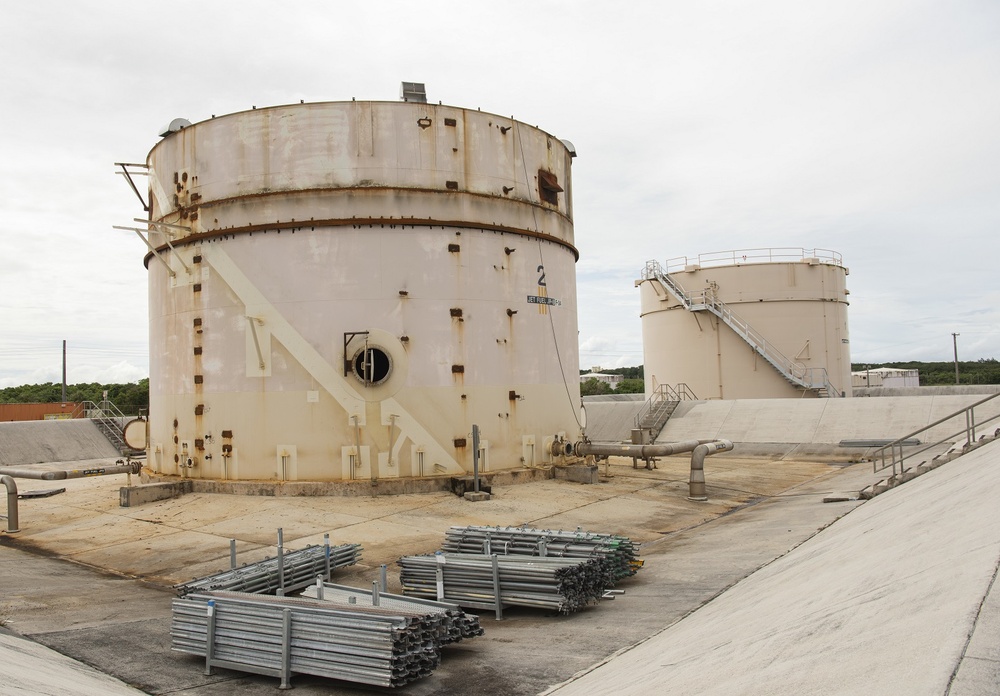
Air Force engineering and logistics support at bases from Hawaii to Guam to mainland Japan is locked in for the next five years, and two of the three winners are Native-owned firms rather than the usual defense-contracting giants. Under a contract announced by the Department of War, Cherokee Nation Government Solutions LLC of Tulsa, Oklahoma, SSE BB&E JV LLC of San Antonio, Texas, and KIRA Services LLC of Juneau, Alaska, were named awardees on a $400,000,000-ceiling, multiple-award indefinite-delivery/indefinite-quantity contract covering advisory and assistance work throughout the Pacific theater.
The five-year ordering period opens September 1, 2026, and runs through September 1, 2031. The Air Force's 766th Enterprise Sourcing Squadron, based at Joint Base Pearl Harbor-Hickam, manages the vehicle, which was competed and drew five offers before the three winners were selected. Two of the three companies are tribally owned enterprises: Cherokee Nation Government Solutions is a Tribal 8(a) company wholly owned by the Cherokee Nation through Cherokee Federal, and KIRA Services is owned by Tlingit Haida Tribal Business Corp, a tribally owned enterprise tied to the Central Council of the Tlingit and Haida Indian Tribes of Alaska. That ownership status carries special federal contracting preferences under the Small Business Administration's 8(a) program and similar set-aside authorities for tribally owned businesses. SSE BB&E JV rounds out the trio as a joint venture of SpecPro Sustainment and Environmental and BB&E, giving the vehicle a mix of tribal-enterprise and joint-venture ownership structures rather than three identical corporate forms.
What the $400 Million IDIQ Covers
The contract language is broad by design, typical of a multiple-award IDIQ meant to serve as a standing pipeline for years of task orders rather than a single defined project. According to the contract notice, the award "provides for advisory and assistance services for comprehensive engineering, logistics, program management, and project support throughout the Pacific theater." That means the three firms will compete against each other for individual task orders as specific needs arise at Air Force installations across the region, rather than splitting a fixed scope of work three ways up front.
The Pacific theater designation points toward some of the Air Force's busiest and most strategically sensitive installations. Task orders issued under the vehicle are expected to reach sites including Joint Base Pearl Harbor-Hickam in Hawaii, Andersen Air Force Base in Guam, and the Kadena, Yokota and Misawa air bases in Japan — a span that covers some of the service's most heavily used forward and logistics-hub installations in the Indo-Pacific. Engineering and program-management support at those bases covers facility upkeep, infrastructure projects, and the logistics and project-support work that keeps runways, hangars and support buildings operational for forward-deployed squadrons.
Why Two Tribal Firms and a Joint Venture Split the Award
Multiple-award IDIQs are a common Pentagon tool for exactly this kind of recurring, geographically dispersed advisory work: rather than betting years of task orders on one contractor, the government pre-qualifies several and then runs smaller, faster competitions for individual orders as they come up. Filling two of the three slots with tribally owned enterprises is notable, though not unprecedented — federal acquisition rules give tribally owned 8(a) firms streamlined, and in some cases sole-source-eligible, paths into government work that other small businesses don't have.
Trade coverage of the award framed the ownership structure as central to why it matters beyond the dollar figure. As GovCon Wire reported of Cherokee Federal, the parent organization of Cherokee Nation Government Solutions, "the profits generated through its federal contracting work are channeled back into the tribe to fund education, healthcare and infrastructure initiatives that benefit Cherokee citizens and the broader Oklahoma community." KIRA Services' parent, Tlingit Haida Tribal Business Corp, follows a similar model, channeling its proceeds back to the Central Council of the Tlingit and Haida Indian Tribes of Alaska to fund scholarships and services for tribal citizens. That reflects the policy rationale behind the preference programs these two companies compete under: revenue from federal contract work is designed to flow back into tribal government services rather than exclusively to private shareholders, the core distinction between a tribally owned enterprise and a conventional small business.
How the Task-Order Competition Will Work
Because this is a multiple-award vehicle rather than a single-award contract, none of the three firms is guaranteed a share of the $400 million ceiling. The 766th Enterprise Sourcing Squadron will issue individual task orders against specific engineering, logistics or program-management requirements as they arise at Pacific bases, and Cherokee Nation Government Solutions, SSE BB&E JV and KIRA Services will each have the opportunity to bid on those orders as they're released over the five-year ordering period. That structure gives the Air Force flexibility to match contractor capacity and pricing to individual projects rather than locking in one firm's rates and staffing for the full ceiling amount up front, and it gives the three awardees a standing shot at recurring revenue without any single one controlling the whole vehicle.
The competitive process that produced the three winners — five offers submitted, three selected — suggests a reasonably deep field of tribally owned and small-business competitors for Pacific-theater engineering work. The multiple-award structure also means the government retains leverage to keep pricing competitive across the five-year period, since each task-order competition re-tests whether awarded rates still hold up against the other two firms.
What It Means for Contractors
For engineering, logistics and program-management firms eligible for 8(a), Alaska Native corporation, or tribally owned set-aside status, this award is a reminder that the Pacific theater buildout is generating steady, multi-year advisory-services demand beyond the headline weapons-platform contracts that typically dominate defense-award coverage. A $400 million ceiling spread across three firms and five years works out to meaningful annual task-order volume if the Air Force uses the vehicle consistently, and the base list — Pearl Harbor-Hickam, Andersen, Kadena, Yokota, Misawa — gives smaller subcontractors and teaming partners a concrete set of locations to watch for follow-on work.
For larger, non-tribally-owned firms that also compete for engineering and logistics support work, the award is a reminder that tribally owned enterprises and joint ventures are landing a meaningful share of this category of Pacific-basing infrastructure spending. Companies without 8(a) or tribal ownership status will need to look for teaming or subcontracting opportunities with the three primes, or focus their own pursuit efforts on task orders and vehicles outside this specific award, if they want a piece of the same Pacific-theater engineering demand.
