
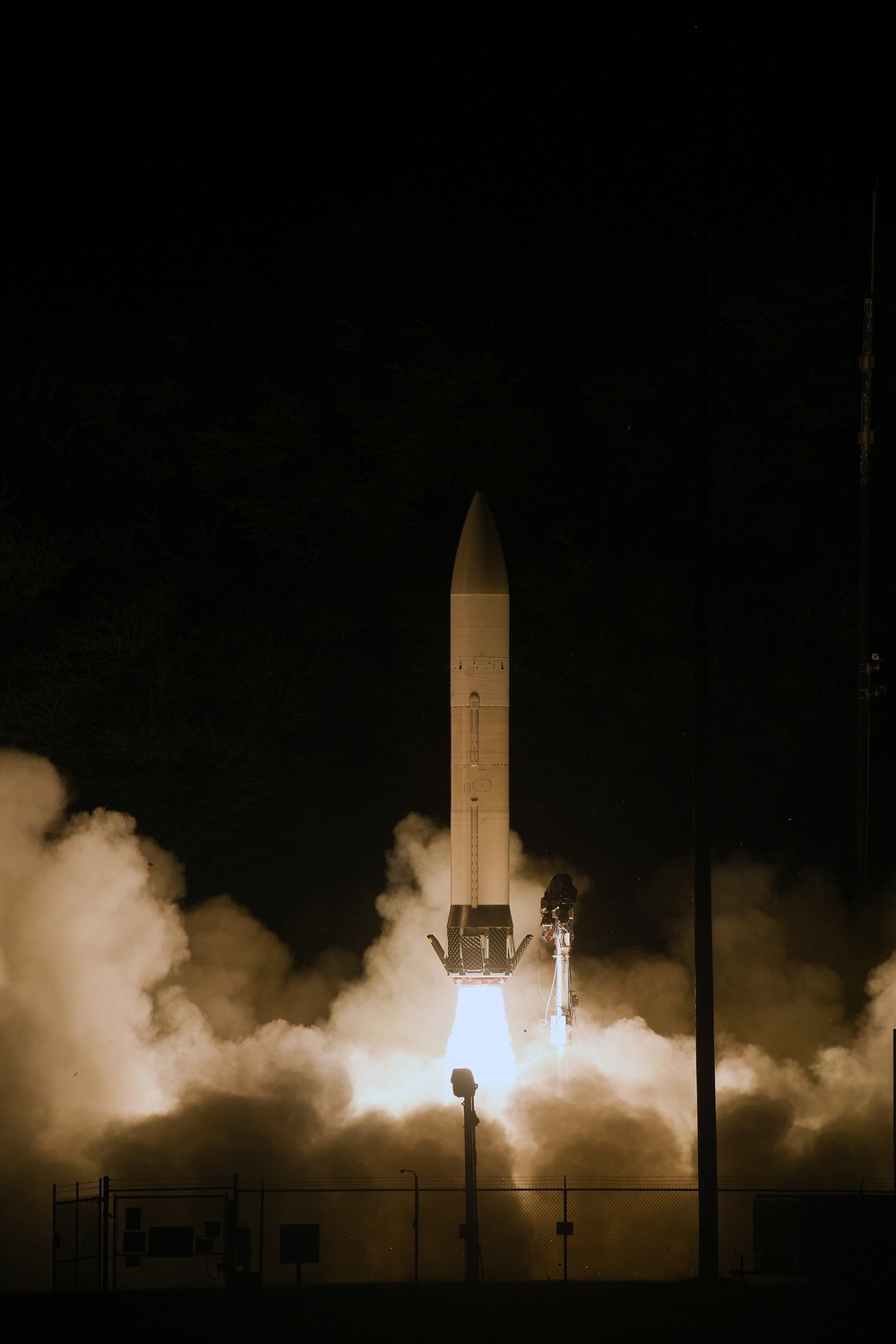
The U.S. Navy has awarded Castelion Corp. a $23,350,000 contract for 50 pre-production Blackbeard hypersonic prototype vehicles under the Multi-domain Affordable Capability Expansion program, according to Department of Defense contract data reported by GlobalSecurity.org. The MACE program aims to develop and field hypersonic strike weapons at scale and at costs compatible with high-volume procurement — a fundamental departure from earlier hypersonic programs that pursued maximum performance at the expense of affordability and producibility. The Blackbeard vehicle is designed as an affordable air-launched hypersonic glide vehicle providing fleet strike options against hardened and time-sensitive targets that increasingly demand hypersonic speed to reach before adversary forces can reposition or take cover.
Castelion Corp., a California-based defense technology startup, has emerged as a significant player in the Navy's push to develop hypersonic weapons at costs meaningfully lower than traditional large-program acquisitions. The company applies commercial aerospace manufacturing methods and supply chain practices to defense hypersonics, an approach the Navy has actively sought through MACE, which was structured to attract non-traditional defense contractors with innovative approaches to hypersonic vehicle production. Castelion's business model centers on designing the Blackbeard vehicle for manufacturability from the outset rather than optimizing purely for performance and then attempting to reduce costs through process improvements after the design is fixed.
The MACE Program and Hypersonic Urgency
The MACE program represents a deliberate shift in Navy hypersonic weapons development. Unlike earlier programs that pursued exquisite, expensive capabilities optimized for maximum performance, MACE focuses on affordability, rate production, and fielding speed. The underlying logic is straightforward: a hypersonic weapon costing $50 million per round will never be bought in quantities that matter strategically, whereas a weapon costing $5 million per round can be procured in numbers that genuinely affect an adversary's planning calculus and create real targeting dilemmas across a theater of operations.
The Blackbeard vehicle is designed to achieve Mach 5 or higher speeds after air launch, using a boost-glide trajectory that makes it extremely difficult to intercept with existing surface-to-air missile systems. Air launch from existing Navy carrier-based aircraft removes the need for dedicated launch platforms and allows integration into current carrier air wing strike packages without major modifications to delivery aircraft. This compatibility with existing platforms is a key affordability driver, since it avoids the costs of developing and fielding a new delivery aircraft specifically for the hypersonic weapon.
The fifty pre-production vehicles funded by this award will be used for envelope expansion testing, integration qualification, and production process refinement. Pre-production quantities at this scale allow the program to validate manufacturing processes under realistic production conditions, identify and resolve quality issues before full-rate production commitment, and generate the flight test data needed to support an operational fielding decision. The Navy has been explicit that MACE is intended to move from prototype to operational inventory faster than traditional acquisition programs, and the current award represents the penultimate phase before a production contract decision.
Castelion's Manufacturing Approach
Castelion's design philosophy for the Blackbeard vehicle draws on principles from commercial aerospace manufacturing, including modular design, digital manufacturing workflows, and supply chain practices from the commercial aviation sector. These approaches contrast with traditional defense hypersonics development, which has historically relied on purpose-built manufacturing processes, military-specification materials, and program-specific manufacturing equipment developed specifically for government programs at significant additional cost.
The company's strategy involves deliberate performance trade-offs — a vehicle designed for low-cost, high-rate production may sacrifice some performance margin compared to a design optimized purely for performance. The Navy has signaled acceptance of those trade-offs, given the strategic priority of fielding hypersonic weapons in militarily meaningful quantities rather than smaller numbers of maximally capable but unaffordably expensive rounds that are held in reserve for only the highest priority targets.
Castelion has also benefited from the Navy's use of Other Transaction Authority mechanisms for MACE, which give non-traditional defense firms more flexibility to use commercial business practices, protect proprietary technical data, and move faster through development without the full burden of military specifications that increase costs substantially for firms not already structured for traditional defense contracting. OTA has been essential to attracting Castelion and similar non-traditional firms to compete for MACE work.
Contract Structure and Future Outlook
The $23.35 million award for 50 vehicles implies a per-unit cost of approximately $467,000 per prototype vehicle — a striking contrast to previous-generation hypersonic programs where per-round costs measured in the tens of millions. These are pre-production prototypes not yet optimized for production economics, so actual production round costs will differ. However, the trajectory strongly suggests the Navy believes it can achieve hypersonic weapons costs well below those of first-generation programs. The Navy has indicated that MACE is intended to be a production program, and successful completion of the pre-production phase is expected to lead to a follow-on production contract for operational quantities.
What It Means for Contractors
The Castelion Blackbeard award confirms that the Navy is willing to award significant contracts to non-traditional defense firms when those firms offer genuinely differentiated technical approaches and compelling cost profiles. Companies with commercial aerospace manufacturing experience should recognize that MACE and similar programs represent real opportunities, not token gestures toward non-traditional contractors in a market otherwise controlled by traditional prime contractors.
The emphasis on affordability throughout MACE signals a broader shift in Navy acquisition philosophy for munitions and weapons. Contractors across the weapons space — propulsion, guidance, structures, thermal protection, seekers — should expect continued pressure to reduce unit costs and design for production rate. Firms that can demonstrate low-cost manufacturing approaches for hypersonic-compatible materials and components are well positioned for subcontract work supporting MACE and similar programs that are proliferating across the defense services.
The use of OTA for MACE suggests the Navy will continue applying these flexible acquisition mechanisms for rapid capability development in emerging technology areas. Contractors who have not yet engaged with OTA agreements should familiarize themselves with how they differ from traditional FAR-based contracting, including data rights provisions, IP protections, and reporting requirements. Understanding OTA is increasingly essential for any firm seeking to compete in the defense emerging technology space, where OTA has become the preferred vehicle for attracting non-traditional industrial partners with innovative technical approaches.
