
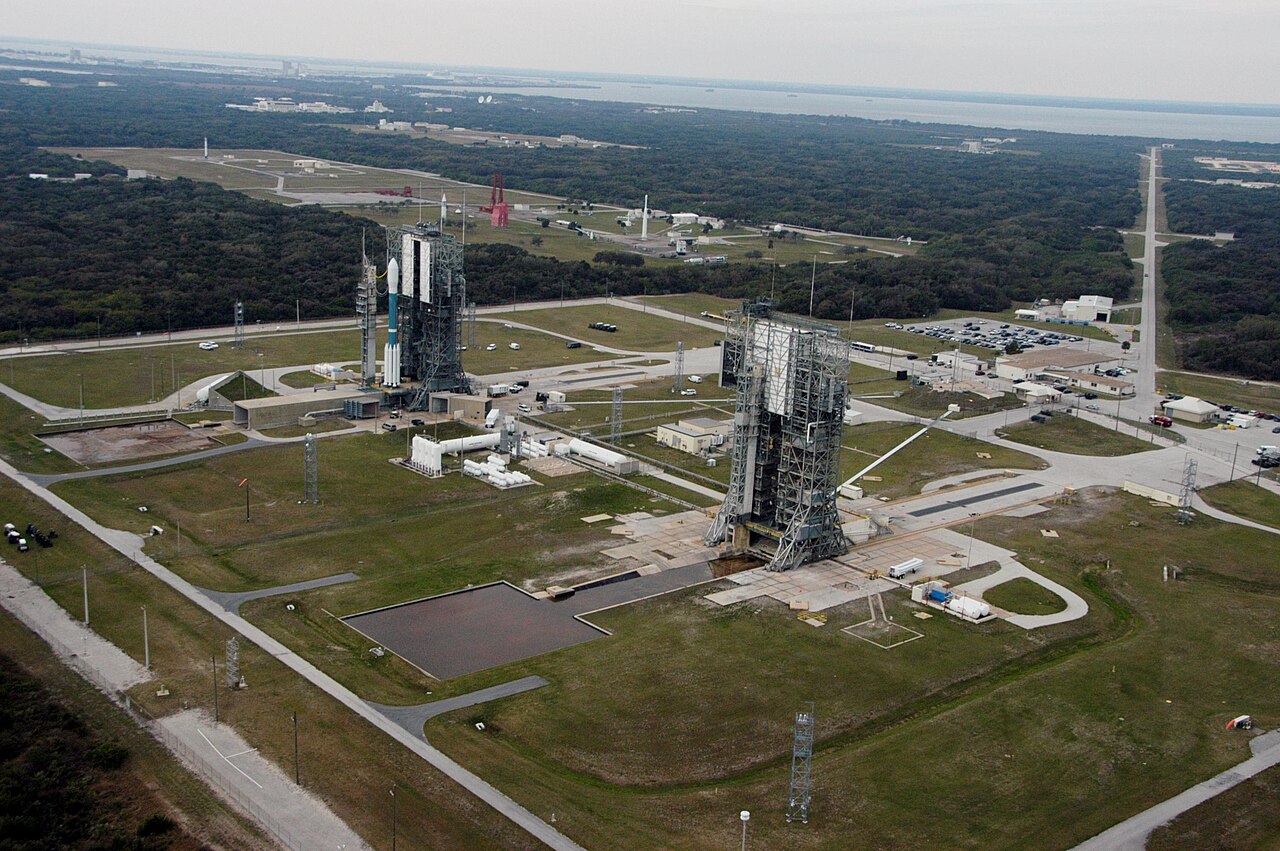
The Pentagon is moving to put federal debt behind a second commercial launch pad on Florida's Space Coast, a bet that more pad capacity at Cape Canaveral will help meet the rising demand for launch that the Department of War says it sees from commercial and Space Force customers. The Department of War's Office of Strategic Capital (OSC) announced a $150 million conditional loan commitment on Oct. 26, 2026, with Stoke Space Technologies, Inc., a U.S. launch company developing fully reusable rockets. The proposed loan, alongside private capital, would support the buildout of the company's second launchpad at its existing launch complex at Cape Canaveral Space Force Station.
The deal is not yet money in the bank. The commitment is conditional, and Stoke still has a list of hurdles to clear before financial close. It is also not a procurement contract: OSC is acting as a lender, not a buyer of launch services. That distinction matters for anyone reading the announcement as a signal about future Space Force task orders.
What the $150 Million Would Build at Cape Canaveral
Stoke already operates a launch complex at Cape Canaveral. According to Jordan Sebold, Senior Managing Director (Investments) at OSC, the company's existing infrastructure there supports its Nova Pathfinder medium-lift rocket. The new pad would support the systems and facilities required for a larger vehicle, the Nova Block 2 rocket, which the department describes as "currently in development."
That sequencing tells the story of the loan. Stoke has not yet flown Nova. Defense Daily reported that the potential financing "closely follows a $1 billion Series E raise that Stoke said would help support the first launch of its Nova pathfinder rocket in early 2027". The OSC money, if it closes, would let the company build ground infrastructure for its next-generation vehicle in parallel with bringing its first one to the pad, rather than waiting for flight results before breaking ground.
"By supporting the construction of additional launch infrastructure, this commitment would enhance the overall capacity and resilience of the commercial space industrial base," Sebold said.
OSC framed the commitment as part of a broader push to expand U.S. launch capacity, which it said is required to meet rising demand for commercial and national security space launch by the United States Space Force. The release describes space launch as a designated critical technology category that is vital to national security and economic resilience, which is the category under which this loan falls.
Why the Office of Strategic Capital Is Lending Instead of Buying
This deal shows OSC acting as a financier rather than a customer. Under this structure, the department can support the industrial base without committing to buy a specific product. For a company like Stoke, a federal loan can lower the cost of capital on long-lead physical assets such as pads, propellant systems and integration facilities, where private investors may be reluctant to carry the full risk before a rocket has flown. That is general reasoning about how such loans work; the release does not itemize what the money would pay for beyond the second launchpad buildout.
David A. Lorch, Director of the Office of Strategic Capital and Senior Advisor to Deputy Secretary of War Steve Feinberg, tied the deal directly to White House space policy. "OSC's conditional investment with Stoke Space aligns with President Donald J. Trump's National Space Transportation Policy, which calls for expanded U.S. launch infrastructure," Lorch said. "By expanding domestic launch facility capacity, this investment enables launch service providers to ensure our commercial and defense partners have reliable, high-cadence access to space."
Emil Michael, Under Secretary of War for Research and Engineering, pushed the national security framing further. "Fulfilling President Trump's mandate for American space superiority requires scaling commercial launch capacity for our warriors at the Space Force," Michael said. "This OSC financing would help provide the robust infrastructure needed to maintain American dominance in the cislunar domain."
What Stoke Must Do Before the Loan Closes
The department's release is explicit that the announcement opens a process rather than ending one. "The conditional loan commitment specifies additional steps Stoke Space must complete before financial close, including satisfying various financial, legal, technical, investment, due diligence, and other requirements," the release states.
The department's release does not give a target date for financial close, an interest rate, a repayment term, or a breakdown of how much private capital would sit alongside the federal loan. Those terms will determine how much of the pad's cost the government actually carries. Until close, the $150 million figure is a commitment subject to conditions, not a disbursement.
The conditions also create potential schedule exposure. Technical due diligence on a pad designed for a rocket that is still in development could take time, and any slip in the Nova Pathfinder's early 2027 first launch, the timing Defense Daily attributes to Stoke, could affect how lenders and the department view the Block 2 timeline. That is analysis, not something either source states.
What It Means for Contractors
The Stoke commitment carries several practical signals for firms working in and around the space launch market.
- Ground infrastructure is fundable. This commitment suggests OSC is willing to lend against launch pads, not just against hardware that flies. Construction firms, propellant and fluid-systems suppliers, and integration vendors at Cape Canaveral could see subcontract work from a second Stoke pad buildout if the loan closes, though neither source names any contractors or procurement plans.
- Financing is not demand. A loan commitment does not guarantee Stoke future Space Force missions, and OSC is acting as a lender here, not a launch customer. Companies pricing teaming arrangements with Stoke should treat any national security launch awards as a separate matter from this financing.
- Watch the conditions. Because the release lists financial, legal, technical, investment and due diligence requirements, subcontractors negotiating with Stoke for pad work should tie their own schedules to financial close rather than to the Oct. 26 announcement date.
- OSC is an option for other critical-technology firms. Space launch is a designated critical technology category for OSC. Companies with capital-intensive facilities in a designated category can study this deal's structure, a federal loan paired with private capital, as a possible template for their own applications.
- Policy alignment counts. Both Lorch and Michael anchored the deal in administration policy on launch infrastructure and space superiority. Firms considering OSC financing would be wise to show how directly a project maps to stated White House and department priorities.
For the Space Coast more broadly, a second Stoke pad would add to the launch infrastructure available at Cape Canaveral Space Force Station at a time when the department says demand from both commercial and national security customers is rising. Whether that capacity materializes depends first on the company clearing the loan's conditions, and then on Nova reaching orbit.
