
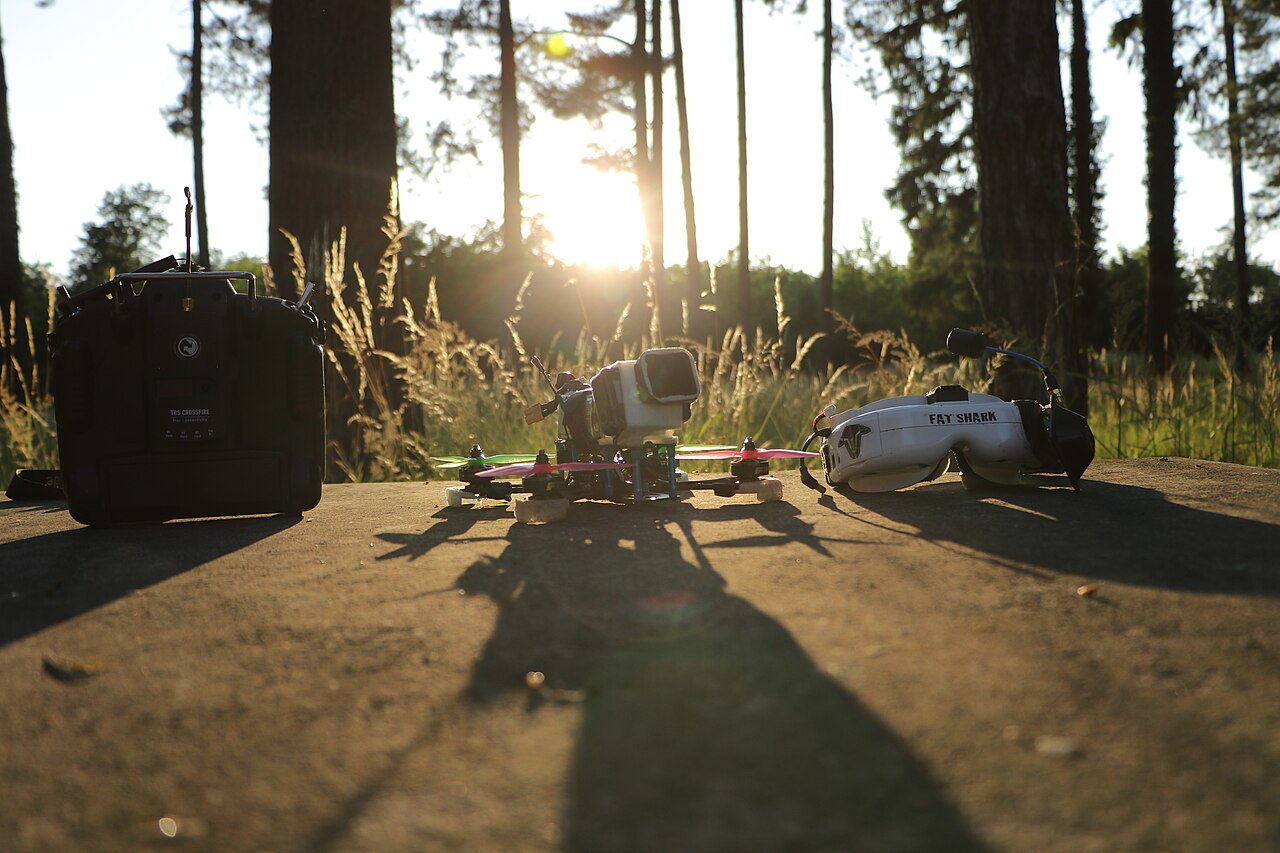
Six companies are now funded to mature the small, expendable strike drones that U.S. special operations tactical units may eventually carry, and the awards are modest. U.S. Special Operations Command (USSOCOM) awarded contracts to six companies for Phase III of its Modular Kinetic Lethal Drone (MKLD) program, Defense Daily reported, with individual awards ranging from $111,640 to $3.1 million. Together the six reported figures add up to roughly $8.7 million.
According to Defense Daily, SOCOM made the awards "to further mature their solutions for small, first person view attritable kinetic drones for use by tactical units." The outlet reported that SOCOM provided the award information to it directly. Only the opening paragraph of the Defense Daily story is publicly readable without a subscription, so details beyond the awardee list and amounts are not available to us.
How the $8.7 Million MKLD Phase III Pot Breaks Down
Defense Daily lists the six awardees and their amounts:
- Neros: $3.1 million
- DFA Systems: $2.3 million
- ModalAI: $1.7 million
- EchoMAV Technologies: $1 million
- XTEND AI Robotics: $497,748
- Vector: $111,640
The amounts vary widely. Neros's award is almost 28 times Vector's. More than 60 percent of the money sits with the top two awardees, Neros and DFA Systems, and the three smallest awards combined come to about $1.6 million. By any standard of Pentagon drone spending, these are small contracts. Defense Daily describes them as funding to further mature each company's solution, which is development money rather than a fielding buy.
The publicly readable portion of the Defense Daily report does not give the contract vehicle, the period of performance, or whether production options are attached, so readers should not assume any of those. What the report does establish is that the awards fall under Phase III of MKLD.
What SOCOM Wants From a Modular Kinetic Lethal Drone
MKLD covers first-person-view (FPV) drones, the camera-guided quadcopters a pilot flies through a headset or screen into a target. Defense Daily describes the target as attritable kinetic drones, meaning cheap enough that a unit can afford to lose them, for use by tactical units.
XTEND has described the program in more detail than the Defense Daily excerpt does. Its press release, issued September 23, 2026, says the program "is designed to provide small tactical units with modular, recoverable and reusable precision-strike capabilities across indoor, confined-space, urban and outdoor operational environments." The words recoverable and reusable stand out. A kinetic drone that can come back unexpended works more like a reusable munition-delivery system than a single-use loitering round, which could affect how many airframes a unit needs and how SOCOM might eventually buy them.
The company also says that "Phase III builds on previous USSOCOM investment, development, testing and operational feedback and will further mature the MKLD capability." That wording applies to XTEND's own path, but it suggests Phase III is not a first look: XTEND reached it through earlier SOCOM investment and testing. Whether the other five awardees followed the same route is not stated in the sources we could read.
XTEND's Striker and Scorpio Package for MKLD
XTEND says its MKLD solution "brings together XTEND's Striker, Scorpio 500 and Scorpio 1000 platforms with a common Ground Control Station and XTEND's XOS operating system." In practice that means the company is offering several airframes under one controller and one software layer rather than a single drone. This fits the program's modular label. An operator could change the airframe to suit the mission and keep the same control station.
"Phase III is an important milestone in our continued work with the U.S. Special Operations community," said Aviv Shapira, CEO and co-founder of XTEND. He added that the company's "focus is on giving Warfighters adaptable robotic capabilities that extend their reach and effectiveness while shifting risk from the operator to unmanned systems."
XTEND says the SOCOM award is separate from, and follows, its selection as a top performer in the Close-Quarters Battle segment of Gauntlet II under the Department of War's Drone Dominance Program, a different competition. The release also carries an explicit caveat: among its listed risks is "the risk that the MKLD program does not advance beyond Phase III or result in production orders." XTEND's release does not describe any production commitment from SOCOM.
XTEND announced its Phase III award on September 23, a month before Defense Daily's October 23 report. The newly reported amounts show that XTEND's share, $497,748, ranks fifth of the six.
Why Six Small Awards Instead of One Big One?
Neither source we could read includes SOCOM's reasoning for funding six vendors at modest levels. The structure still tells readers something. SOCOM is keeping several designs alive at once rather than choosing a single winner, and the smallest award is little more than $100,000.
For the companies, a Phase III award likely has value beyond the dollar amount. In XTEND's case, the release presents it as a milestone built on earlier SOCOM work, and it keeps a vendor in a program that could later move toward fielding. For SOCOM, the outlay is small compared with the cost of committing early to the wrong design in a technology area that changes fast. That is analysis, not something either source states.
What It Means for Contractors
Small unmanned systems firms should take three practical points from the MKLD awards.
First, SOCOM is spreading money widely. Six awardees with contracts worth between $111,640 and $3.1 million means the command is paying to keep competition going, not narrowing to a single supplier at this stage. Companies outside this group should track whether MKLD opens another entry point or whether SOCOM restricts later phases to current performers, and should watch SAM.gov for any related notices.
Second, Phase III is not a production contract. XTEND's own risk disclosure says the program may never progress beyond this phase or produce production orders. Teaming partners, component suppliers, and investors should value these awards as maturation funding and nothing more.
Third, the requirement as XTEND describes it leans toward modularity and reuse. XTEND's description of airframes that are recoverable, reusable, and controlled from a common ground station suggests SOCOM cares about mission flexibility and logistics as well as how cheap each drone is. Vendors pitching FPV strike systems to special operations buyers should expect to show indoor and confined-space performance, a shared control architecture across variants, and a credible way to recover and reuse airframes.
Watch for SOCOM to disclose a Phase III schedule, any downselect, or follow-on production plans. Watch also for the other five awardees to describe what they are delivering. Until that happens, Defense Daily's SOCOM-sourced figures are the best figures we could confirm for who is funded to build the command's next small strike drone.
