
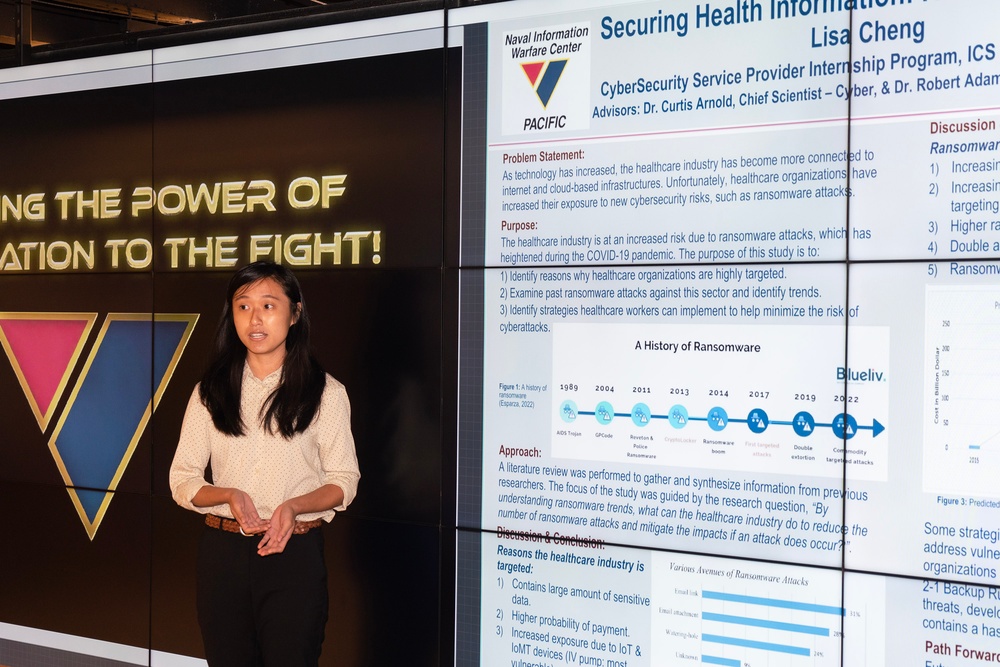
The Naval Information Warfare Center Pacific has awarded a $178,400,000 multiple-award indefinite-delivery/indefinite-quantity contract to ten small businesses for cybersecurity, command and control integration, and systems lifecycle support services, according to Department of Defense contract data. The award supports NIWC Pacific's mission of providing engineering, research, and acquisition support for Navy and Marine Corps information warfare programs across the Indo-Pacific theater. Dark Wolf Solutions is among the ten awardees, alongside nine other small businesses with complementary expertise. The five-year contract vehicle establishes a competitive pool from which individual task orders will be solicited throughout the performance period.
NIWC Pacific, headquartered in San Diego with major facilities in Hawaii and other Pacific locations, serves as one of the Navy's primary technical authority organizations for information warfare systems, networks, and cyber capabilities. The center provides engineering support for tactical data links, command and control systems, electronic warfare, and the secure networks underpinning Navy and Marine Corps operations across the Pacific. As Indo-Pacific competition has intensified, NIWC Pacific's workload has grown substantially, increasing demand for qualified small business technical service providers who can support a widening portfolio of programs at the pace operational requirements demand.
Scope of Services Under the IDIQ
The IDIQ covers three broad service areas reflecting NIWC Pacific's core technical requirements. Cybersecurity services encompass Risk Management Framework implementation, vulnerability assessment, penetration testing, continuous monitoring, and accreditation support activities required to maintain authorization to operate for Navy information systems under DoD Instruction 8510.01 and related policies. As cyber threats to naval systems have grown in sophistication and persistence, demand for qualified cybersecurity engineering support has increased substantially across the NIWC Pacific portfolio. The RMF implementation burden alone — required for virtually every new system and major modification — generates sustained demand for qualified cybersecurity engineers who understand both the technical and regulatory dimensions of Navy ATO processes.
Command and control integration services encompass the technical work of connecting disparate systems — sensors, weapons, communications networks, and decision support tools — into coherent command and control architectures enabling naval commanders to receive information, make decisions, and direct forces effectively. This work spans hardware integration, software development, communications protocol engineering, and operational testing in realistic fleet environments. It requires personnel with both deep technical expertise and familiarity with Navy tactical doctrine and operational concepts. The Indo-Pacific focus means many C2 integration tasks involve interoperability with allied nation systems, multinational exercise environments, and the Combined Maritime Forces' diverse coalition architectures.
Systems lifecycle support encompasses engineering services required to sustain information warfare systems throughout their operational lives, from design and development through installation, maintenance, and decommissioning. This work includes configuration management, technical documentation, failure analysis, engineering change proposals, and obsolescence management. Given the Navy's significant inventory of aging information systems across the Pacific Fleet — many fielded in the 1990s and 2000s with hardware and software approaching end of support — lifecycle support represents a growing workload that draws on a different set of technical skills from new system development, requiring engineers who can work with legacy architectures and navigate complex technical baseline management processes.
Small Business Set-Aside and Pool Structure
The IDIQ is structured as a total small business set-aside, reflecting federal small business contracting goals and NIWC Pacific's strategy of developing a qualified small business industrial base. The multiple-award structure with ten awardees creates meaningful competition for individual task orders while ensuring NIWC Pacific has a diverse pool of qualified vendors across all three service categories. Task orders competed among the ten awardees will generate ongoing competitive pressure on pricing and technical approaches, giving NIWC Pacific better outcomes than single-award vehicles typically deliver.
Dark Wolf Solutions brings specialized cybersecurity and DevSecOps capabilities to the pool. The company has built a reputation in the national security community for combining technical depth with understanding of operational requirements, and its inclusion positions it to compete for cybersecurity-heavy task orders across the NIWC Pacific portfolio. The other nine awardees span a range of small businesses with relevant expertise in defense information systems, networking, and systems engineering, collectively providing NIWC Pacific coverage across virtually all anticipated task order requirements.
The contract's five-year performance period provides awardees with a sustained window of opportunity, though actual revenue depends entirely on winning individual task orders through competition within the pool. Awardees who perform well on initial task orders are well positioned to build relationships with NIWC Pacific program managers and increase their share of subsequent task orders — a dynamic that rewards early investment in program performance and customer relationship management at the center.
What It Means for Contractors
The NIWC Pacific IDIQ award has practical implications for small businesses pursuing defense information technology and cybersecurity work in the Pacific theater. The Navy information warfare enterprise represents a substantial and growing market for qualified small business technical services providers, with demand driven by the Indo-Pacific strategy's requirement for enhanced network capabilities, cyber resilience, and C2 modernization across the fleet. Firms with relevant clearances and technical expertise in these areas should monitor NIWC Pacific's contracting activity closely and position themselves for the next IDIQ vehicle when the current one expires.
The multiple-award IDIQ vehicle type is the dominant procurement mechanism for Navy technical services, and a position on the relevant vehicle is effectively a prerequisite for competing for task order work. Small businesses that lack positions on active IDIQ vehicles are shut out of those market segments until new vehicles are competed. This makes winning IDIQ positions a strategic priority requiring significant bid and proposal investment, and firms should budget accordingly when pursuing NIWC Pacific work.
The emphasis on cybersecurity — particularly RMF and ATO support — reflects a sustained Navy challenge of getting new systems authorized to operate quickly enough to meet operational timelines. The RMF process is resource-intensive and specialized, requiring personnel certified in information security and familiar with Navy-specific implementation guidance. Small businesses that invest in building certified RMF teams and accumulating Navy ATO track records are positioning themselves for sustained demand across multiple Navy commands and contracting vehicles, not just NIWC Pacific. This is a capabilities investment with broad applicability across the Navy information warfare enterprise.
