
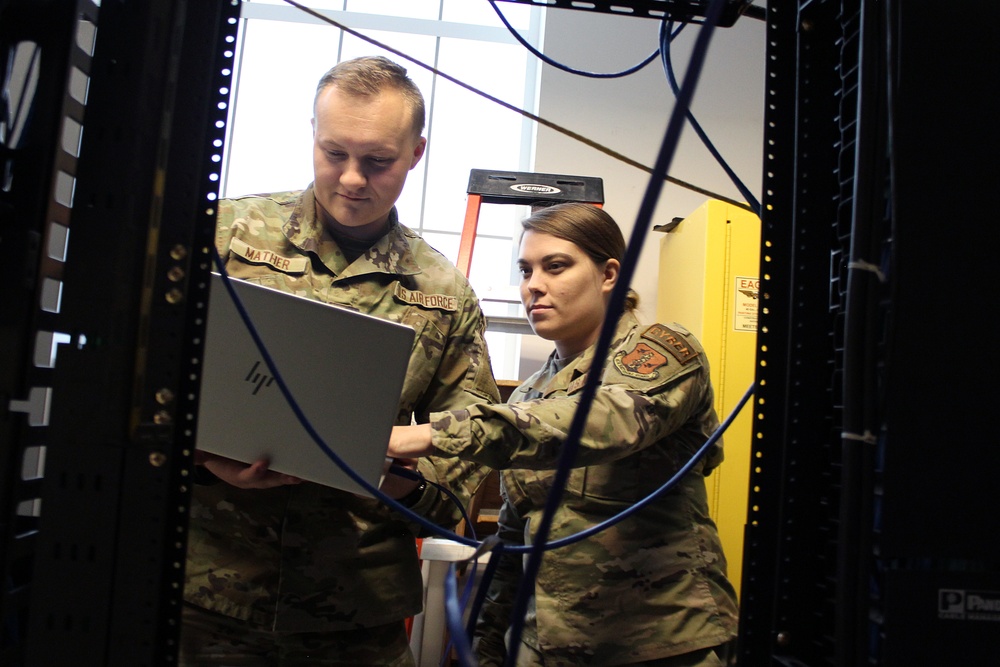
The Defense Advanced Research Projects Agency awarded a $121,521,288 modification to SecuriGence LLC's IT multi-network support services task order on June 16, 2026, bringing the contract's total cumulative face value to $816,412,874. Work continues in Arlington, Virginia, with a completion date of June 2027.
Background
DARPA awarded SecuriGence the original multi-network support services task order in September 2021 under the General Services Administration Multiple Award Schedule. The base award totaled $735 million and structured performance across one base year with eight one-year option periods — a long runway reflecting the agency's dependence on continuous, specialized IT support across its classified and unclassified network environments.
At the time of the original award, SecuriGence was a minority- and veteran-owned small business headquartered in Leesburg, Virginia, with a focus on cybersecurity, software engineering, and cloud computing for federal customers. That status changed in 2024 when Chenega Corporation, an Alaska Native Corporation, acquired SecuriGence. The firm now operates as a wholly owned Chenega subsidiary.
The GSA Multiple Award Schedule structures IT task order competition around specific Special Item Numbers — the product and service codes vendors must hold to be eligible for a given task order. Multi-network support at a classified research agency requires at minimum IT professional services categories covering cybersecurity, cloud migration, and network engineering. Holders of those SINs who also maintain cleared workforces, certified facilities, and continuous monitoring capabilities are a relatively narrow population, which limits competition and shapes how DARPA structures its IT procurement vehicles.
DARPA's IT infrastructure spans multiple classification levels and network domains, supporting research programs across the entire range of IT services, engineering, and infrastructure necessary to implement DARPA's operational, mission, and research objectives — including traditional data centers, cloud services, and DoD enterprise environments. Sustaining those networks requires contractors with cleared personnel, 24/7 operational coverage, and the technical depth to manage transitions between legacy systems and modern cloud environments.
Key Details
The June 16 modification adds $121,521,288 to the existing task order. A $172 million modification was issued in 2024, and a $93.8 million modification preceded that in 2023. Together, the three post-award modifications account for roughly $387 million in additions above the original $735 million base, reflecting option-period exercises, scope expansions, or both.
Fiscal Year 2025 research and development funds of $26,849,189 were obligated at the time of the June 2026 award. The R&D fund type is notable: most IT service task orders are funded with operations and maintenance dollars. Obligating research and development funds ties the IT support work directly to DARPA's active program portfolio rather than treating it as administrative overhead — a distinction that influences how the agency categorizes the work in budget exhibits and how future solicitations may be structured. The contracting activity is DARPA itself, Arlington, Virginia, operating under task order HR001121F0006, modification P00081.
The June 2027 completion date suggests the current modification covers the task order's final active option period or a bridge extension ahead of a potential recompete. With cumulative value now exceeding $816 million, the contract ranks among the larger single-agency IT support vehicles in the federal market, even measured against enterprise-wide programs at much larger departments.
What It Means for Contractors
The SecuriGence award illustrates several dynamics relevant to firms pursuing long-duration IT support work with defense research agencies.
First, the GSA Multiple Award Schedule remains a primary on-ramp for DARPA IT task orders. Contractors without current MAS presence face a structural barrier to competing for this category of work, regardless of technical capability. Firms holding MAS information technology categories should treat DARPA as an active buyer, not a secondary market.
Second, the Chenega acquisition of SecuriGence demonstrates the ongoing consolidation of veteran-owned and small-business IT contractors into Alaska Native Corporation portfolios. ANCs offer incumbents access to capital, cleared facility infrastructure, and expanded teaming capacity — but the transition also removes the small-business set-aside advantages the original firm carried. Competitors tracking this contract should assess whether a recompete would be structured as a full-and-open acquisition or retain any small-business preference, given the incumbent's changed status.
Third, the contract's longevity — now in its fifth year with modifications pushing well past the original ceiling — underscores how critical incumbent advantage is in classified IT environments. Transitioning network support contractors at DARPA requires clearing personnel, migrating institutional knowledge, and managing continuity risk across active research programs. Agencies pay a real cost to switch, which is reflected in successive extensions rather than early recompetes.
For firms planning to pursue the follow-on when it eventually reaches the market, the window to build relevant past performance and cleared-staff bench strength is now, not at the solicitation release date. DARPA's network support requirements are unlikely to shrink — the agency's budget has grown consistently, and its research portfolio increasingly spans contested domains requiring hardened, multi-domain IT environments.
The June 2027 completion date on the current modification means a recompete solicitation could appear as early as late 2026 or early 2027, depending on whether DARPA elects to bridge with a short extension or re-compete immediately at contract expiration. Incumbents filing a recompete with a changed corporate structure — as would be the case for SecuriGence after the Chenega acquisition — routinely face scrutiny over whether past performance citations remain applicable to the new entity. Challengers should document any case where an ANC-acquired contractor has had past performance attribution challenged at the protest level, as that argument could inform bid strategy.
Contractors already holding DARPA task orders in adjacent areas — facilities support, security operations, or software development — should position for the recompete as a teaming opportunity or prime bid, depending on cleared workforce size and MAS eligibility. Past performance on DARPA IT work, even at subcontract tier, will be a differentiator in a recompete field where few firms can demonstrate direct agency experience at this classification level and scale.
