
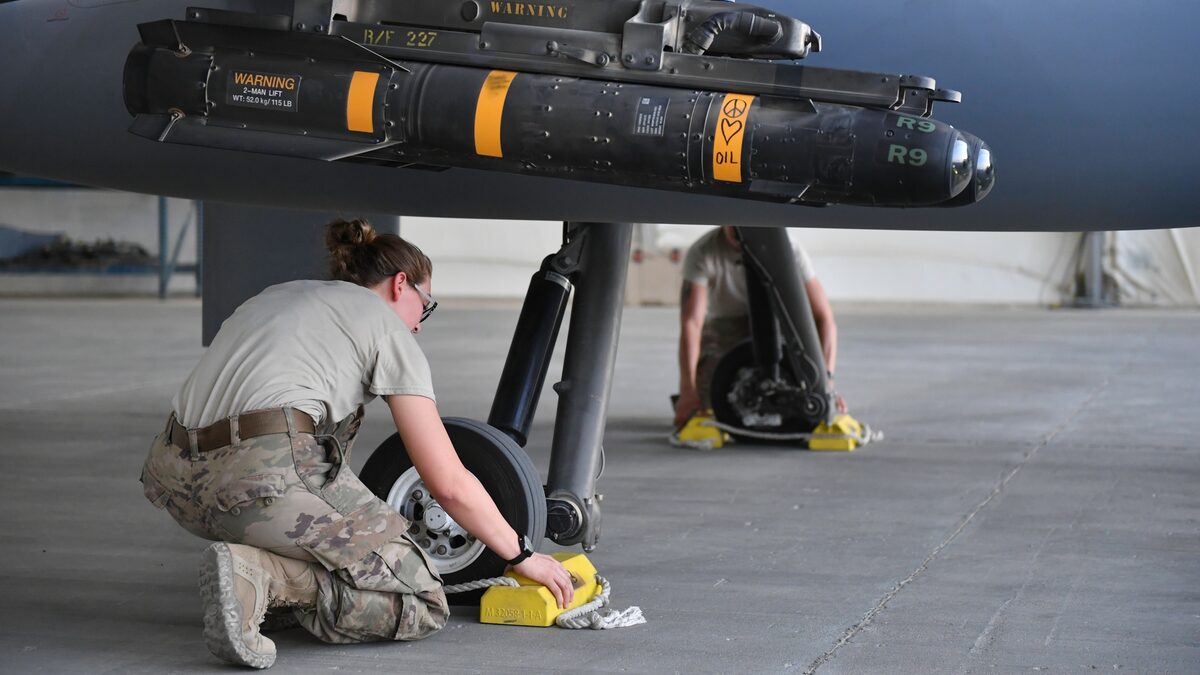
The Defense Innovation Unit issued a Commercial Solutions Opening solicitation on July 7 for a "Massed Modular Aircraft," a long-range, heavy-payload drone built from the outset to be expendable in combat and cheap enough to build in numbers that losses do not matter.
Background
The solicitation follows Operation Epic Fury, a recent U.S. air campaign against Iran. During that campaign, nearly 30 MQ-9A Reaper drones were reportedly lost in combat, according to Breaking Defense and Defense News, which also cited a May 13 Congressional Research Service report tallying U.S. aircraft losses from the operation. The losses exposed the Reaper, General Atomics' long-serving hunter-killer drone, as unable to survive the kind of integrated air defenses Iran fielded. DIU's new program is a direct response, seeking a successor built for attrition rather than survivability.
The MQ-9 has been a mainstay of U.S. counterterrorism and surveillance operations for two decades, but its slow speed, limited maneuverability and lack of stealth make it vulnerable to modern integrated air defense systems. Losing dozens of aircraft, each priced in the tens of millions of dollars, in a single campaign pushed the Pentagon toward a different acquisition model: build drones designed to be lost.
The Defense Innovation Unit exists specifically to move fast on programs like this one, using Commercial Solutions Openings to pull in commercial technology and nontraditional vendors rather than running a conventional multi-year program of record. The Massed Modular Aircraft effort is the clearest example yet of DIU applying that model to a front-line combat platform rather than a support or enabling technology, and it reflects a broader shift in Pentagon thinking after Operation Epic Fury: that survivability against advanced air defenses is now less important than producibility at a cost and scale that tolerates losses.
Key Details
DIU's solicitation calls the Massed Modular Aircraft program a bid to replace exquisite, expensive platforms with cheaper aircraft procured in mass. The notice explicitly describes any aircraft costing "$30 million or more" as "exquisite," a marker that sets the Reaper's roughly $30 million to $50 million unit price as the ceiling MMA must undercut, not match.
The technical requirements published by DIU call for a minimum payload of 2,800 pounds, paired with a long-range profile: unrefueled combat radius of at least 2,300 nautical miles and a one-way self-deployment range of 8,000 nautical miles or more. The aircraft must cruise at a minimum 200 knots true airspeed and operate from runways of 6,000 feet or shorter. Payload power requirements are set at 25 kilowatts with 5 kilowatts of cooling, and the aircraft must comply with a Modular Open Systems Approach, allowing operators to swap payloads including full-motion-video sensors. DIU also requires one-to-many operator control, meaning a single operator could oversee multiple aircraft rather than the one-to-one crewing the Reaper requires.
The funding structure is built to pull in vendors outside the traditional defense-industrial base. Offerors must meet at least one of three conditions: participation by a nontraditional defense contractor, an all-small-business team, or at least one-third of prototype costs funded from non-federal sources. The solicitation is issued under Other Transaction authority, which exempts it from standard Federal Acquisition Regulation rules and is intended to speed contracting with companies that do not typically work with the Pentagon. DIU has left the competition open to both U.S. and international vendors.
The timeline is compressed relative to traditional Pentagon drone programs. Proposals are due July 23, 2026, roughly two weeks after the solicitation's release. Winners will be required to conduct full-scale prototype flight testing within 21 months of award, with the program targeting Initial Operating Capability of 20 mission-ready aircraft by fiscal year 2031.
General Atomics, which builds the Reaper, confirmed it is competing for the follow-on contract. "Competition brings out the best in General Atomics, and keeps us on our toes," the company said in a statement reported by Breaking Defense. The company's willingness to compete against its own legacy platform underscores how directly DIU's solicitation targets the Reaper's role, rather than proposing a complementary system alongside it.
DIU's framing of the program name is itself a signal of intent. "Massed" points to a production philosophy built around fielding large numbers of aircraft rather than a small fleet of high-value assets, while "Modular" points to the open-systems payload requirement that lets the same airframe carry different sensor or strike packages depending on the mission. Together, the requirements describe an aircraft meant to substitute quantity and adaptability for the survivability and sensor sophistication that made the Reaper expensive in the first place.
What It Means for Contractors
The Massed Modular Aircraft solicitation opens a new drone category to companies that could never have competed for a traditional MQ-9-class program. By requiring nontraditional-contractor participation, an all-small-business team, or one-third non-federal funding, DIU is structurally locking established primes like General Atomics out of solo bids and forcing partnerships with venture-backed drone startups or new entrants willing to co-invest in prototypes.
The two-week window between solicitation and proposal deadline favors companies that already have a design in hand or have been tracking DIU's Commercial Solutions Opening process closely; there is little time to stand up a new team from scratch. Companies with existing long-range unmanned aircraft designs, modular payload architectures, or Group 4/5 airframes that can be adapted to meet the 2,800-pound payload and 2,300-nautical-mile radius thresholds are best positioned.
The Modular Open Systems Approach requirement also signals that payload and sensor vendors, not just airframe builders, have an opening to participate as subcontractors on winning teams. And because the notice frames $30 million-plus aircraft as failing the program's intent, bidders should expect cost competitiveness, not just performance, to be a central evaluation factor. With Initial Operating Capability targeted for FY2031 and a 21-month flight-test clock starting at award, contractors that can move from paper design to flying prototype quickly will have an advantage over those relying on lengthier traditional development cycles.
