
General Dynamics Mission Systems has won a Navy contract worth up to $184.25 million to begin full-rate production of a new electronic-warfare component for the EA-18G Growler, according to The Defense Watch, which reported the award on September 11, 2026.
The contract, an indefinite-delivery/indefinite-quantity vehicle combining firm-fixed-price and cost-plus-fixed-fee terms, covers manufacture of the Next Generation Electronic Attack Unit, or NGEAU, along with related sustainment support. It was issued as a sole-source award under 10 U.S.C. 3204(a)(1), the statutory authority the government uses when only one contractor is capable of performing the required work — in this case reflecting General Dynamics' existing position as the incumbent producer of Growler electronic-attack hardware.
What NGEAU Replaces on the Growler
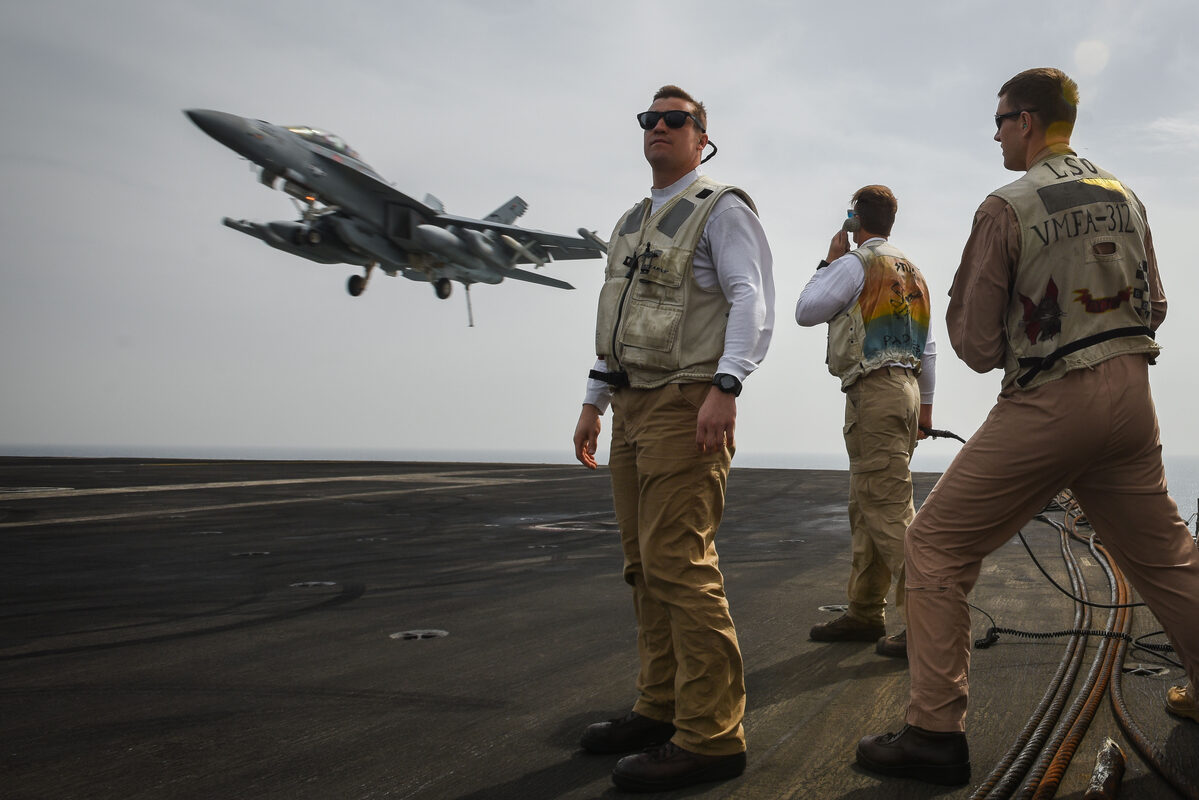
The EA-18G Growler is the Navy's primary carrier-based electronic-attack aircraft, tasked with jamming enemy radar and communications to protect strike packages. Its effectiveness depends heavily on the processing hardware inside its jamming pods and mission systems, which has to keep pace with adversary radars that are themselves becoming more agile and harder to jam using older fixed-function electronics. NGEAU is intended as a hardware refresh for that processing chain, giving the Growler fleet updated electronic-attack computing capacity without requiring a wholesale redesign of the aircraft's other systems.
The official contract announcement states the award covers "manufacture of Full Rate Production of Next Generation Electronics Attack Units (NGEAU)" along with future sustainment of the Advanced Capability Mission Computer, tying NGEAU production to the broader mission-computer architecture the Growler relies on for processing sensor and jamming data in real time. Bundling initial production with sustainment support in a single IDIQ vehicle is a common Navy approach for hardware that will need incremental technology refreshes and repair support over a program's full service life, rather than a one-time buy.
A Long Production Run Through 2032
Work under the contract will be performed at General Dynamics Mission Systems' facility in Bloomington, Minnesota, with an expected completion date of September 2032 — giving the award roughly a six-year production and sustainment horizon. An IDIQ structure typically means the Navy will issue individual delivery or task orders against the $184.25 million ceiling as funding and fleet requirements dictate, rather than committing the full amount up front. That gives the Navy flexibility to adjust NGEAU production quantities and sustainment task orders in line with actual Growler fleet needs over the life of the contract, while giving General Dynamics a long-term revenue floor for its Bloomington electronic-warfare production line.
Sole-Source Award Reflects Growler Program's Narrow Industrial Base
The use of sole-source authority under 10 U.S.C. 3204(a)(1) underscores how concentrated the industrial base is for Growler-specific electronic-attack hardware. Programs like NGEAU that sit deep inside a single aircraft's mission systems architecture often have no practical second source once an initial design and qualification process is complete, since a new entrant would need to replicate years of integration testing on a system that has to interoperate precisely with the rest of the Growler's electronic-warfare suite. That dynamic gives incumbent contractors like General Dynamics durable, long-running positions on legacy hardware refresh programs even as the Pentagon publicly emphasizes increasing competition across its acquisition portfolio.
Why Full-Rate Production Matters as a Program Milestone
Moving a hardware program from development or low-rate initial production into full-rate production is a significant milestone in defense acquisition, typically signaling that a system has cleared its major testing and qualification hurdles and is ready to be manufactured at the volume needed to equip an entire fleet. For NGEAU, reaching full-rate production means the Navy has validated that the new electronic-attack processing hardware performs as required across the operational test conditions Growler crews will face, clearing the way for General Dynamics to ramp its Bloomington production line from prototype quantities to the steady output needed to refresh electronic-attack capability across the full Growler fleet over the coming years.
That transition also typically brings unit costs down, since full-rate production allows a contractor to spread fixed tooling and setup costs across a much larger quantity of units than was possible during earlier low-rate production runs — a dynamic that should improve the economics of the program for the Navy as NGEAU units roll off the line in higher volumes through the contract's 2032 completion date.
It also typically stabilizes the supplier base beneath the prime contractor, since component vendors can commit to longer production runs and firmer forecasts once a program has cleared the transition from low-rate to full-rate manufacturing, rather than bracing for the volume swings and schedule uncertainty common during earlier development and testing phases.
What It Means for Contractors
The NGEAU award is a reminder that sole-source contracting remains alive and well for narrow, program-specific hardware where an incumbent's existing qualification and integration work makes a competitive recompete impractical — a dynamic that favors established primes with deep platform-specific engineering histories over new entrants, even on smaller-dollar awards like this one. Companies hoping to break into electronic-warfare hardware supply chains should look for opportunities earlier in a program's life cycle, before a single vendor's design becomes so deeply embedded in a platform's mission systems that sole-source justifications become routine.
The contract's combination of production and long-tail sustainment in one IDIQ vehicle also illustrates a durable pattern in Navy avionics and electronic-warfare procurement: award structures that lock in a single contractor's role across both initial manufacture and years of follow-on support. Subcontractors and suppliers feeding into General Dynamics' Bloomington production line should expect a multi-year window of related task-order activity as NGEAU units move from full-rate production into fleet-wide sustainment.
