
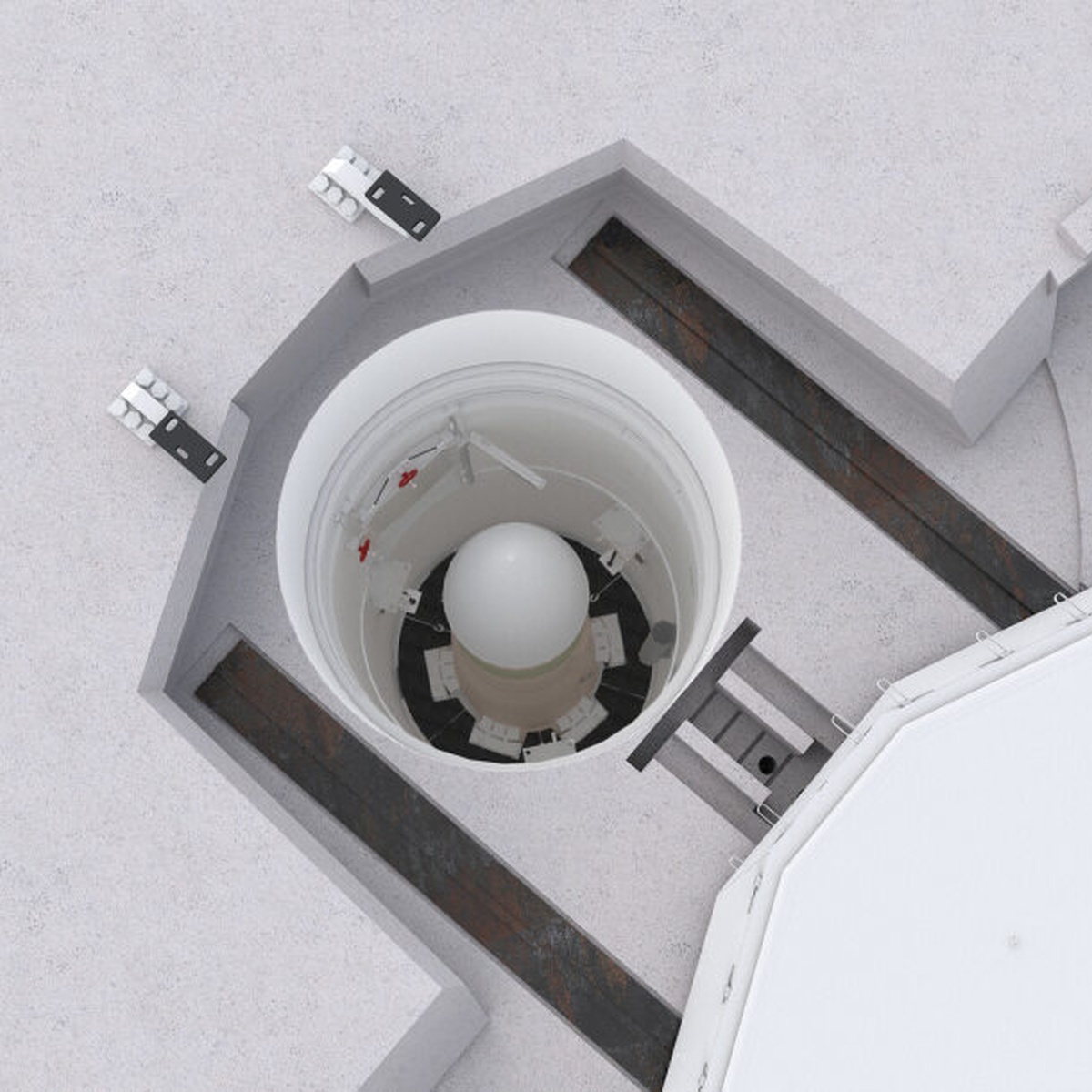
The Air Force Nuclear Weapons Center has awarded Govini a $31,000,000 firm-fixed-price contract to build a software-as-a-service view of the Intercontinental Ballistic Missile industrial base, according to the Department of War's Contracts for June 30, 2026. The Arlington, Virginia, data-analytics firm will deliver an integrated picture of the ICBM supply chain designed to surface current and future gaps and assess risk, with work performed at Hill Air Force Base, Utah, and completion scheduled by June 2029.
Background
Hill AFB is the hub of the Air Force Nuclear Weapons Center's ICBM mission, which spans both the aging Minuteman III fleet and its planned replacement, the LGM-35A Sentinel. That dual mission puts the center at the heart of one of the Pentagon's hardest sustainment problems: keeping a 1970s-era missile force operational while standing up an entirely new weapon system, all while the supplier base that produces specialized parts continues to shrink. Many Minuteman III components are decades out of production, and the diminishing manufacturing sources behind them force program managers to hunt for alternate parts, qualify new suppliers, or fund costly redesigns. Managing that obsolescence is a recognized sustainment discipline in its own right, and it depends on knowing which parts and which suppliers are at risk before a line goes cold.
That is the visibility gap this contract targets. Rather than delivering hardware, Govini is delivering data infrastructure: a subscription software product that pulls disparate procurement, supplier, and parts information into a single view so the ICBM enterprise can see where its industrial base is thin before a shortage stops a missile from flying. Historically, program offices have assembled that picture by hand, stitching together spreadsheets, contract records, and supplier reports that quickly go stale — a slow, labor-intensive process poorly suited to a supply base that can lose a sole-source vendor with little warning. The award was a competitive acquisition, with four offers received, and it carries contract number FA8204-26-C-B003. FY2026 research, development, test and evaluation funds of $1,802,906 were obligated at the time of award, with the balance of the $31 million ceiling to follow as the work proceeds.
Key Details
The scope centers on giving the ICBM enterprise an integrated view of its industrial base and supply chains through software as a service. The goal, as described in the award, is to identify current and future supply-chain gaps and assess the associated risks — the kind of forward-looking analysis that is difficult to perform when supplier and parts data sits in separate systems across multiple programs and contractors.
The work connects to Govini's Ark platform, a set of AI-enabled applications the company markets across the defense acquisition lifecycle, including supply chain. According to Govini's Ark supply-chain product page, the software is built to map tier-n supplier networks, sourcing options, vendor health, and production capacity, and to surface supplier constraints, sourcing risks, and demand signals before they become production delays — precisely the visibility the ICBM enterprise needs for a fleet full of obsolete components. Unifying supply chain, production, and sustainment data into a single view so teams can see which constraints are most likely to affect availability is the core of what the June 30 award buys under a directly held Air Force contract. For a weapon system whose parts were designed generations ago, the value is less in any single dashboard than in continuously refreshed data that flags trouble early enough to act on — requalifying a supplier or funding a redesign takes years, so the earlier a gap surfaces, the cheaper it is to close.
Key terms at a glance:
- Value: $31,000,000, firm-fixed-price
- Buyer: Air Force Nuclear Weapons Center, Hill AFB, Utah (contracting activity)
- Contract number: FA8204-26-C-B003
- Competition: Competitive acquisition, four offers received
- Funding at award: $1,802,906 in FY2026 RDT&E funds obligated
- Period: Completion expected June 2029
The firm-fixed-price structure is notable for a software effort. It signals that the government and Govini agreed on a defined deliverable and price rather than an open-ended level-of-effort arrangement, shifting cost risk onto the contractor and giving the Air Force budget predictability across the roughly three-year period of performance.
What It Means for Contractors
This award is a marker for where defense buying is heading, and it carries lessons well beyond the nuclear enterprise. First, it shows the government paying real money — eight figures — for supply-chain visibility itself, treated as a discrete capability rather than a byproduct of a hardware program. Firms that can aggregate, clean, and analyze industrial-base data now have a defined lane to sell into, and the ICBM enterprise is unlikely to be the last program office to buy it. Industrial-base awareness has been a persistent Pentagon concern, and buying it as a service is one answer to a problem that has resisted one-time studies. Sentinel's own cost and schedule pressures make early warning on supplier health valuable across the entire nuclear modernization portfolio.
Second, the SaaS model is worth studying. The Air Force is buying a subscription to software the vendor operates and maintains, not a custom system it must own and sustain. For contractors, that reinforces a shift toward productized, repeatable offerings that can be sold to multiple government customers with modest tailoring — a higher-margin, more scalable posture than one-off integration work. It also raises the bar on authority-to-operate, data rights, and hosting compliance, since the government is entrusting sensitive industrial-base data to a vendor-run environment.
Third, the competitive four-offer field tells primes and subcontractors alike that the analytics market for defense supply chains is contested, not sole-sourced. Incumbency in a mission area can convert into a direct prime award, but only through open competition. Companies eyeing this space should expect to compete on demonstrated performance against real Pentagon data, and should be building the past-performance record now.
Finally, the modest initial obligation against a large ceiling is a familiar pattern that subcontractors and suppliers should read carefully: the $31 million is a not-to-exceed figure, and actual revenue will track the pace of funded work. Teams pursuing similar awards should plan cash flow around incremental funding rather than the headline number, and watch for follow-on tasking as the ICBM enterprise expands its use of the platform toward Sentinel.
