
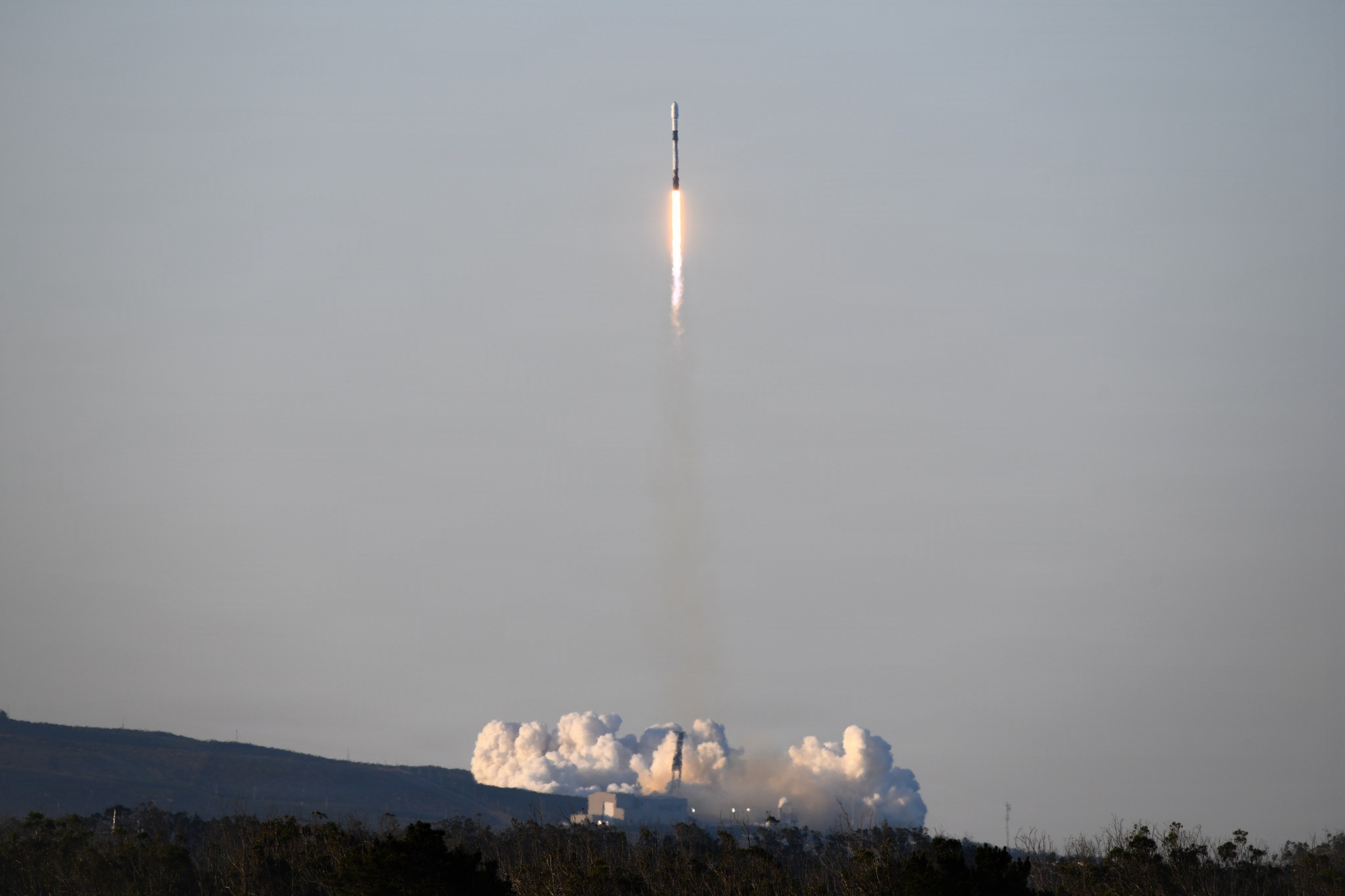
The Space Force has increased a Small Business Innovation Research contract with Broomfield, Colorado-based Pivotal Space Inc., doing business as LEAP, by $93 million, pushing the deal's cumulative value from $7 million to $100 million, according to a Department of War contract announcement published July 10, 2026.
Background
LEAP builds satellite logistics and resupply hardware. The company's website describes a proprietary dual-mode rocket engine that "combines a high-thrust booster with a high efficiency upper stage" and a family of launch vehicles that includes Bighorn and a larger vehicle called Springbok, which LEAP describes as a "Delta II class launch vehicle delivering dedicated orbital, point-to-point, and deterrence missions." The company's original contract, FA8821-25-D-B001, was issued under the Small Business Innovation Research (SBIR) Phase III authority, a mechanism that lets the government sole-source follow-on work to small businesses that developed technology under earlier SBIR phases without running a new competitive solicitation. Phase III awards can grow substantially over time as the government exercises additional task orders against an existing indefinite-delivery/indefinite-quantity (IDIQ) vehicle, which is what happened here: contract modification P00006 lifted LEAP's ceiling roughly 13-fold in a single move.
Space Systems Command at Peterson Space Force Base, Colorado, holds contracting authority for the vehicle. Peterson is also the headquarters for Space Systems Command's acquisition arms that manage launch, satellite, and space domain awareness programs, making it a natural home for a contract built around on-orbit resupply capability. LEAP's home base of Broomfield sits north of Peterson along Colorado's Front Range aerospace corridor, a region that has become one of the densest concentrations of small and mid-size space companies working directly with Space Systems Command and the broader Space Force acquisition enterprise.
SBIR Phase III contracts differ from a standard federal award in one important respect: because the underlying research was funded through earlier SBIR phases, the government can direct follow-on production, services, or evaluation work to the originating small business without opening a new competitive solicitation, so long as the work relates to the technology developed in Phase I and II. That authority is what allowed Space Systems Command to expand LEAP's ceiling by modification rather than by running a fresh procurement, and it is a common path for space-hardware startups moving from prototype demonstrations toward recurring government business.
Key Details
The modification's stated scope covers "performance evaluation for resupply, integration, and global expeditionary enablement," language that points toward testing and validating LEAP's ability to service satellites or deliver cargo to orbit rather than a single hardware buy. The contract is task-order-funded, meaning no money was obligated at the moment the modification was signed; funding will flow as Space Systems Command issues individual task orders against the IDIQ ceiling over the life of the agreement.
Work will be performed in Broomfield, Colorado, where LEAP is headquartered, and the period of performance runs through Aug. 29, 2030. That multi-year runway gives Space Systems Command time to evaluate LEAP's resupply and integration hardware as it matures, rather than committing the full ceiling against a single near-term deliverable.
The jump from a $7 million baseline to a $100 million ceiling is unusually steep for a Phase III modification. Government contract data on SBIR Phase III awards typically shows incremental ceiling increases tied to specific new task orders; a single modification multiplying the total value by more than 13 times signals that Space Systems Command sees enough near-term work to commit a nine-figure ceiling in one step, even though the money itself will be obligated later, order by order. ClearanceJobs independently reported the same $7 million-to-$100 million jump and the same "performance evaluation for resupply, integration, and global expeditionary enablement" scope language drawn from the same underlying contract notice.
LEAP's own site describes its propulsion work as "a propulsion breakthrough" built around what it calls mass-manufacturable space systems, with a simplified design the company says cuts part count by up to 90 percent compared with conventional rocket hardware. That emphasis on manufacturability and a multi-vehicle product line, rather than a single flagship launcher, is consistent with a company positioning itself as a recurring logistics supplier to the government rather than a one-off launch provider — the kind of profile SBIR Phase III vehicles are designed to reward as a company matures technology developed under earlier SBIR phases into follow-on production and services work.
What It Means for Contractors
The size of this ceiling increase is a signal to the broader space logistics and in-orbit servicing sector that Space Systems Command is willing to commit large sums to small companies still developing their core vehicle line, provided the underlying SBIR track record and IDIQ vehicle already exist. Companies pursuing their own Phase III follow-ons should note that the government exercised this increase as a modification to an existing contract number rather than issuing a new solicitation — a reminder that maintaining an active Phase III vehicle, even a small one, can be more valuable long-term than winning a series of one-off SBIR Phase II awards that expire without a Phase III bridge.
The task-order-funded structure also matters for planning purposes. A $100 million ceiling does not equal $100 million in near-term revenue; LEAP will need Space Systems Command to issue individual task orders and obligate funds before any of that ceiling turns into actual contract dollars. Subcontractors and suppliers evaluating whether to team with LEAP on resupply or integration work should track task-order announcements rather than treating the ceiling figure as committed spending.
For companies competing in the broader responsive-space and satellite-servicing market, the award underscores that Space Systems Command is actively building out capacity for "global expeditionary enablement" — logistics support that can reach satellites or forward locations on short notice. Firms with resupply, refueling, or rapid-integration capabilities relevant to that mission set may find Peterson Space Force Base's Space Systems Command office issuing related task orders or companion solicitations as this vehicle matures, particularly as LEAP works to bring its launch vehicle line toward operational status.
The scale of the modification also raises the stakes for LEAP's own execution. Space Systems Command has now put a nine-figure ceiling behind a company whose launch vehicles are still working toward flight status. Whether task orders against this ceiling actually materialize at scale will depend on LEAP successfully flying its vehicles and demonstrating the resupply and integration performance the contract's scope language describes.
