
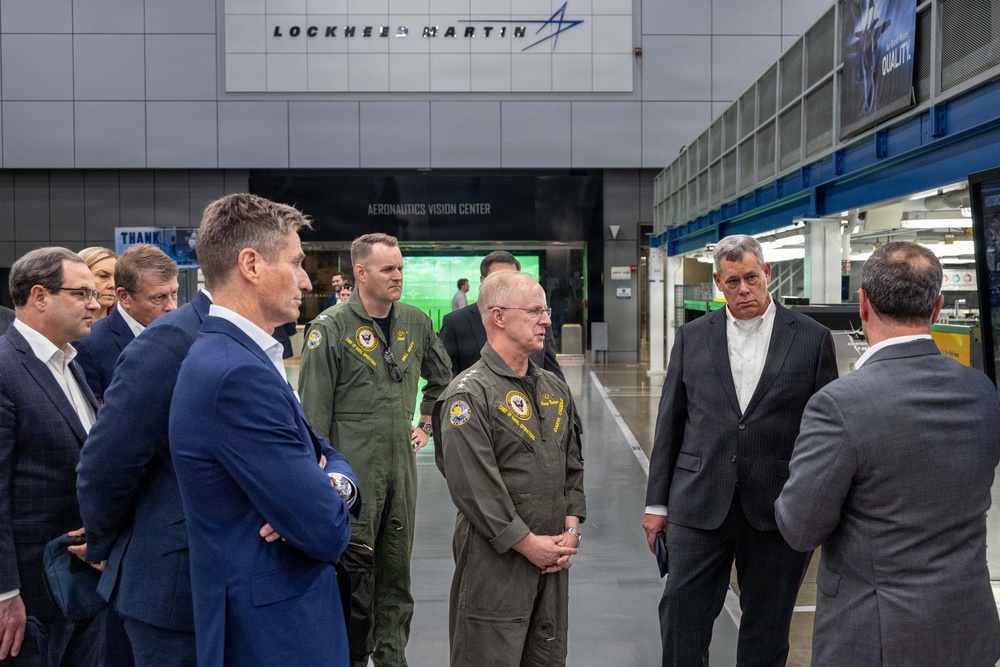
Naval Air Systems Command has awarded Lockheed Martin a $2,293,000,000 cost-plus-incentive-fee indefinite-delivery/indefinite-quantity contract for F-35 Lightning II initial sustainment services, according to DoD contract announcement data for June 2026. The award, contract number N00019-26-D-0004, establishes a multi-year contract vehicle for the full range of sustainment activities required to maintain the Navy's, Marine Corps', and allied partners' F-35 fleets in operational readiness. Lockheed Martin, as the sole developer and manufacturer of the F-35, is the only entity with access to the technical data, tooling, and supply chain relationships needed to provide the full scope of initial sustainment services covered by this contract vehicle.
The F-35 Lightning II is the United States' primary next-generation tactical strike fighter, with variants deployed across the Air Force (F-35A conventional takeoff), Marine Corps (F-35B short takeoff/vertical landing), and Navy (F-35C carrier variant). The program represents the largest defense acquisition in history by life-cycle cost, with a total fleet of over 3,000 aircraft planned across the U.S. military and allied partner nations. Sustaining a fleet of this scale across multiple variants, multiple services, and multiple countries creates sustainment requirements of extraordinary complexity, requiring coordination across a global supply chain, specialized maintenance and repair operations, and continuous software and configuration management activities.
Scope of F-35 Initial Sustainment Services
The initial sustainment phase of an aircraft program covers the period after production delivery when the aircraft enters operational service but before the sustainment enterprise matures to the point where competitive follow-on sustainment contracts can be practically structured and executed. For the F-35, initial sustainment encompasses a wide range of activities including contractor logistics support, supply chain management, repair and overhaul of components, system-level software maintenance, configuration management, and technical support to operational squadrons and maintenance organizations. These activities are tightly integrated with Lockheed Martin's ongoing production activities and with the work of major system suppliers like Pratt and Whitney, which provides the F135 engine, and major avionics and subsystem suppliers.
The cost-plus-incentive-fee contract structure reflects the complexity and uncertainty inherent in F-35 sustainment. Unlike mature aircraft programs where the costs of specific maintenance activities and supply chain operations are well understood from years of operational experience, the F-35 sustainment enterprise is still maturing. The CPIF structure aligns contractor and government incentives by providing a base fee plus additional fee earned when sustainment costs come in below the target cost, while protecting the government from the unlimited cost growth risk that would be present under a cost-plus-fixed-fee vehicle without incentive structures.
The $2.293 billion ceiling on the IDIQ does not represent a guaranteed revenue amount for Lockheed Martin. Individual task orders issued under the vehicle will specify the particular services required, the quantities of components or activities covered, and the specific performance periods. Total expenditure against the vehicle will depend on the pace of F-35 operational fleet expansion, the actual sustainment demands of the fleet, and the evolution of the sustainment enterprise as the program matures and organic maintenance capabilities grow within the services' maintenance organizations.
Competitive Landscape and Sole-Source Considerations
Lockheed Martin's position as the sole developer and manufacturer of the F-35 creates a structural sole-source position for a significant portion of F-35 sustainment activities. Technical data package restrictions, proprietary software, unique tooling, and supply chain relationships that Lockheed Martin developed as the original equipment manufacturer cannot simply be transferred to competing maintenance organizations without the type of sustained investment and data release that would require negotiation and significant transition cost. DoD has been working to improve competitive sustainment outcomes on the F-35 program through the F-35 Autonomic Logistics Information System data sharing arrangements and the development of organic depot maintenance capability at military depots, but these efforts take years to develop and the initial sustainment phase remains primarily the OEM's domain.
NAVAIR and the F-35 Joint Program Office have been under sustained Congressional pressure to improve competition and reduce sustainment costs on the F-35 program. GAO has repeatedly found that F-35 sustainment costs per flight hour remain above target levels and that the program faces significant challenges achieving the Affordability Target sustainment cost established by Congress. The $2.293 billion IDIQ is part of the ongoing contractual framework within which DoD and Lockheed Martin are working toward sustainment cost reductions through improved supply chain efficiency, increased organic capability, and performance-based logistics approaches that tie contractor compensation to fleet availability outcomes rather than specific activities performed.
What It Means for Contractors
For the F-35 supply chain — which encompasses hundreds of major and minor suppliers across the United States and allied nations providing components, subsystems, and materials for both production and sustainment activities — the NAVAIR IDIQ award signals continued stable demand for F-35 sustainment support through the initial sustainment phase. Suppliers who have established themselves in the F-35 supply chain should anticipate sustained demand for repair, overhaul, and replacement components as the operational fleet grows and aircraft age into heavier sustainment requirements. Sustainment demand tends to grow as fleets age, with more components reaching end of service life and requiring repair or replacement as aircraft accumulate flight hours.
For companies seeking to enter the F-35 sustainment market as suppliers or subcontractors, the NAVAIR IDIQ represents the prime contract vehicle under which opportunities will flow. Lockheed Martin will issue subcontracts and purchase orders against the IDIQ for specific components and services, creating opportunities for qualified suppliers who can meet the F-35's exacting quality, traceability, and configuration management requirements. Companies with existing aerospace manufacturing qualifications, AS9100 certifications, and experience with military aviation quality requirements are best positioned to compete for F-35 supply chain opportunities.
Finally, the CPIF structure of the NAVAIR contract creates specific incentive dynamics that flow through Lockheed Martin to its supply chain. When Lockheed Martin faces incentives to reduce sustainment costs below target levels to earn additional fee, it will drive similar cost reduction expectations through its supply chain. Suppliers whose cost reduction trajectories lag behind program expectations may face pricing pressure or substitution risk as the prime contractor works to achieve its fee targets. Building genuine cost efficiency into F-35 supply chain operations is not merely a commercial imperative but a factor in maintaining a long-term position in a program that will operate for decades.
