
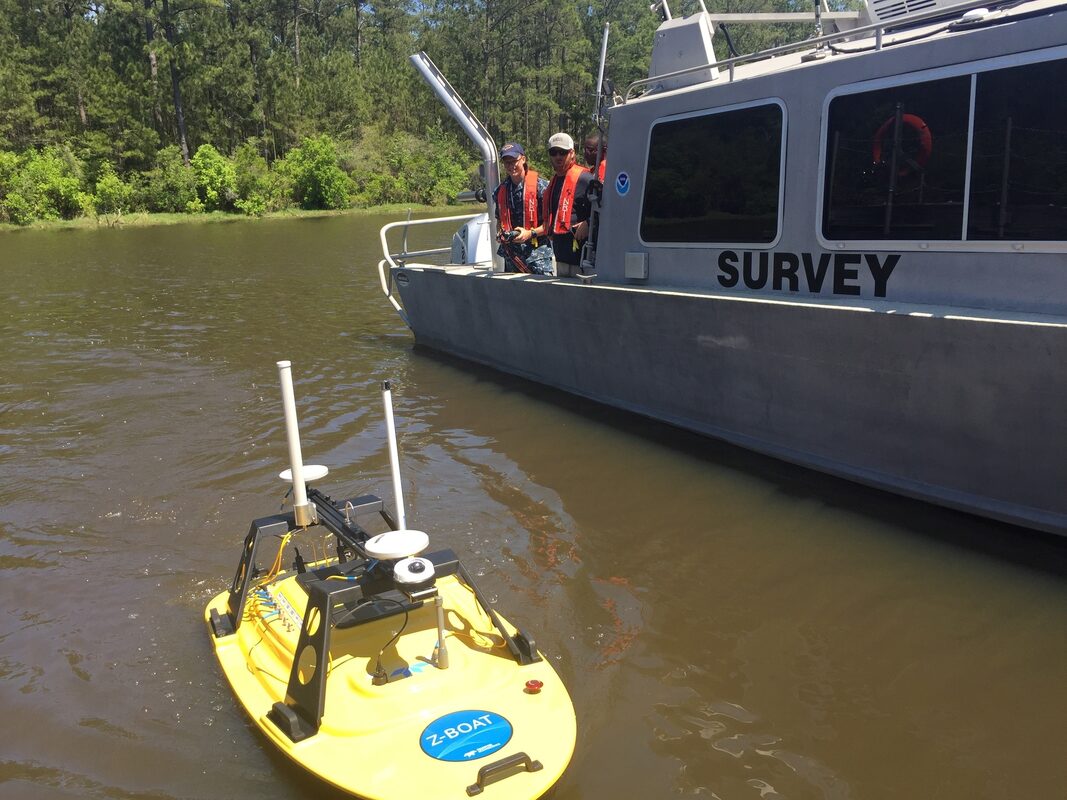
The Naval Oceanographic Office is soliciting proposals for a $40 million-ceiling, multiple-award contract for autonomous ocean-floor mapping services using long-endurance unmanned surface vehicles, according to Washington Technology's reporting on the underlying solicitation. Proposals were due June 11, and the Naval Oceanographic Office had not announced any award as of this writing.
Background
The Navy has long relied on crewed survey ships to gather bathymetric data, but the service does not have enough hulls or personnel to chart the full expanse of ocean floor it wants mapped. That capacity gap is what pushed the Naval Oceanographic Office toward a new approach: a solicitation for contractor-owned, contractor-operated unmanned surface vehicles that can stay at sea for weeks at a time without a crew aboard, collecting bathymetric and seamount data that feeds into navigation charts and situational-awareness products. Reporting on the solicitation states the rationale bluntly: the Navy itself doesn't have the ships or the manpower to collect the data itself.
Rather than adding another crewed survey ship to its inventory, the Naval Oceanographic Office structured the requirement as a multiple-award contract vehicle with a $40 million ceiling, open to companies that can supply long-endurance autonomous platforms in place of traditional survey ships. The solicitation is set aside for women-owned small businesses, and proposals were due June 11. Bidders are responsible for providing all equipment, operations and logistics themselves, meaning the government is buying survey data as a service rather than buying or crewing vessels of its own.
Bathymetric survey work of this kind has historically fallen to the Navy's own crewed survey ships or to specialized ocean-mapping vessels chartered for individual missions, both of which carry crew costs, port-call logistics and scheduling constraints that limit how much seafloor territory the fleet can realistically cover in a given stretch of time. Unmanned surface vehicles remove the crew-endurance limit entirely, letting a single platform stay on station for weeks without a personnel rotation, which is why the Naval Oceanographic Office built this requirement around long-endurance autonomous systems instead.
Key Details
The solicitation carries a $40,000,000 ceiling with an ordering period of two years, and it is structured as a multiple-award contract vehicle rather than a single-vendor award. As is typical for that contract structure, the government would compete individual task orders among whichever companies win spots on the vehicle rather than committing the full ceiling to any one company up front, giving the Navy flexibility to match specific mapping missions to whichever contractor's platform and pricing best fit the task once awards are made.
The scope covers high-resolution ocean-floor mapping using long-endurance unmanned surface vehicles. The government set a series of pass/fail technical gates that bidders must clear before their proposals are even evaluated on price or past performance. Those requirements include a minimum range, and data-delivery capacity, of 2,000 nautical miles per month; endurance for 25 continuous days of deep-ocean survey operations without returning to port; multibeam sonar coverage from 200 meters down to full ocean depth; and a secure online platform with end-to-end encryption for delivering survey data over NIPRNET, the Defense Department's unclassified network, in near-real time rather than only after a vessel returns to shore. Missing any single requirement disqualifies a proposal outright.
That combination of range, endurance, sonar depth coverage and secure near-real-time data relay is a demanding bar for a commercial USV to clear, and it signals a market the Naval Oceanographic Office expects to draw from specialized autonomous-maritime companies rather than general contractors bidding on data services. As of publication, the Naval Oceanographic Office has not publicly identified which companies, if any, have been selected. The Department of War's daily contract-announcement page, where Navy awards of this size are typically disclosed once finalized, had not listed an award tied to this solicitation as of the most recent posting checked for this story.
What It Means for Contractors
The solicitation is a marker for where the Navy's hydrographic survey mission is headed: toward a roster of pre-qualified commercial USV operators the service can call on for specific missions, rather than a single long-term survey contract with one prime. For companies already building or operating long-endurance unmanned surface vehicles, that model lowers the barrier to entry compared with competing for a traditional single-award ship-survey contract, since a multiple-award vehicle lets several vendors sit on the contract and bid task by task as missions come up.
It also sets a technical bar other unmanned-maritime companies will need to clear to compete for this and future Navy survey work: 2,000 nautical miles of monthly range and data delivery, 25-day continuous deep-ocean endurance, full-ocean-depth multibeam sonar, and NIPRNET-encrypted near-real-time data relay. Vendors chasing similar Navy hydrographic or ISR-adjacent unmanned-surface-vehicle opportunities should expect comparable pass/fail gates rather than a simple lowest-price evaluation, since the Naval Oceanographic Office used those thresholds to filter proposals before evaluating price or past performance at all.
The set-aside for women-owned small businesses is also worth flagging for contractors: it narrows the competitive field to a specific socioeconomic category rather than opening the vehicle to any interested USV operator, which changes who can credibly bid regardless of technical capability alone.
Because no award has been announced, companies with qualifying platforms that missed the June 11 proposal window should watch for follow-on solicitations or on-ramp opportunities, since the Navy's stated rationale, that it lacks the ships and personnel to cover its own mapping backlog, is unlikely to be resolved by a single contract vehicle. Once awards are made, contractors that win a spot on the vehicle should still treat it as a bid opportunity rather than a funded contract: a shared ceiling with no dollars committed up front means a place on the vehicle guarantees nothing without also winning individual task orders.
The solicitation also illustrates a broader pattern worth tracking: the Navy appears increasingly comfortable structuring survey and data-collection work as commercial-service buys built around pass/fail technical thresholds rather than reserving that work for traditional shipbuilding primes. Contractors in adjacent unmanned-maritime niches, from mine countermeasures to seabed surveillance, should watch how this solicitation resolves as an early test of whether that model becomes the Navy's preferred path for future autonomous ocean-survey work.
