
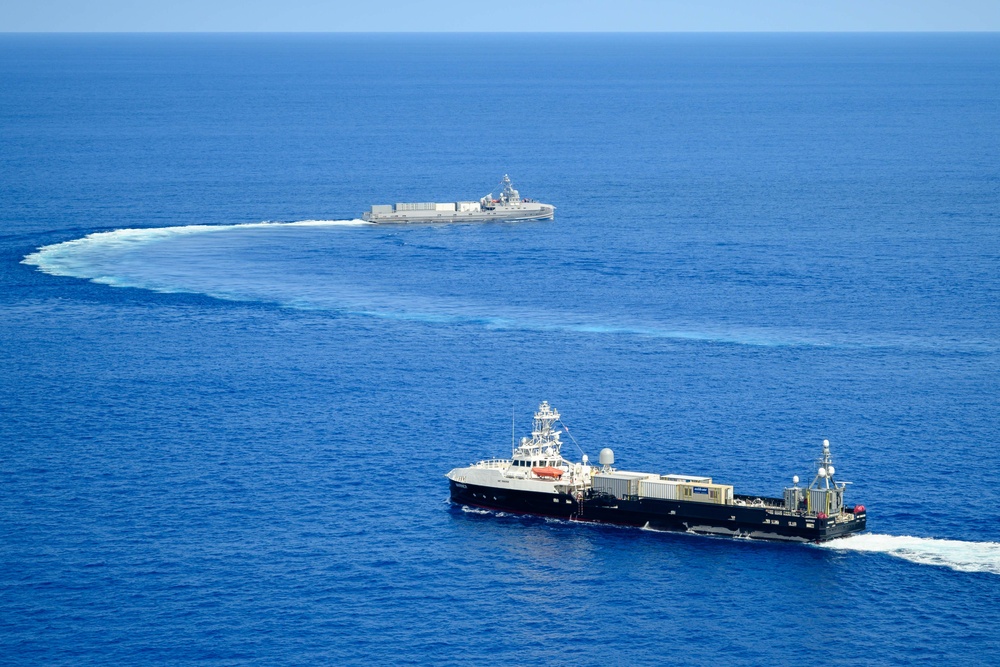
The Navy has awarded a $24,960,408 firm-fixed-price contract to ReconCraft LLC, an Anchorage, Alaska-based small business, to build autonomous low-profile vessels, according to the Pentagon's July 8, 2026 daily contracts announcement. The deal was steered directly to ReconCraft under a small-business sole-source authority rather than opened to competing bidders, underscoring the Navy's growing appetite for niche autonomous-craft suppliers outside the traditional shipbuilding belt.
Background
The contract, valued at $24,960,408, is funded through the Navy's fiscal year 2026 appropriation for the accelerated procurement and fielding of innovative technologies. That funding line exists specifically to move promising unproven capabilities from prototype to fielded units faster than the standard acquisition cycle allows, and its use here signals that the Navy views ReconCraft's low-profile autonomous vessel design as mature enough to field on an accelerated timetable rather than run through a lengthy competitive down-select.
Naval Sea Systems Command in Washington, D.C. is the contracting activity overseeing the award, designated N00024-26-C-6324. Work will be performed at ReconCraft's manufacturing site in Clackamas, Oregon, with the contract's expected completion date set for November 2028. The Pentagon's contract notice states plainly that the award "was not competitively procured in accordance with Federal Acquisition Regulation 19.805-1(b)(2)," the clause that permits agencies to sole-source work to a qualifying small or 8(a) business without a full and open competition.
ReconCraft is not a new entrant to naval shipbuilding circles. The company previously won a separate Navy contract worth roughly $36 million to deliver a fleet of 40-foot, 45-knot patrol boats, giving it an established track record building high-speed small craft for the service before this latest low-profile vessel award. ReconCraft has also positioned itself in the DARPA flying-boat space, partnering with Aurora Flight Sciences and Gibbs & Cox on that agency's experimental program, according to trade press coverage of the company. Together, the two prior efforts show a company building a portfolio around fast, small, and increasingly autonomous surface platforms rather than large traditional combatants.
The location split between headquarters and production is itself notable. ReconCraft's corporate address in Anchorage sits far from the Navy's usual small-craft manufacturing corridors, while its Clackamas, Oregon facility puts actual production closer to the Pacific Northwest's broader marine manufacturing base. That arrangement lets the company draw on Alaska's small-business contracting advantages while building boats within reach of the West Coast fleet concentration and its associated testing waters, a combination that may explain part of the Navy's comfort sole-sourcing repeat work to the firm.
Key Details
- Award amount: $24,960,408, firm-fixed-price, dated July 8, 2026.
- Contractor: ReconCraft LLC, Anchorage, Alaska, designated a small business under the award.
- Scope: Autonomous low-profile vessels — small, low-observable surface craft designed to operate without a crew aboard.
- Work location: ReconCraft's manufacturing facility in Clackamas, Oregon.
- Completion date: November 2028.
- Funding source: Fiscal year 2026 Navy appropriation for accelerated procurement and fielding of innovative technologies.
- Procurement method: Sole-source, citing FAR 19.805-1(b)(2), meaning no competing offers were solicited for this particular award.
- Contracting activity: Naval Sea Systems Command, Washington, D.C. (contract number N00024-26-C-6324).
The Pentagon's notice does not break out a breakdown of unit quantities, hull dimensions, or specific operational requirements for the low-profile vessels beyond the general description, which is typical for contracts of this size and classification level. What is clear from the notice is the pairing of an accelerated-technology funding line with a sole-source award — a combination the Navy tends to reserve for capabilities it wants fielded quickly rather than developed through a multi-year competitive program of record.
What It Means for Contractors
This award is a data point for small and mid-tier shipbuilders eyeing the unmanned and low-observable surface vessel market: the Navy is willing to sole-source meaningful contracts to companies that have already demonstrated relevant hull-building and autonomy work, even when those companies are based far from the traditional Gulf Coast and mid-Atlantic shipbuilding hubs. ReconCraft's Alaska headquarters and Oregon production site illustrate that geography is not a barrier when a company can show a credible track record — in this case, a prior patrol-boat contract and a role on a DARPA-backed flying-boat effort.
The use of the accelerated procurement and fielding of innovative technologies appropriation is also worth tracking. Contractors positioning themselves for similar sole-source opportunities should understand that this funding category exists to bypass the friction of traditional competitive timelines for technologies the Navy judges ready to move from demonstration to limited fielding. Companies with an existing FAR 19.805-1(b)(2)-eligible small-business or 8(a) status, paired with a demonstrated prototype or fielded product in the autonomous-surface-vessel space, are the most likely beneficiaries of this funding pathway. Firms without that qualifying status, or without a track record the Navy can point to, are unlikely to see similar sole-source treatment and should instead watch for a future competitive solicitation if the Navy decides to scale the low-profile vessel line beyond this initial award.
For companies already competing in the unmanned surface vessel space — a field that includes larger primes building medium and large unmanned surface vessels under Navy programs of record — ReconCraft's award is a reminder that the small end of the market, low-profile and low-cost autonomous craft built by small businesses, is advancing on its own accelerated track separate from the big-ticket unmanned surface vessel competitions. Subcontractors supplying autonomy software, low-observable hull coatings, propulsion systems, or sensor packages sized for small craft may find more near-term opportunity chasing awards like this one than waiting on the multi-year timelines associated with larger unmanned vessel programs.
The November 2028 completion date also gives a rough sense of program scale: a roughly 28-month period of performance for a $25 million firm-fixed-price contract suggests a limited initial production run rather than a large multi-unit buy, consistent with an early fielding effort the Navy may later expand through a follow-on competitive contract if the vessels perform as expected during this contract's period of performance.
Contractors tracking Naval Sea Systems Command's small-craft portfolio should watch for follow-on notices tied to contract N00024-26-C-6324, since sole-source awards funded through accelerated fielding lines often precede a broader solicitation once the Navy validates a design in limited numbers. A validated, fielded low-profile autonomous vessel from ReconCraft would give the Navy a reference design to cite if it later opens a competitive follow-on, which is typically the point at which teaming opportunities open up for companies that did not have the qualifying track record to win the initial sole-source award.
