
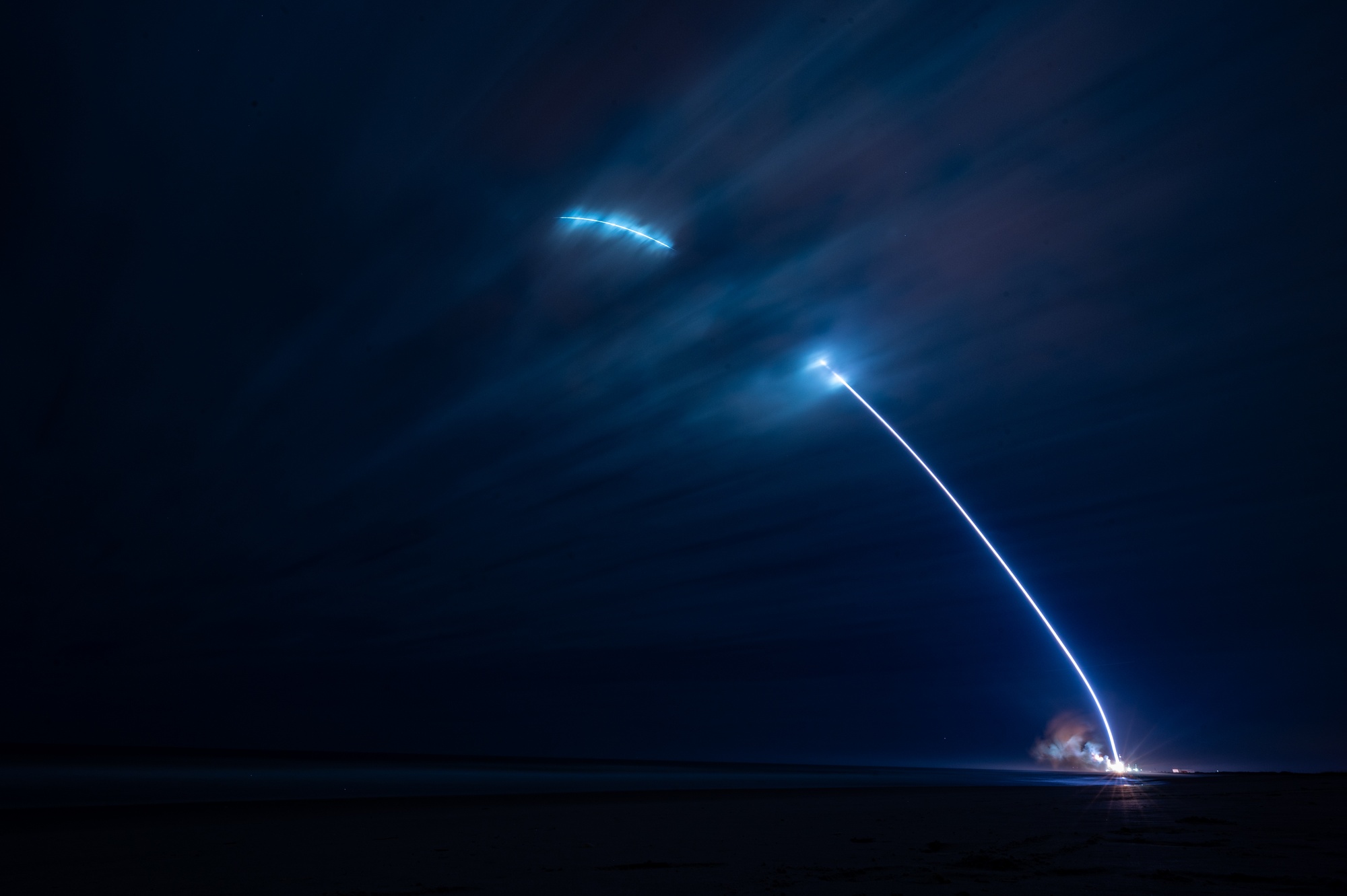
The Pentagon and NASA now have a standing order to buy commercial launch services first and build their own only when nothing on the market will do. National Security Presidential Memorandum 17, "The National Space Transportation Policy," takes direct aim at how the government has historically procured rides to orbit, and it reshapes who government space transportation dollars flow to for years to come.
The President signed NSPM-17 on August 20, 2026, and it appeared in the Federal Register on August 25, 2026 (Vol. 91, No. 163, pp. 54929-54934). The memo formally revokes Presidential Policy Directive 26 from 2013 and waives the 2004 Space Transportation Policy guidance under 51 U.S.C. 30703, replacing it with the direction in NSPM-17 — more than two decades of accumulated launch-policy instructions folded into a single document built around one instruction: let commercial providers lead.
What NSPM-17 Actually Orders Agencies to Do
The operative language sits in Section 6(b) of the memo, which directs the Secretary of War and the NASA Administrator, in their roles as the government's launch agents, to change how they plan missions. The policy text states the two officials "shall... favor commercial space transportation services for meeting United States Government needs."
That favoring instruction is paired with a restriction on government-run alternatives. The memo directs agency heads to "refrain from conducting United States Government space transportation activities that preclude, discourage, or compete with United States commercial space transportation activities, unless required by public safety or national security." In practice, that means a government-owned or government-operated launch capability can only be justified going forward when commercial providers cannot meet a public-safety or national-security need, not simply because an agency finds an in-house option more convenient or familiar.
NSPM-17 also pushes DoD and NASA to act as a single customer rather than as separate buyers competing for the same limited pool of vehicles, pads and range time. The memo directs agencies to "coordinate space transportation acquisitions to maximize shared requirements and United States Government buying power," language aimed at consolidating what has historically been duplicated contracting across the two agencies' launch programs.
The 1,000-Launches-a-Year Target
NSPM-17 sets a specific numerical goal for the launch ranges themselves. The policy text says: "By 2030, our space transportation ranges must grow to support more than 1,000 launches and reentries every year." That figure is a multiple of current annual U.S. launch cadence and functions as the benchmark against which the memo's infrastructure directives are measured.
To get there, the memo assigns implementation deadlines running from the August 20 signing date, with the Assistant to the President for Science and Technology (APST) coordinating implementation under Executive Order 14369. The earliest deadline comes at 90 days, when the Secretary of the Interior must identify federal lands for an additional reentry site. At 120 days, the Secretary of State and the Secretary of Commerce must update export policies and export controls governing space transportation. Most deliverables cluster at 180 days: new range-scheduling criteria, a report on additional launch-infrastructure locations, a spectrum-access report, and a space-transportation industrial-base strategy among them. At 240 days, Commerce must deliver a development plan for that reentry site. Measured from signing, the 90-day deadline falls in mid-November 2026, the 180-day cluster lands in mid-February 2027, and the final 240-day deliverable is due in mid-April 2027 — an eight-month rollout of range, spectrum, industrial-base, and export-policy documents rather than one omnibus release.
Why the Policy Requires U.S.-Built Rockets
NSPM-17 pairs its commercial-first buying preference with a domestic-manufacturing requirement: government payloads must fly on U.S.-manufactured vehicles. The memo carves out three narrow exceptions: no-exchange-of-funds international agreements, including scientific instruments hosted on foreign spacecraft, or other government-to-government deals where a foreign government provides the launch; secondary science payloads riding along on other missions, but only when no comparable U.S. launch service is available; and hosted payloads flying on spacecraft not owned by the United States. Outside those categories, a foreign-built launch vehicle is not an option for a U.S. government payload, regardless of who operates it.
The memo also directs agencies to develop "fair and transparent cost recovery policies" for common services and infrastructure at federal launch and reentry facilities, a signal that the government intends to revisit how it charges commercial operators for use of range infrastructure that taxpayers built and maintain. Beyond near-term launch cadence, the policy instructs the NASA Administrator to pursue lunar-logistics and Mars-access architectures in partnership with commercial companies, extending the commercial-first approach beyond low Earth orbit and geostationary missions into deep-space logistics.
What It Means for Contractors
For established commercial launch providers already holding DoD and NASA contracts, NSPM-17 is a durable tailwind: it converts what has often been agency-by-agency preference into a written presidential directive that government program managers must justify departing from. Companies competing for national-security and NASA missions should expect procurement officers to lean harder toward existing commercial vehicles and away from proposals that involve the government building or operating its own transportation capability.
The U.S.-manufactured-vehicle requirement narrows the field further. Contractors that assemble final vehicles domestically are best positioned to benefit; companies proposing foreign-built launch vehicles for government payloads outside the memo's three exceptions are effectively locked out regardless of cost or capability. The requirement applies across both DoD and NASA procurements, so a contractor disqualified on one agency's solicitation for using a non-U.S. vehicle should expect the same disqualification to hold on the other's, given the memo's emphasis on coordinated requirements between the two.
The coordinated-buying-power directive is worth watching closely. If DoD and NASA genuinely consolidate shared launch requirements into joint acquisitions, as the memo instructs, that could mean fewer, larger solicitations rather than the separate agency-specific contract vehicles providers have negotiated in the past — a shift that rewards firms with the vehicle inventory and range access to handle bigger blocks of missions, and raises the bar for newer entrants trying to win a foothold through smaller, agency-specific contracts.
The range-capacity and industrial-base deadlines running from November 2026 through mid-April 2027 are also a signal to infrastructure and range-services contractors: the 90-day reentry-site pick, the 180-day siting report and industrial-base strategy, and the 240-day reentry-site development plan will shape where the government invests in pads, spectrum access, and reentry sites needed to reach the 1,000-launches-a-year goal. Firms with range operations, spectrum-management expertise, or reentry-site capabilities should expect near-term solicitation activity tied to those deadlines, since the memo leaves none of them open-ended.
