
The Justice Department has extracted a $7.3 million settlement from a New York packaging supplier and its owner over a scheme to disguise Chinese-made bags as Hong Kong products and evade antidumping duties. New York Packaging II LLC, doing business as Redi-Bag USA, and its CEO Jeffrey Rabiea agreed to resolve False Claims Act allegations that they misrepresented the country of origin of polyethylene retail carrier bags on U.S. customs entry forms.
Background
Antidumping duties exist to stop foreign manufacturers from flooding the U.S. market with goods priced below fair value. Chinese-made polyethylene retail carrier bags, the thin plastic bags handed out at store checkouts, carry antidumping duties of up to 77.57 percent. That margin gives importers a powerful incentive to make Chinese goods look like they came from somewhere else, and prosecutors say Redi-Bag did exactly that.
The company imported bags manufactured in China, routed them through Hong Kong, and then declared Hong Kong as the country of origin when the shipments entered the United States. By swapping the origin label, Redi-Bag avoided the duties it owed on Chinese product and undercut competitors who paid the full freight. The government pursued the case under the False Claims Act's reverse-false-claims provision, which reaches conduct that improperly avoids an obligation to pay money to the United States rather than the more familiar act of overbilling the government.
The whistleblower behind the case is John Maierhoffer, a former contracted Redi-Bag sales representative. He filed a qui tam complaint under the False Claims Act in 2021, and the government intervened. Maierhoffer will receive roughly $1.33 million, about 18 percent of the recovery, the standard relator's share for a case the government joins.
Key Details
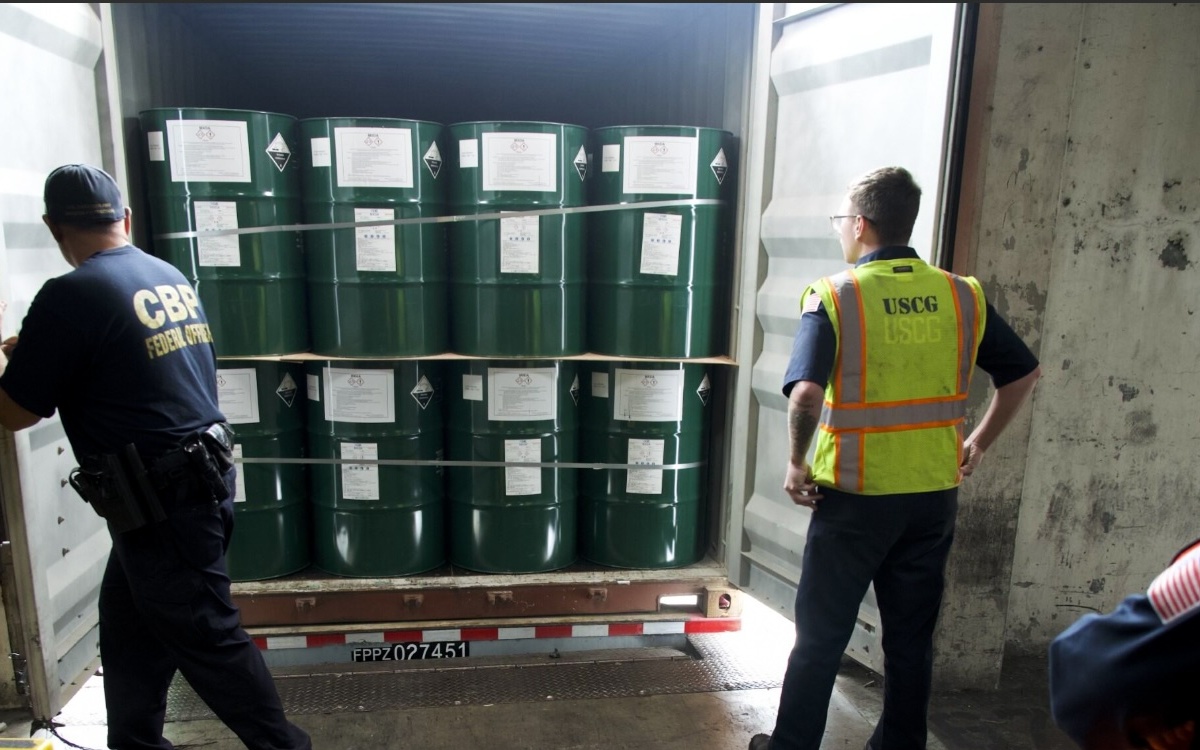
The alleged conduct went well beyond a paperwork misclassification. According to prosecutors, Redi-Bag directed employees to cover or remove "Made in China" markings on the bags, and instructed overseas manufacturers to strip the markings before shipment. When shipments were scheduled for inspection by U.S. Customs and Border Protection, the company canceled them rather than risk the origin fraud surfacing during examination. That pattern of concealment is what elevates a customs-classification dispute into a fraud case, and it is the kind of intent evidence that makes a False Claims Act theory stick.
The $7.3 million resolves the government's civil claims. The transshipment route, China to Hong Kong and then into U.S. ports, is a well-worn evasion tactic, and country-of-origin misrepresentation on entry forms is precisely the false statement the reverse-false-claims provision targets. Each entry form certifying Hong Kong origin became, in the government's telling, a false record used to avoid a duty obligation.
The enforcers reflect the government's sharpening focus on trade fraud. The U.S. Attorney's Office for the District of New Jersey, led by U.S. Attorney Robert Frazer, handled the case alongside the Justice Department Civil Division's Trade Fraud Task Force. Customs and Border Protection, under Commissioner Rodney S. Scott, supported the investigation. The task force has been driving a string of customs-duty recoveries as tariff enforcement climbs the federal priority list, and it treats duty evasion as a revenue-integrity problem rather than a technical import matter.
One wrinkle underscores how liability follows the conduct rather than the corporate shell. AmerCareRoyal acquired Redi-Bag's assets one day before the settlement was announced. Asset deals of that kind do not necessarily wipe out exposure for the seller's prior conduct, and the timing is a reminder that customs-fraud liability can shadow a company through a change in ownership. Rabiea, named personally in the settlement, illustrates the same principle at the individual level: the government reached past the corporate entity to the executive who allegedly directed the scheme.
What It Means for Contractors
Redi-Bag is not a government contractor, but the case matters to anyone who imports goods and touches federal dollars, because the legal machinery is identical to what enforcers aim at the contracting community. The reverse-false-claims theory applies with equal force to a defense supplier that mislabels the origin of components to sidestep duties, satisfy a Buy American or Trade Agreements Act requirement, or shave landed cost on a bid. Country-of-origin representations are not a back-office formality; they are certifications the government can and does treat as claims.
Three lessons carry over directly. First, transshipment does not launder origin. Routing Chinese product through a third country and re-declaring its origin is the exact conduct the Trade Fraud Task Force was built to catch, and the task force is expanding, not contracting. Contractors with multi-tier supply chains should assume that where a good was substantially transformed, not where it last shipped from, is the question that will be asked under audit.
Second, concealment is what turns a classification error into fraud. Honest disagreements about tariff codes or origin rules happen, and they are generally resolved through the customs process without False Claims Act exposure. Directing employees to scrub "Made in China" markings and canceling shipments to dodge inspection is the opposite of a good-faith dispute, and it is precisely the evidence that converts a civil duty question into a fraud settlement with a personal name attached.
Third, insiders are watching, and the FCA pays them to talk. A former contracted sales representative, not a competitor or a government auditor, surfaced this scheme and walked away with more than $1.3 million. Any employee, contractor, or sales agent with visibility into origin misrepresentation has both the standing and the financial incentive to file. Compliance programs that let origin fraud persist are effectively funding their own whistleblowers.
For federal contractors specifically, the settlement signals that trade-based fraud enforcement is accelerating in parallel with contract-based FCA work, and the two increasingly overlap. Origin certifications embedded in supply contracts, Buy American attestations, and customs entries are all statements the government can build a false-claims case around. Contractors should map where origin representations live in their compliance stack, verify that substantial-transformation determinations are documented, and treat any pressure to obscure a country-of-origin marking as a five-alarm event. The cost of the alternative, as Redi-Bag and its CEO learned, is a settlement measured in millions and a whistleblower who profits from the silence.
Sources
- Redi-Bag USA and CEO Agree to Pay $7.3M to Settle False Claims Act Allegations Relating to Evaded Customs Duties — DOJ Office of Public Affairs
- Reusable Bag Company Will Pay $7.3 Million For Allegedly Hiding 'Made In China' Labels — Forbes
- Whistleblower Law Collaborative Client Successfully Blows Whistle on Redi-Bag USA and Its CEO — PRNewswire
- Redi-Bag USA Country-of-Origin Customs Fraud Case — National Law Review
