
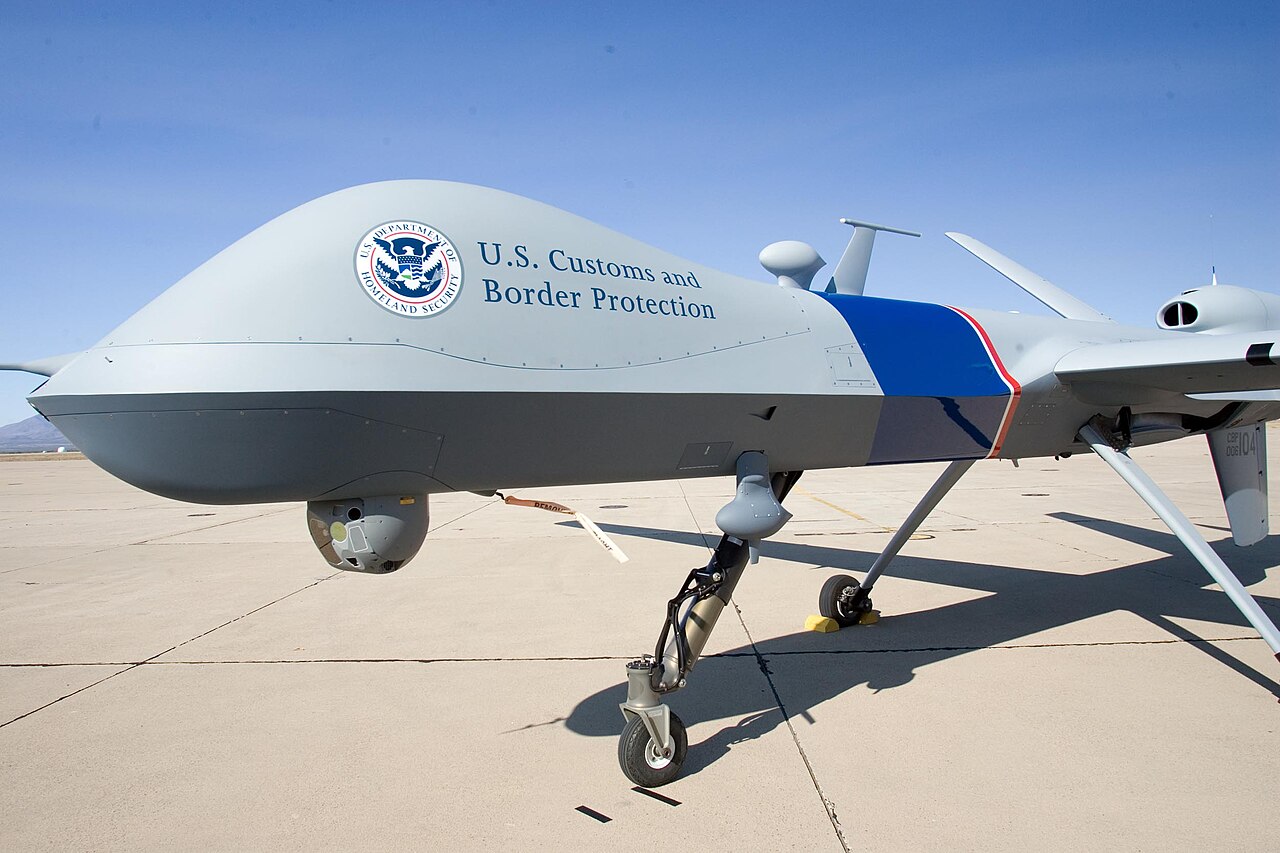
Anyone flying a drone near the U.S.-Mexico border now faces a federal no-fly zone. The Departments of Transportation, War and Homeland Security on Friday, Oct. 16, 2026, imposed a temporary flight restriction (TFR) for drones along the southern border, effective the same day. The restriction bars unauthorized drone activity from the surface up to 400 feet above ground level, in a band that extends one nautical mile north of the border.
The joint announcement says the move builds on the administration's border enforcement push and cites illicit cartel activity. It also pairs the regulatory action with an explicit threat of force: the Secretary of War said warfighters equipped with directed energy weapons will shoot down cartel drones that threaten U.S. sovereignty.
What the One-Nautical-Mile Border TFR Prohibits
The restriction is narrow in altitude and broad in reach. It covers the low-altitude band where small unmanned aircraft typically operate, surface to 400 feet, and runs along the border with a depth of one nautical mile into U.S. territory. The FAA release describes the restriction as prohibiting "unauthorized drone operations within one nautical mile of the U.S.-Mexico border, from the surface to 400 feet."
According to the three departments, the measure "will reduce risks to ongoing border security operations, protect federal personnel, facilities and the Homeland, and enhance enforcement against those who violate the restrictions."
The FAA will publish a Notice to Airmen (NOTAM) that links to the Domestic Notice and to the FAA's UAS Data Delivery System. The release puts the burden on pilots: "Drone operators are responsible for reviewing all applicable NOTAMs and restrictions before operating and must comply with the requirements in effect for their planned operations."
The announcement does not give an end date for the temporary restriction, and it does not spell out the penalties for violating it. The word "unauthorized" signals that some drone operations will be permitted; the release does not say how an operator obtains that authorization, so operators will need to read the NOTAM and Domestic Notice once the FAA posts them.
Why Cabinet Secretaries Are Talking About Shooting Down Cartel Drones
All three department heads issued statements, and each tied the restriction to cartel activity. Transportation Secretary Sean P. Duffy said: "President Trump promised to secure the Southern Border, and he did. Now we’re doubling down on that promise by protecting our skies from cartel drone threats and other illicit activities."
Secretary of War Pete Hegseth went further. "The United States government will maintain 100% operational control of our border: land, air, and sea," he said. Hegseth argued that restricting unauthorized drone activity gives "commanders greater awareness, greater decision space, and more options to defend the Homeland," and added: "Equipped with cutting-edge technology—including Directed Energy Weapons—our warfighters will shoot down any cartel drone that threatens America’s sovereignty."
Homeland Security Secretary Markwayne Mullin said the action "will help counter cartel drone threats, protect our personnel, and strengthen security in the airspace above the border."
The operational logic appears straightforward. A blanket restriction near the border would make any drone in that band presumptively unauthorized, which could simplify decisions for operators of detection and defeat systems. Distinguishing a hobbyist from a cartel scout aircraft is hard; a no-fly zone may remove much of the need to try.
How the Border Fits Into the Counter-UAS Buildout
The southern border has been a focal point for counter-UAS efforts, FedScoop noted in its coverage of the restriction. The outlet reported that vendors supplying DHS with AI-powered surveillance towers at the border are considering how to incorporate counter-UAS capabilities into those systems.
Coordination across agencies runs largely through the Army-led Joint Interagency Task Force 401 (JIATF 401). Since launching last year, the task force has served as a mechanism for technology tests, standard-setting and procurement, FedScoop reported. At the task force's second summit in August, Bryan Stevens, deputy assistant director of the FBI's Critical Incident Response Group, described the core tension in the mission: "Counter-UAS lives at the seam between military capability and civilian authority. The threat does not respect that seam, and neither can we."
Last month, the Department of Energy's National Nuclear Security Administration expanded its partnership with JIATF 401. Under a memorandum of understanding, the two created a framework for sharing counter-UAS test data to avoid duplicative research.
The border TFR also follows a separate FAA airspace action. In May 2026, the FAA proposed a rule that would let operators of certain critical infrastructure petition the agency to restrict drone flights over their sites "for safety and security reasons." The FAA said that proposal aligns with Executive Order 14305, Restoring Airspace Sovereignty, and addresses a provision of the FAA Extension, Safety and Security Act of 2016. Taken together, the two actions show the federal government steadily carving out more low-altitude airspace where drones need permission to fly.
What It Means for Contractors
The TFR touches contractors in two distinct ways.
First, firms that fly drones near the border as part of their work now have a compliance obligation. Surveying, construction inspection, infrastructure monitoring and mapping work within one nautical mile of the border would all fall inside the restricted band. Because the FAA places responsibility on the operator to check NOTAMs before each flight, contractors should build a NOTAM check for the border restriction into flight planning and confirm with their contracting officer whether their operations count as authorized. Until the NOTAM and Domestic Notice are available, no public document explains how authorization works, so companies should not assume an existing federal contract covers them.
Second, the restriction strengthens the demand signal for counter-UAS technology at the border. Cabinet-level commitments to shoot down cartel drones, including with directed energy weapons, imply a need for detection, tracking and defeat systems along the line. Vendors already supplying DHS surveillance towers are weighing counter-UAS add-ons, according to FedScoop. Companies outside that group should watch JIATF 401, which tests technology, sets standards and coordinates procurement across agencies. Its data-sharing framework with NNSA suggests that test results from one agency may increasingly carry weight with others, which could shorten the path from a single successful demonstration to broader adoption.
Firms tracking the FAA's critical-infrastructure rulemaking should also note the trend. Restricted airspace over sensitive sites could create a market for the sensors that enforce it, and the border TFR shows the government declaring restricted airspace while the enforcement tools are still being worked out.
