
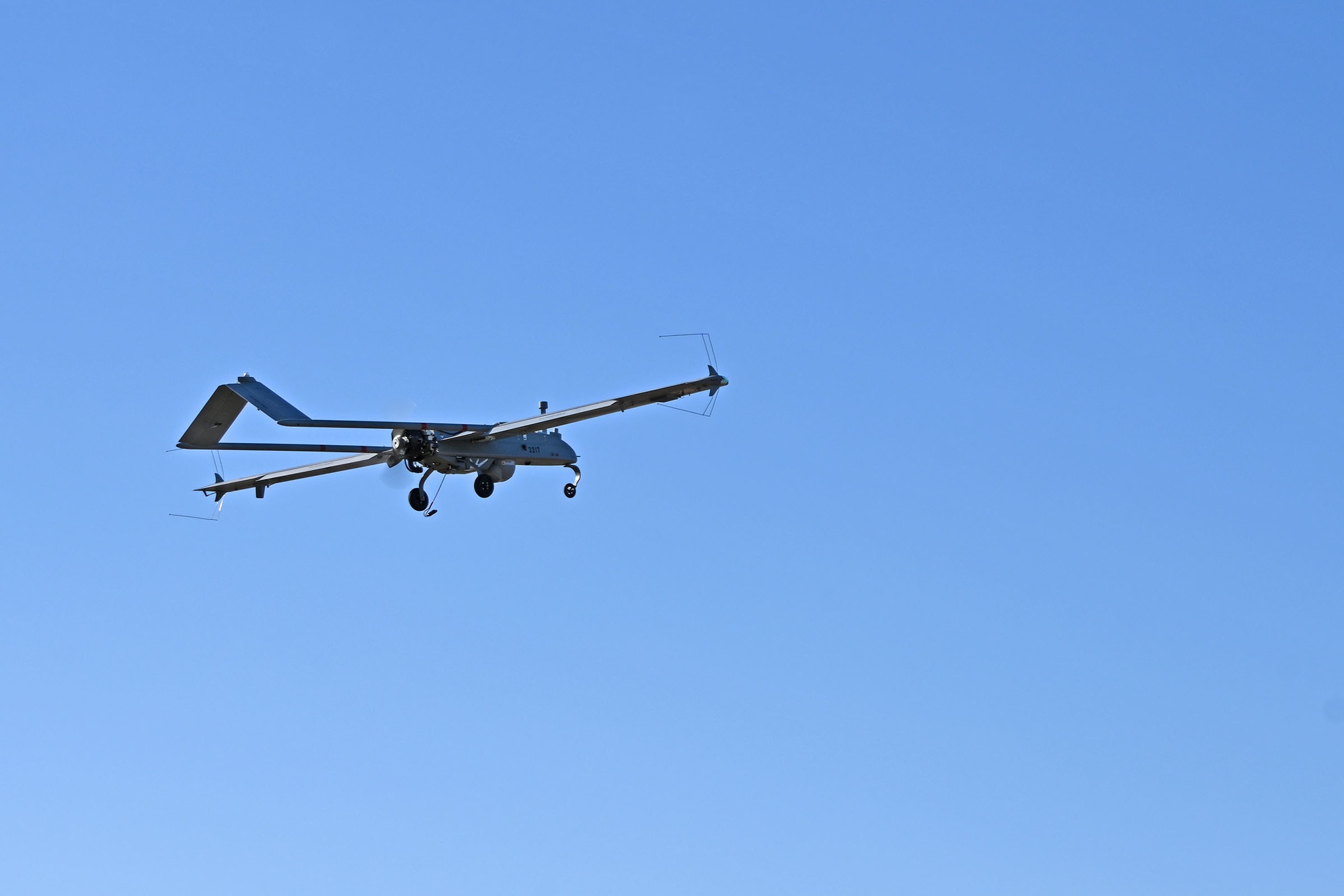
The UK Ministry of Defence has selected Portuguese drone maker Tekever's AR5 uncrewed aircraft to replace the British Army's Watchkeeper ISTAR drone, in a deal worth up to £400 million over 10 years, according to Janes.
Background
Watchkeeper, built by Thales UK as the WK450 variant, has been the British Army's principal tactical intelligence, surveillance, target acquisition and reconnaissance (ISTAR) drone for more than a decade, according to Janes and Breaking Defense. In November 2024, the MoD cancelled a planned acquisition of 46 additional Watchkeeper airframes, a decision driven by operational limitations highlighted by lessons from Russia's war in Ukraine, according to Breaking Defense. The replacement program is designated Project Corvus, Janes reported.
Tekever's AR5 was a natural contender: Breaking Defense reported the aircraft has been operationally tested by Ukraine's armed forces during the country's conflict with Russia, giving the MoD a platform with real combat exposure rather than one validated only through test ranges.
Winning a flagship NATO buyer's tactical ISTAR replacement competition marks a significant milestone for Tekever, positioning the company inside a major Western military's core force structure rather than as a supplementary or trial-quantity supplier.
Key Details
The contract, awarded to Tekever, is worth up to £400 million (roughly $533 million) over a 10-year period, according to Janes and Breaking Defense. The initial order covers six air vehicles, with the total planned buy rising to as many as 24 aircraft by 2029 as deliveries ramp up. The MoD has also secured a minimum five-year support and sustainment commitment from Tekever, with options to extend further, Janes reported. Janes reported service entry is expected in late 2026, while Breaking Defense reported entry to service later in 2026, dependent on contract signature and final approvals.
Notably, the aircraft will not simply be imported. Tekever is opening a new production facility in Swindon, England, in summer 2026, and the AR5s destined for British Army service will be manufactured domestically at that site, according to Breaking Defense. That detail matters for a program built partly around the lesson that supply chains for critical ISTAR assets need to be resilient and, where possible, based on friendly or domestic soil rather than dependent on long international pipelines.
On specifications, the AR5 is a considerably smaller and lighter aircraft than Watchkeeper. It measures roughly 4 meters in length with a 7.3-meter wingspan, a maximum takeoff weight of 180 kilograms, and a payload capacity of 50 kilograms, according to Janes. It is powered by a twin 150cc engine, giving it a range of up to 1,000 kilometers and a maximum endurance of 20 hours. Those figures point to a lower-cost, more attritable ISTAR asset than the platform it replaces — one that can be fielded in greater numbers and is less catastrophic to lose than a large, expensive Watchkeeper airframe.
UK Defence Secretary Wes Streeting tied the selection directly to combat lessons from Ukraine. "Proven in Ukraine and designed to protect British soldiers globally, we have chosen the UK-based Tekever AR5 drone to supply our personnel with kit that will keep them ahead of emerging threats," Streeting said, according to Janes. The MoD said the AR5 "offers significantly improved endurance, sensor capability and reliability, ensuring that the Army maintains a battle-winning edge," according to Breaking Defense. The announcement did not detail the contracting vehicle or acquisition authority beyond attributing the selection to the Ministry of Defence, and it did not name a prime integrator or subcontractors beyond Tekever itself.
What It Means for Contractors
The award signals where the UK — and likely other NATO members watching the same Ukraine battlefield data — intend to direct future ISTAR drone spending: toward smaller, cheaper, combat-tested platforms rather than large legacy ISR aircraft with long procurement tails and high per-unit replacement costs. Contractors pitching tactical UAS to the MoD or allied ministries should expect buyers to weight combat pedigree heavily. Tekever's edge here was not a paper spec sheet; it was that the AR5 has already been operationally tested by Ukraine's armed forces in an active conflict. Vendors without an operational track record, or without a credible path to get one, will face a harder sell on future ISTAR competitions in Europe.
The domestic-manufacturing requirement is also worth watching closely. Tekever, a Portuguese company, is establishing UK production specifically to win and execute this contract, opening its Swindon facility this summer. That mirrors a broader trend across NATO defense ministries: even when the best-performing platform comes from an allied nation's industry rather than the buyer's own base, governments increasingly require final assembly, sustainment or significant value-add work to happen domestically. US and allied contractors bidding into UK, European or Indo-Pacific ISTAR programs should factor in that a strong product alone may not be enough — a credible local manufacturing or industrial-partnership plan is becoming a de facto requirement to be competitive, not just a nice-to-have.
The structure of the deal — a modest initial buy of six aircraft against a ceiling of 24 by 2029, paired with a guaranteed multi-year sustainment tail — is also a template contractors should recognize. Rather than committing to the full 24-aircraft buy up front, the MoD is starting with a smaller initial order and scaling based on performance and delivery, while locking in support revenue for at least five years regardless of how the full buy plays out. Companies competing for similar tactical ISTAR or loitering-munition-adjacent programs should expect buyers to increasingly favor this phased-award, guaranteed-sustainment structure over large single-tranche buys, since it lets the customer manage risk on newer, less mature suppliers while still giving industry revenue certainty to justify standing up new production lines.
Finally, the Watchkeeper retirement itself is a cautionary data point for any contractor currently supplying, or bidding to supply, legacy ISR platforms to NATO militaries. A program that was once a flagship British Army acquisition saw a planned expansion of 46 additional airframes cancelled in November 2024 over operational limitations that Ukraine-conflict lessons brought into sharp relief, rather than as part of a scheduled recapitalization cycle. Contractors with aging ISTAR, radar-heavy or large-signature platforms in service with allied militaries should anticipate accelerated replacement timelines as more governments reassess legacy fleets against the electronic warfare and air-defense environment now visible in Ukraine.
