
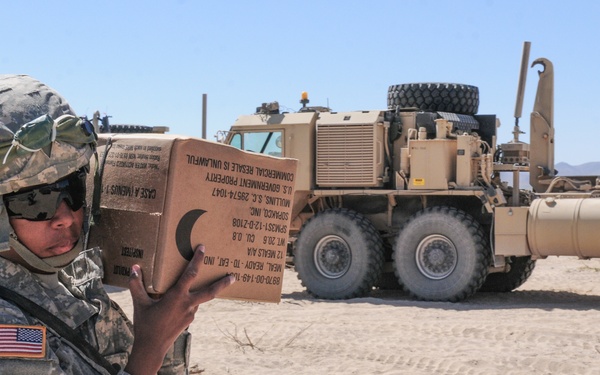
The Defense Logistics Agency Troop Support, Philadelphia, Pennsylvania, on June 23, 2026, awarded Baxters North America Inc. of Cincinnati, Ohio, a maximum $66,645,000 fixed-price indefinite-delivery/indefinite-quantity contract to supply Modular Operational Ration Enhancement packages for Army, Navy, Air Force, and Marine Corps personnel operating in extreme environments. The ordering period runs five years, closing June 23, 2031, with no option periods attached. Three offers competed for the award.
Background
The Modular Operational Ration Enhancement program exists to address a gap that standard operational rations cannot close on their own. Daily operational rations — the Meal, Ready-to-Eat and its variants — are calibrated for average caloric expenditure under temperate conditions. Soldiers patrolling at altitude in sub-zero temperatures or operating in sustained desert heat burn through considerably more calories than those standard rations provide. DLA Troop Support designed MORE as a supplemental package: bolt-on components that soldiers add to their standard ration to offset the deficit without requiring a wholesale redesign of the MRE format.
Two distinct variants serve opposite climate extremes. The cold-and-high-altitude MORE loads additional fats and carbohydrates to offset the energy premium the body pays when working to maintain core temperature at elevation. The hot-weather MORE targets hydration support and lighter caloric formats that remain tolerable when appetite suppresses in sustained heat. Both variants ship as compact, shelf-stable packages that integrate with existing ration logistics chains without requiring separate cold-chain handling — a deliberate design choice that keeps the logistics footprint manageable in forward areas.
The MORE's relevance extends beyond standard training scenarios. High-tempo operations in mountainous or arctic terrain impose caloric demands that can rapidly outpace standard ration planning. Cold environments compress the gap between maintenance calories and active-duty expenditure, while heat suppresses appetite even as fluid and electrolyte demands rise. The MORE program addresses both scenarios at the logistics planning level, giving supply officers a pre-positioned enhancement package they can issue before troops deploy to thermally demanding environments, reducing the caloric and nutritional shortfall that accumulates over extended operations.
DLA Troop Support in Philadelphia manages the subsistence supply chain for all U.S. military services and selected allied customers. Its Operational Rations division holds the contracting authority for specialty ration programs including the MRE, the First Strike Ration, the Unitized Group Ration, and the MORE. The agency publishes performance and nutritional specifications for each program and runs competitive acquisitions when contracts approach expiration or when the government moves to expand supply capacity. When a requirement spans multiple military services, as the MORE program does, DLA Troop Support serves as the single contracting office, consolidating demand from all four services into a single vehicle rather than requiring each service to manage its own acquisition.
Key Details
The award follows a competitive acquisition in which three offers were received, making this a competed contract rather than a directed or sole-source action. Baxters North America submitted the winning proposal. The resulting vehicle is a fixed-price IDIQ, identified under contract number SPE3S1-26-D-Z100. Fixed-price IDIQ vehicles are a standard DLA mechanism for multi-year commodity supply requirements: the government commits to ordering within a maximum ceiling, and unit prices are locked at award rather than negotiated order by order.
Funding flows from FY2026 through FY2031 defense working capital funds, with obligations placed each time a delivery order is issued rather than at contract award. The $66.6M figure represents the maximum IDIQ ceiling; actual spending over the five-year ordering window depends on service-level ordering activity. All four military services — Army, Navy, Air Force, and Marine Corps — are listed as ordering customers, and DLA Philadelphia retains the contracting officer role throughout the ordering period.
Baxters North America Inc. is a Cincinnati, Ohio-based food manufacturing contractor. DLA subsistence work requires suppliers to meet military specification standards for packaging, labeling, and traceability documentation before a contract is executed — requirements that apply equally to all offerors regardless of incumbent status. The competitive structure of this acquisition, with three offers evaluated, indicates that at least two other companies met the threshold requirements and submitted responsive proposals. A three-offer competition is typical for specialized ration programs, where the supplier base is narrowed by the capital investment required to meet MIL-SPEC production standards.
The contract carries no formal option periods. DLA structured the vehicle as a straight five-year base IDIQ rather than a base-plus-options format. That choice signals that DLA is confident enough in the program specification and pricing approach to commit through 2031 without reserving the right to recompete at intermediate intervals — a commitment that gives Baxters North America stable demand visibility for production planning over the full contract term. The absence of option periods also simplifies the administrative profile of the vehicle, reducing the number of renewal decisions the contracting officer must manage over the life of the award.
What It Means for Contractors
For food manufacturers and specialty ration suppliers, this contract illustrates DLA Troop Support's preference for competed, fixed-price IDIQ vehicles in the supplemental ration space. Companies that have invested in MIL-SPEC food processing and military-grade packaging lines — particularly those with existing relationships in emergency or international food aid supply chains — are positioned to compete in future MORE solicitations or adjacent programs like the First Strike Ration and the Unitized Group Ration, where similar procurement structures apply. The competed nature of this award confirms that DLA has not restricted the MORE program to a single incumbent supplier, keeping the field open for new entrants that can meet the specification.
The five-year, no-option structure tells prospective competitors when the next competitive cycle will open. Companies not currently in the MORE supply chain have a meaningful runway to build the production capacity, quality certifications, and compliance documentation needed to submit a credible offer before the 2031 ordering period closes. DLA Troop Support typically posts pre-solicitation notices well ahead of a contract's expiration for programs of this type, which gives prospective offerors adequate preparation time before the competitive window opens.
For prime contractors in adjacent ration segments — particularly those holding MRE component contracts — the MORE program represents an opportunity to extend their DLA subsistence footprint without requiring new facility investment. MORE components draw from the same food-processing and packaging infrastructure that supports existing ration supply lines. Any company already operating under a current DLA subsistence contract and meeting MIL-SPEC performance standards should evaluate whether its production lines can support MORE component specifications before the next competition opens.
