
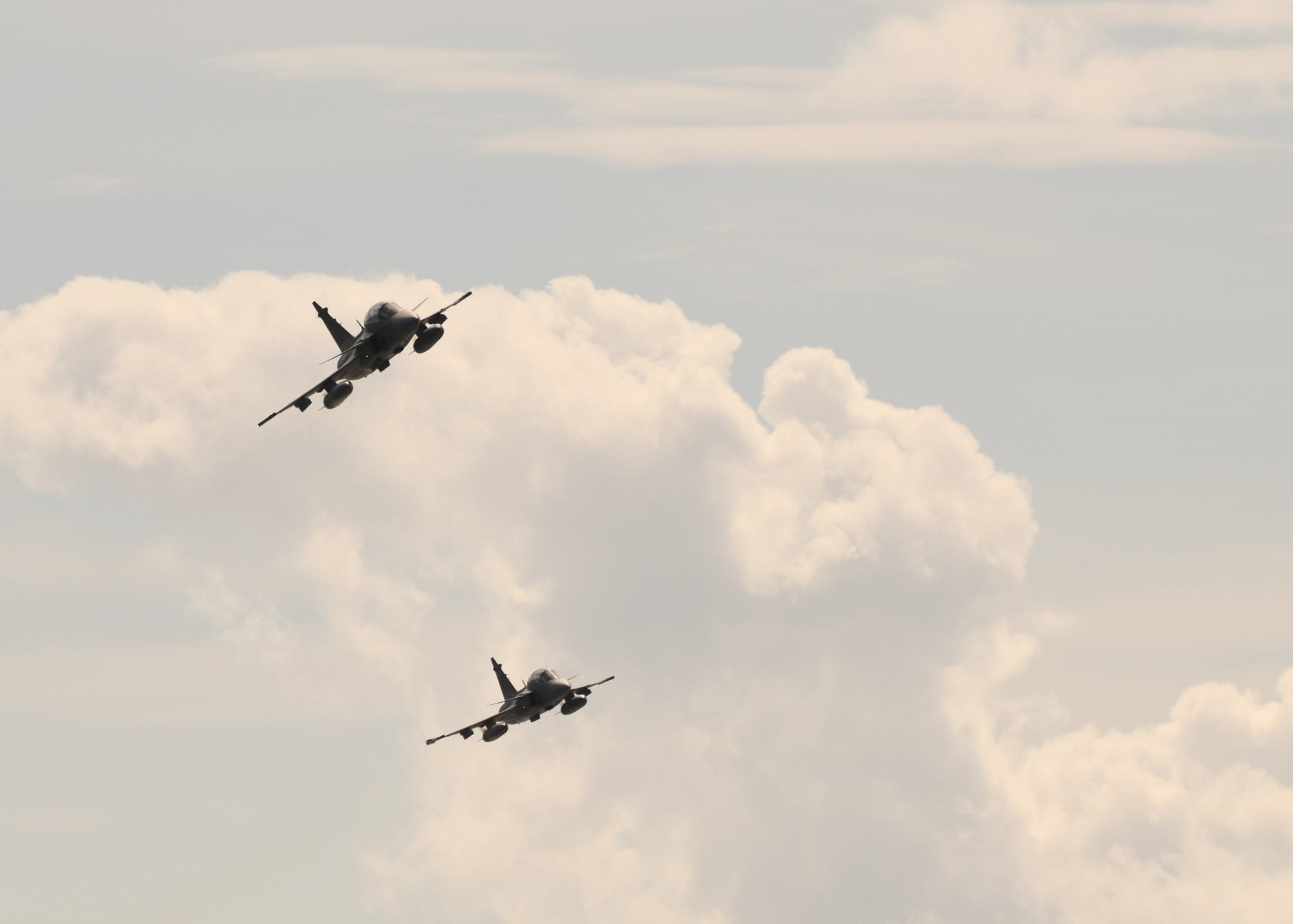
Saab delivered the final two Gripen C fighters to Hungary on June 24, 2026 at Kecskemet Air Base, closing out a 2024 contract amendment and lifting the Hungarian Air Force combat fleet to 18 aircraft, according to Janes. The handover completes a four-jet follow-on order placed in early 2024 and ends a delivery campaign that began with a lease arrangement signed more than two decades ago. With the last pair in Hungarian markings, Budapest now fields one of Central Europe's most homogeneous fighter forces, built entirely around the Swedish single-engine type and tasked with guarding both national and NATO airspace.
The new aircraft arrive built to the MS20 Block 2 configuration, the same software and hardware baseline Sweden and other export operators have adopted to keep the C/D variant relevant against modern threats. That standard brings upgrades to the Saab PS-05/A Mk4 radar, improved Link 16 connectivity for sharing tracks across NATO networks, and NATO Mode 5 identification friend or foe, the encrypted interrogation standard the alliance now requires. The contract sat between the Swedish Defence Materiel Administration, known by its Swedish initials FMV, and the Hungarian Ministry of Defence, with Saab as the industrial prime.
Background
Hungary first acquired the Gripen through a lease, not a purchase. In 2001 Budapest agreed to lease 14 aircraft from Sweden, a mix of single-seat Gripen C and twin-seat Gripen D airframes, to replace the Soviet-era fighter fleet it inherited after the Cold War. The jets entered Hungarian service in 2006, five years after the lease was signed. The lease later converted toward ownership, and the Gripen became the backbone of Hungarian air defence, flying quick-reaction alert sorties and contributing to allied air-policing rotations in a region that borders Ukraine.
The decision to add four more aircraft, formalized in a February 2024 contract amendment, reflected both attrition over nearly two decades of operations and a broader European rearmament wave triggered by Russia's full-scale invasion of Ukraine. Rather than switch types or jump to a fifth-generation platform, Hungary chose to deepen its existing Gripen investment, expanding the fleet while bringing the whole force up to a common modern standard. That choice keeps training, logistics, and spare-parts pipelines unified around a single airframe, a meaningful advantage for a small air arm that cannot afford to split its maintenance and crew base across multiple types.
Key Details
The June deliveries close the four-aircraft batch ordered in 2024. Hungary now operates 18 Gripen C/D fighters in total: 16 single-seat Gripen C and two twin-seat Gripen D. The two-seaters serve conversion training and certain operational missions, while the single-seaters carry the bulk of the air-policing and air-defence workload. All of the aircraft are tied into the MS20 Block 2 standard, meaning Hungary avoids operating a split fleet with incompatible sensors or datalinks, a problem that drives up cost and complexity for operators who buy in mismatched tranches. Hungary's geography sharpens the stakes: Kecskemet hosts the country's Gripen wing, and Hungarian Gripens routinely scramble to identify unknown contacts along NATO's eastern edge, work that demands current sensors and secure identification gear.
The technical heart of the upgrade is the radar and networking suite. The PS-05/A Mk4 radar improves detection and tracking over earlier marks, while the enhanced Link 16 fit lets Hungarian Gripens exchange a richer picture with NATO airborne early warning aircraft, ground controllers, and allied fighters. NATO Mode 5 IFF, meanwhile, is not optional inside the alliance going forward; it is the cryptographically secure successor to older identification modes, and fitting it keeps Hungarian jets interoperable during combined operations and reduces the risk of misidentification in crowded skies.
The deliveries took place at Kecskemet Air Base, home of Hungary's Gripen wing, and were announced on June 24, 2026. Saab framed the handover as the completion of the order and a continuation of its long-term support and industrial cooperation relationship with Hungary. Saab already holds a support contract with FMV covering Hungary's Gripen fleet and has signalled readiness to provide upgrades beyond 2035, a relationship that stretches back to the original 2001 lease and now extends through sustainment of an enlarged fleet.
What It Means for Contractors
For defense contractors, the Hungarian completion underscores how much value sits downstream of the initial aircraft sale. The jets themselves are delivered, but the revenue tail runs for years: sustainment, spares, software drops, radar and avionics upgrades, simulator support, and pilot training all flow from the airframe count. An 18-aircraft fleet locked to a single standard is a predictable, long-duration support customer, and the prime that controls that baseline controls the follow-on work. The completion of the order also gives Saab a reference point as it markets the Gripen E/F to prospective buyers, demonstrating that it can deliver and sustain export fleets even as larger primes dominate headlines.
The deal also illustrates the competitive logic facing fighter suppliers in Central Europe. Several regional air forces have moved toward newer fifth-generation platforms, drawn by advanced capability and alliance commonality. Hungary instead chose to expand a fourth-generation fleet it already knew, betting that a unified, upgraded Gripen force delivered now beats a costlier transition later. For contractors, the takeaway is that incumbency and a clean logistics chain remain powerful selling points, especially for smaller operators that cannot easily absorb the cost and infrastructure demands of a new type.
Industrial cooperation is the third thread. Saab pairs its Gripen sales with offset and cooperation arrangements that route work and technology to the buyer nation, a model that helps secure deals in markets where governments expect domestic economic return. Subcontractors and component suppliers that plug into that ecosystem, from avionics and IFF vendors to test and integration shops, gain a multi-year position tied to the upgraded fleet. The FMV-to-Ministry-of-Defence government-to-government structure also signals a route that bypasses some commercial friction, with the Swedish state acting as intermediary between manufacturer and foreign customer, a contracting pattern worth watching for firms that supply into European fighter programs.
